In modern warfare, it’s not just firepower that shapes the battlefield — it’s the ability to learn, adapt, and strike back smarter.
In 2026, at the height of U.S.–Iran tensions, a new name emerged over the Middle Eastern battlespace: LUCAS (Low-cost Unmanned Combat Attack System). What caught military analysts’ attention wasn’t just its capability — but its origin.

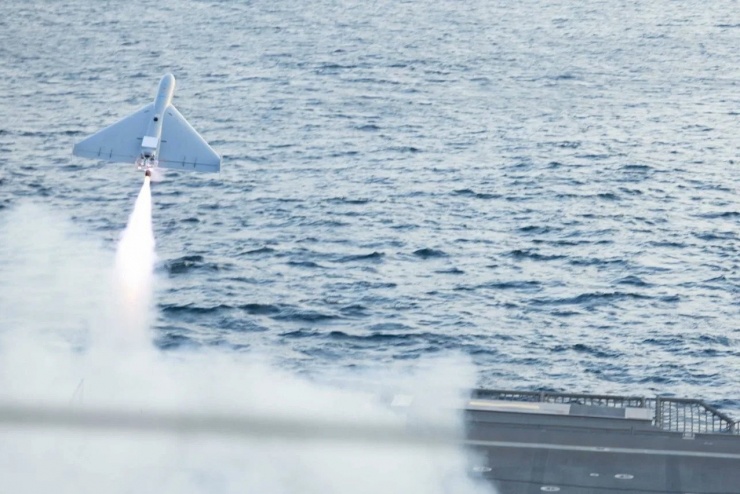
LUCAS was developed through reverse-engineering the Iranian Shahed-136, the loitering munition widely used by Tehran. Arizona-based SpektreWorks initially built a training surrogate, the FLM-136, to simulate the threat. Then they weaponized the concept.
The result? A loitering attack drone costing roughly $35,000, with a range of 714 km, 6 hours of endurance, and an 18 kg warhead. Cruise speed sits around 137 km/h, surging to nearly 194 km/h in terminal dive. Delta-wing configuration. Lightweight composite fuselage. GPS + INS guidance. Loiter capability. Beyond-line-of-sight strike profile.
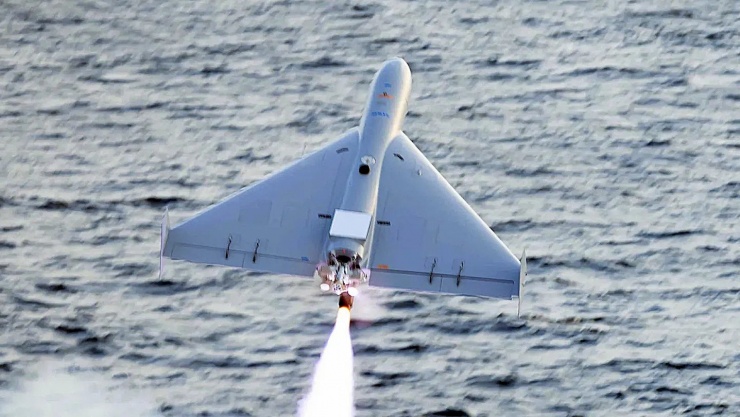
During Operation Epic Fury, under United States Central Command, LUCAS saw its first combat deployment. Launched in waves by Task Force Scorpion Strike (TFSS), dozens were airborne within the first 12 hours, contributing to nearly 900 strike actions — saturating radar networks and paving the way for follow-on attacks.
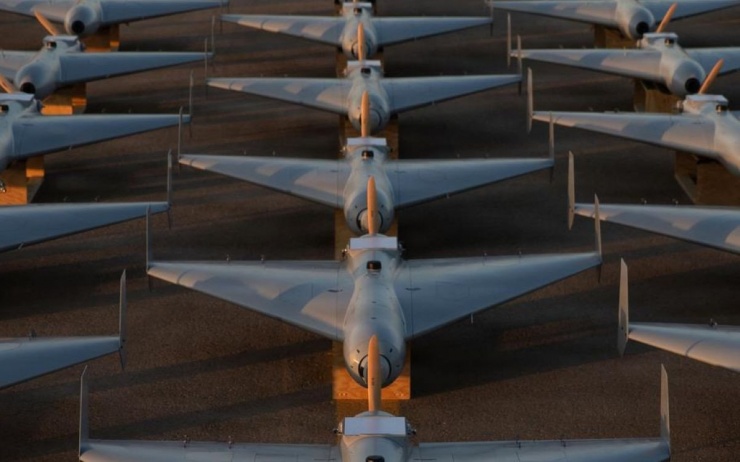
This is the doctrine of “affordable mass.” Overwhelm through numbers. Accept attrition. Penetrate layered air defenses like S-300 and Bavar-373 through saturation, not single-shot precision.
It’s “turning the stick back on its owner” — at a strategic level.
The era of large-scale, low-cost drone warfare has begun.
And LUCAS may only be the opening salvo.
Do you believe swarm drones are the future of warfare?
Drop your analysis in the comments.