In a world often overwhelmed by bad news, there are rare moments when medicine, courage, and human determination come together to remind us what is still possible.
The story of Bernardo and Arthur Lima is one of those moments, unfolding not as a miracle that happened overnight, but as a painstaking journey measured in years, risks, fear, and unwavering hope.
Nearly four years after they entered the world joined at the head, the Brazilian twins became the center of a medical achievement that would capture global attention.
After a 27-hour operation involving nearly one hundred medical professionals, Bernardo and Arthur were finally separated, their heads and brains no longer physically bound together.
This was not just surgery.
It was one of the most complex neurosurgical procedures ever attempted on children.
The operation brought together surgeons, nurses, anesthetists, engineers, and specialists from Brazil and the United Kingdom, all working toward a single goal.
To give two little boys the chance to live not as one unit, but as two individuals.
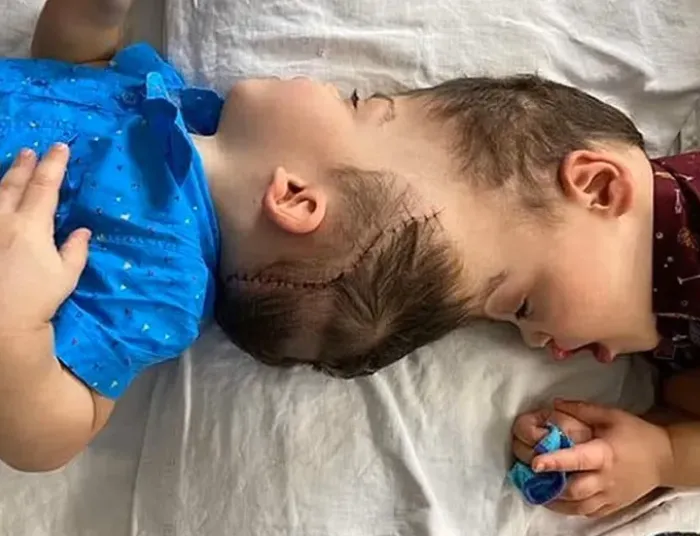
Bernardo and Arthur were born with an extremely rare condition known as craniopagus.
In this condition, twins are conjoined at the skull and often share brain tissue, blood vessels, and critical neurological structures.
Craniopagus twins occur in approximately one in sixty thousand births.
Only about five percent of conjoined twins are joined at the head, making the Lima twins’ condition exceptionally rare and dangerous.
From the beginning, doctors were honest with the family.
Survival alone would be a challenge, and separation would carry enormous risks.
Yet the potential reward was life-changing.
If successful, each child would have the possibility of independent movement, development, and identity.
The First Days of Life
Bernardo and Arthur entered the world at full term, but their arrival was anything but ordinary.
They were immediately transferred to specialized neonatal care, where doctors began assessing the extent of their shared anatomy.
The twins shared parts of their skulls and some underlying brain tissue.
Their circulatory systems were intricately connected, creating a delicate balance that could not be disturbed without careful planning.
For their parents, the early days were filled with fear and disbelief.
Holding two babies whose heads were fused forced them to confront a reality few families ever face.
Doctors explained the risks in clear but heavy terms.
Craniopagus twins often experience developmental delays, neurological impairment, and a high risk of early death.
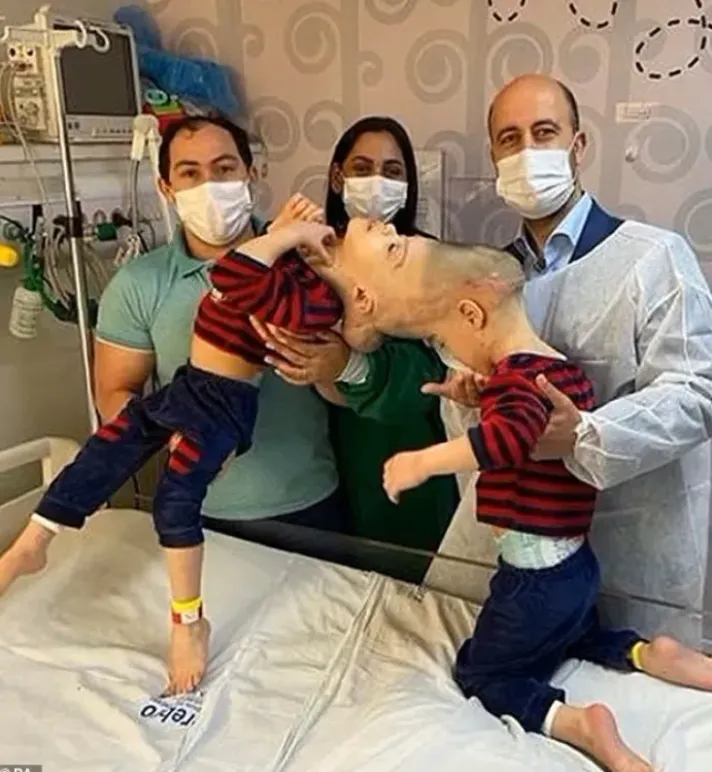
Despite this, Bernardo and Arthur’s parents chose hope.
They committed themselves to giving their sons every possible chance at life.
Love, for them, became an act of endurance.
Every day was lived with the understanding that tomorrow was not guaranteed.
Growing Together, Learning Apart
As the twins grew, so did the complexity of their care.
Simple milestones, like sitting or turning, required careful monitoring.
Yet even as their bodies were physically connected, their personalities began to separate.
Bernardo was calm, observant, and content to watch the world quietly.
Arthur, on the other hand, showed a playful curiosity.
He was expressive, alert, and eager to interact with anything new.
Their parents noticed how they communicated without words.
Small movements, facial expressions, and shared rhythms became their language.
But with every smile came a reminder of limitation.
They could not turn away from each other, explore independently, or experience privacy.
Their bond was undeniable, but so was the longing for individuality.
Their parents dreamed of a day when each child could move freely, learn independently, and live fully.
Preparing for the Impossible
Separation was never a single decision.
It was a process that unfolded over years.
Between birth and their fourth birthday, Bernardo and Arthur underwent multiple preparatory surgeries.
These procedures were designed to slowly reshape their shared skull and prepare their bodies for eventual separation.
Titanium plates were implanted to support bone structure.
Blood flow was carefully rerouted to ensure that each brain could survive independently.
Each surgery carried significant risk.
Infection, blood loss, or neurological damage could occur at any stage.
Their parents watched anxiously as the twins were wheeled into operating rooms again and again.
Every recovery felt like a small victory against overwhelming odds.
Scar tissue built up over time, making future procedures even more complex.
But each step forward brought them closer to the final goal.
A Global Team Comes Together
The full separation required expertise beyond what any single hospital could provide.
An international team was assembled, led by pediatric neurosurgeon Dr. Noor ul Owase Jeelani from London.
Dr. Jeelani had dedicated much of his career to separating conjoined twins.
Even for him, the Lima twins presented extraordinary challenges.
Months before the surgery, the team began detailed planning.
CT scans and MRI images were transformed into three-dimensional digital models of the twins’ skulls and brains.
Using advanced virtual reality technology, surgeons from different countries entered the same digital space.
There, they rehearsed the operation step by step.
Every incision was planned.
Every blood vessel was mapped.
Virtual reality allowed them to practice without risk, identifying potential complications before they ever touched the children.
This technology transformed an almost unimaginable operation into a carefully choreographed plan.
For craniopagus twins, even the smallest error can be fatal.
VR planning gave the team a critical advantage.
The Day of Surgery
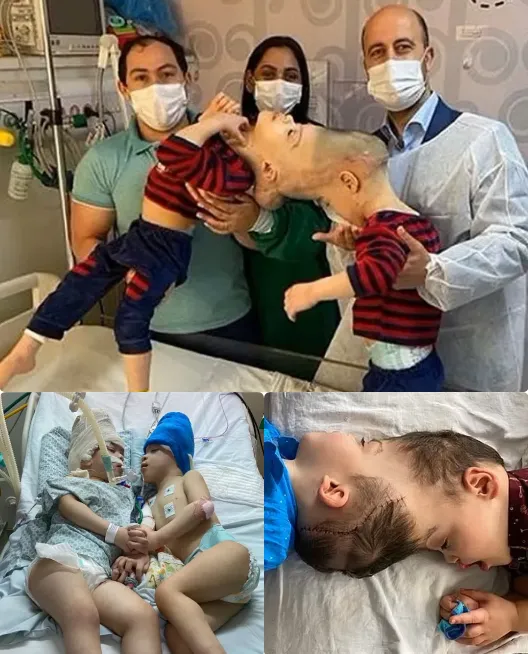
When the day finally arrived, tension filled the operating theater.
Bernardo and Arthur were anesthetized simultaneously, each monitored by dedicated teams.
Surgeons worked in shifts, knowing the operation would stretch far beyond a normal workday.
Neurosurgeons, craniofacial specialists, and vascular experts moved with synchronized precision.
The surgery began with the removal of scar tissue from previous operations.
Shared cranial bones were carefully separated.
The most dangerous phase involved dividing shared brain tissue and blood vessels.
Maintaining oxygen and blood flow to both brains was critical.
Every minute mattered.
Every movement carried irreversible consequences.
Titanium plates and custom 3D-printed implants were used to reconstruct each child’s skull.
Slowly, meticulously, two heads began to take shape where once there had been one.
The operation lasted 27 continuous hours.
Surgeons rested only briefly, fueled by focus and responsibility.
Dr. Jeelani reportedly took just 45 minutes to eat and drink during the entire procedure.
Exhaustion was present, but failure was not an option.
When the final reconstruction was completed, silence filled the room.
The most perilous part of the journey was over.
Waking Into a New Reality
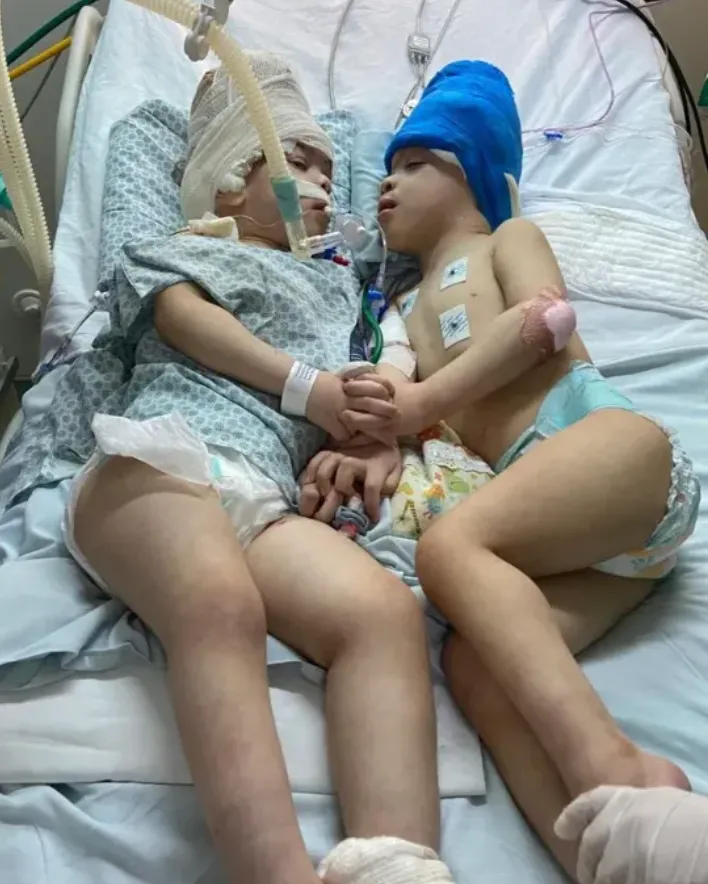
After surgery, Bernardo and Arthur were transferred to a specialized pediatric intensive care unit.
Machines monitored every heartbeat, every breath.
The days that followed were critical.
Their bodies had to adjust to independent circulation and newly shaped skulls.
Blood pressure and heart rates fluctuated as their systems adapted.
Doctors watched closely for signs of swelling or neurological complications.
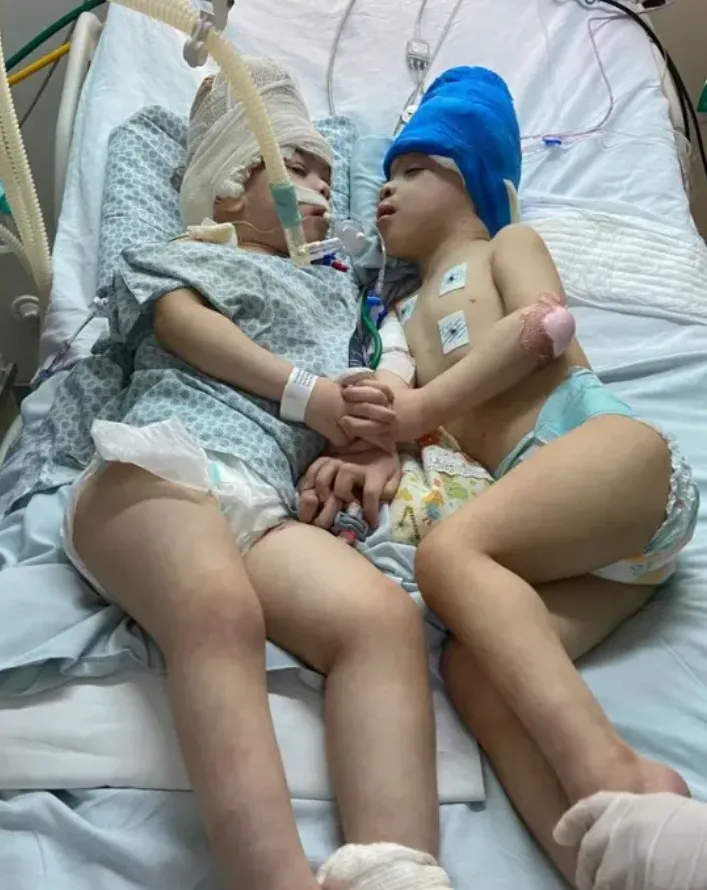
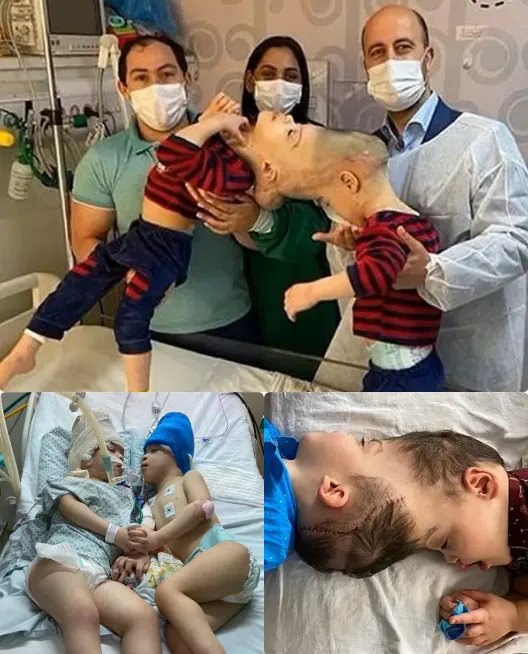
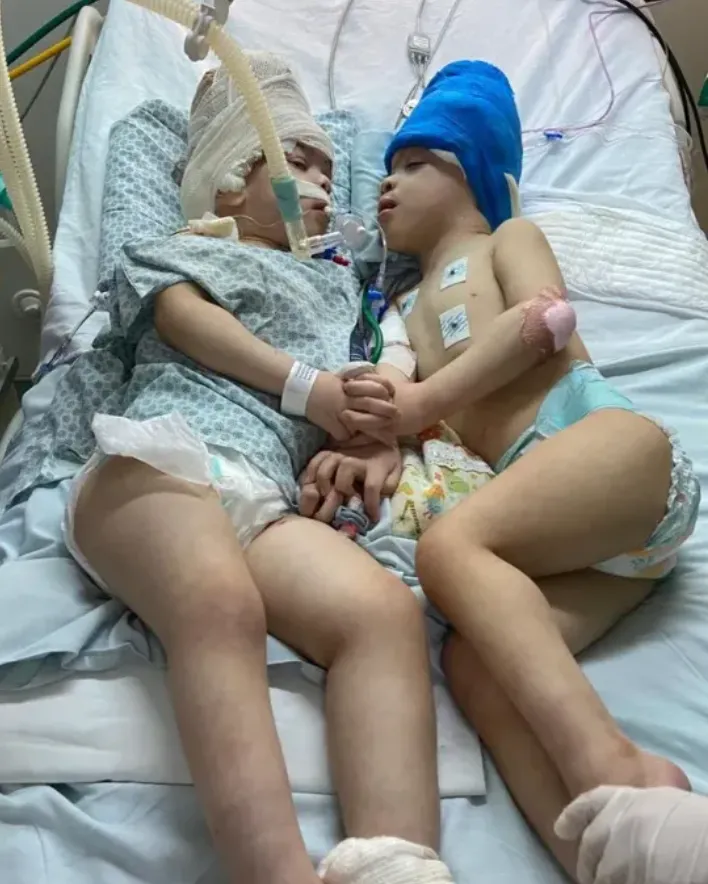
Four days after surgery, the twins were allowed to touch hands.
For the first time in their lives, they faced each other as separate individuals.
The moment overwhelmed everyone in the room.
Tears and laughter mingled freely.
Their parents described the experience as bittersweet.
Joy and fear existed side by side.
The Road to Recovery
Doctors estimate that full rehabilitation will take approximately six months.
Physical therapy will help strengthen muscles that had never worked independently.
Occupational therapy will assist with coordination and daily movements.
Neurological monitoring will continue to ensure healthy development.
Early signs are encouraging.
Both boys are responding well to treatment.
Challenges remain, but the foundation for independent lives has been laid.
For the first time, their future is defined by possibility rather than limitation.
A Rare Medical Milestone
Only about fifty cases of head-conjoined twins are reported worldwide each year.
Fewer than one-third survive beyond the first month of life.
Even fewer undergo successful separation.
Bernardo and Arthur are among the oldest craniopagus twins ever successfully separated.
Their case marks a milestone in pediatric neurosurgery.
It showcases the power of international collaboration, innovation, and preparation.
Virtual reality, 3D printing, and global teamwork changed what was once impossible.
For families facing similar diagnoses, this story offers hope.
A Family Reborn
For the Lima family, the surgery changed everything.
Years of fear gave way to cautious optimism.
Their parents speak openly about the emotional toll.
Sleepless nights, anxiety, and moments of doubt were constant companions.
Seeing their sons separated felt surreal.
But for the first time, they could imagine separate futures for each child.
Organizations like Gemini Untwined played a vital role.
Their support made access to global expertise possible.
Without such efforts, surgeries of this magnitude would remain unreachable for many families.
Their involvement turned compassion into action.
Ethics, Risk, and Responsibility
Separating craniopagus twins raises profound ethical questions.
The risk of surgery must be weighed against quality of life.
In this case, extensive consultations took place.
Bioethicists, pediatric specialists, and the family worked together.
The parents were involved at every stage.
Informed consent was not a formality, but a process of shared understanding.
The decision to proceed was grounded in both medical evidence and parental hope.
It reflected trust between family and doctors.
Looking Forward
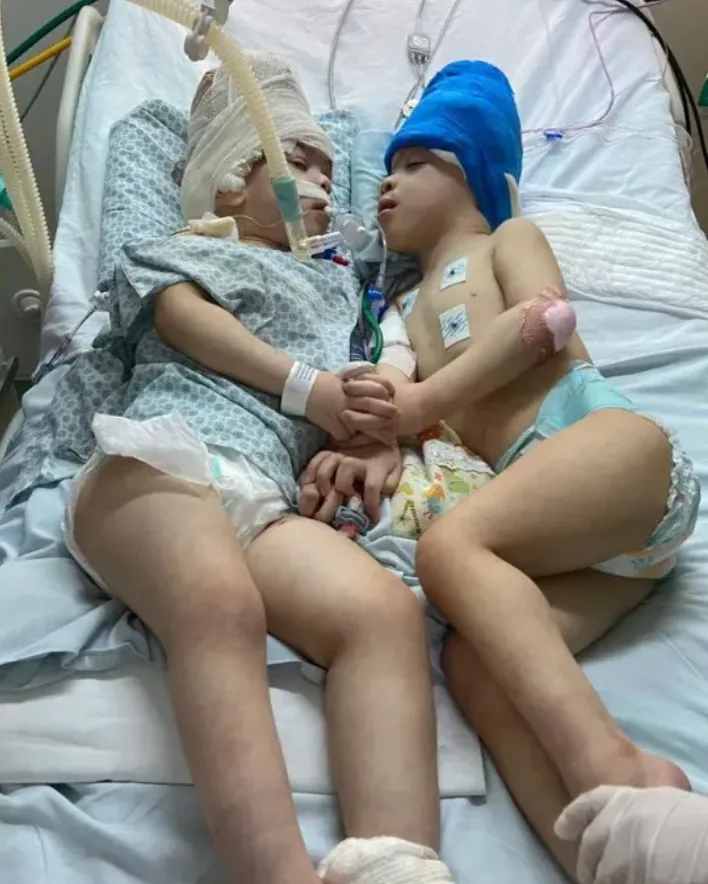
As Bernardo and Arthur continue to heal, the world watches with admiration.
Their story is not just about medicine.
It is about resilience.
It is about courage.
It is about what happens when people refuse to accept limits placed by rarity and fear.
Each day now belongs to two boys learning who they are as individuals.
Their journey will inspire doctors, families, and children for generations.
It proves that even the rarest challenges can be met with innovation and heart.
Bernardo and Arthur Lima entered the world together.
But today, they step into the future apart.
Two minds.
Two bodies.
Two lives finally free to unfold.
September Gold: The Unseen Struggles and Enduring Courage of Children Facing Cancer.4660
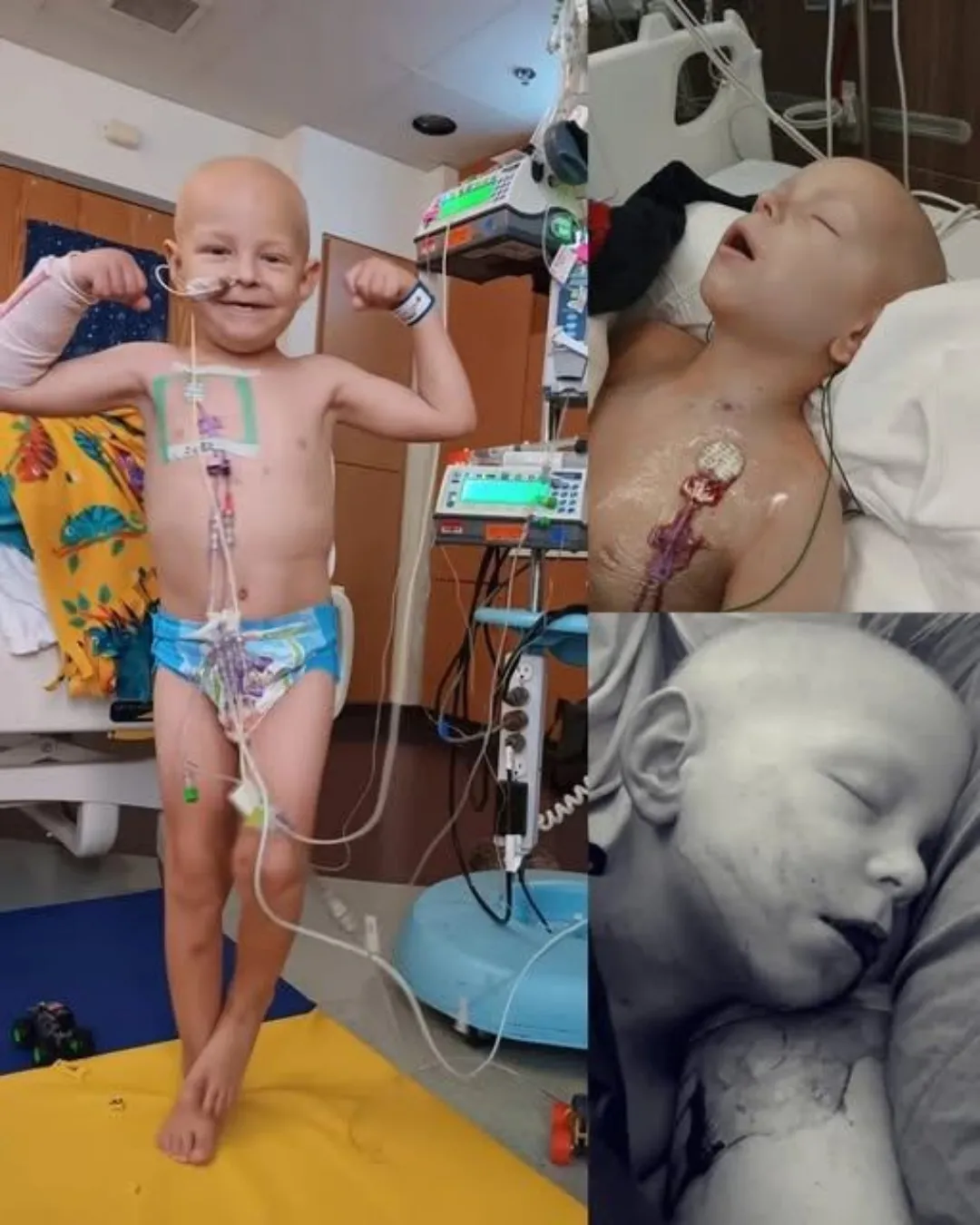
September arrives with a crispness in the air, a shift in seasons, and the promise of new beginnings. For most, it signals the start of school, changing leaves, and autumn routines. But for countless families across the world, September carries a weight that is invisible yet profound—a reminder that life can change in an instant, that childhood can be interrupted, and that courage is measured in ways the world rarely acknowledges.
Childhood cancer is not defined by ribbons, hashtags, or awareness campaigns. It is measured in the silent hours spent in hospital hallways, the antiseptic scent of medical wards replacing the familiar smell of playgrounds and grass. It is marked by chemotherapy schedules supplanting birthdays, treatment appointments overshadowing weekend adventures, and a relentless rhythm that consumes families in ways impossible to capture with a social media post. The world outside continues, unaware of the battles fought behind closed doors.
Parents learn quickly that every breath can carry fear. They memorize every beep of a monitor, every instruction from doctors, every fluctuation in their child’s vitals. The simplest tasks—a walk to the bathroom, a sip of water, a moment of sleep—become mountains to climb. Anxiety becomes constant, sleep becomes fractured, and hope becomes both fragile and essential. Yet, in this crucible, love becomes sharper, more immediate, and more resilient than ever.
Behind each brave smile is pain that the world rarely sees. Children endure needles, nausea, exhaustion, and physical discomfort far beyond their years, often with a stoicism that belies their small bodies. They navigate fear and pain with a grace that inspires awe, finding light in moments of laughter, companionship, or even a favorite toy beside their hospital bed. Their courage is quiet, persistent, and often invisible—yet it is the heartbeat of every family that surrounds them.
Families learn to stand with unwavering resolve. Every procedure, every test, every setback demands resilience, patience, and faith. Siblings adjust to lives rearranged, sharing love and support in ways that only adversity can teach. Parents adapt, becoming experts in medical terminology, caregivers, advocates, and protectors all at once. Their lives become intertwined with the hospital’s rhythms, with hope as both compass and anchor, navigating a path that balances fear and love in equal measure.
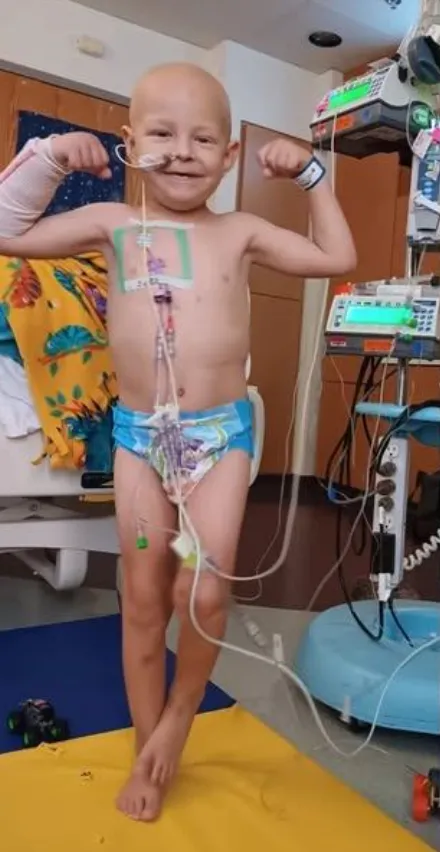
Love shows up in ways both extraordinary and subtle. It appears in the hand held during a procedure, the quiet reassurance whispered at night, the care taken to make a hospital room feel like home. It is present in the messages, calls, and prayers from friends and strangers who stand in solidarity. Love becomes armor and sustenance, a force that sustains families when the world seems distant and indifferent.
September, with its golden awareness campaigns, is a call not just to observe, but to act. To Go Gold is to recognize the full humanity behind statistics—to see the small victories, the moments of resilience, and the unspoken courage. It is a reminder that while ribbons and hashtags can draw attention, they cannot replace action, compassion, or the commitment to stand with those enduring unimaginable trials.
Faith and hope become intertwined. Many families find solace in prayer, meditation, or spiritual guidance, seeking comfort and strength in the belief that healing, protection, and resilience can be nurtured by forces beyond the tangible. For parents, each prayer is both an act of faith and a tether, connecting them to hope even when the physical reality is harsh. For children, this faith often translates into trust, comfort, and the ability to smile amid discomfort—a quiet but profound form of bravery.
Children with cancer remind us of the fragility and the extraordinary strength of life. They teach lessons in courage, endurance, and the capacity to find joy in moments that might otherwise seem impossible. Each step forward, every laugh amidst treatment, and every day lived outside the constraints of illness is a victory celebrated quietly but profoundly. They remind the world that courage is not only heroic; it is daily, relentless, and often invisible.
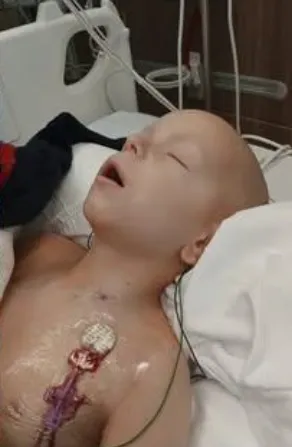
The community that surrounds these families plays an indispensable role. Nurses, doctors, volunteers, friends, neighbors, and advocacy groups all contribute to a network of care that sustains life, eases suffering, and offers emotional sanctuary. Fundraisers, awareness campaigns, and acts of kindness become more than gestures—they become lifelines. Together, the community affirms that families facing childhood cancer are not alone, that their battles are recognized, and that hope can be shared and amplified through collective support.
September is also a reminder of the preciousness of ordinary life. While families navigate the extraordinary—hospital beds, treatment plans, and life-threatening illness—they also cling fiercely to the ordinary moments: a bedtime story, a shared meal, a birthday song, a walk in sunlight. These moments, though simple, are sacred. They are proof that life continues, that joy can coexist with struggle, and that love is a guiding force through even the darkest chapters.
Parents bear burdens invisible to the outside world. Every decision, every emotional reaction, every moment of endurance is compounded by the awareness that their child’s life depends on their strength, vigilance, and advocacy. The weight is immense, yet within it emerges a remarkable resilience. Families discover capacities for endurance, empathy, and courage they never knew they possessed. And through their example, they show the world the depth of parental love, the universality of sacrifice, and the extraordinary strength that ordinary people can summon when faced with profound adversity.
In hospitals across the world, children fight quietly and heroically. They fight against nausea, fatigue, pain, and fear. They fight for the chance to return to playgrounds, classrooms, birthdays, and ordinary moments of childhood. And every day that they win, even in small ways, is a testament to human endurance, medical innovation, and the unshakable support of those who love them. Their lives are reminders that even in the most challenging circumstances, courage and hope persist.
September is a time to honor these invisible battles. It is a time to raise awareness not only through symbols, but through understanding and action. Go Gold is more than a campaign—it is a movement to acknowledge pain, to celebrate courage, and to offer tangible support to children and families navigating one of life’s most difficult journeys. It is a call to see beyond awareness, to engage compassionately, and to participate actively in the lives of those who need it most.
As the month unfolds, may we carry this awareness into tangible acts. Whether it is offering a helping hand, volunteering time, donating resources, or simply speaking words of encouragement, each gesture matters. Each act strengthens the fabric of support that surrounds children with cancer, reinforcing the message that they are not alone. Compassion becomes action, and action becomes hope.
May God protect these children, strengthen their families, and bring healing where it is needed most. For parents, every prayer is a reminder that they are not alone in their journey. For children, each day survived and each smile shared is a testament to enduring courage. And for communities, each effort to understand, to support, and to stand alongside these families embodies the truest meaning of empathy and solidarity.
Childhood cancer is not a choice, nor is it a momentary struggle. It is a lifelong journey for many, defined by the interplay of fear, courage, pain, and love. Yet through this journey, families and children demonstrate an extraordinary capacity for endurance and hope. They remind the world that life, even when threatened, can be lived with dignity, joy, and profound bravery.
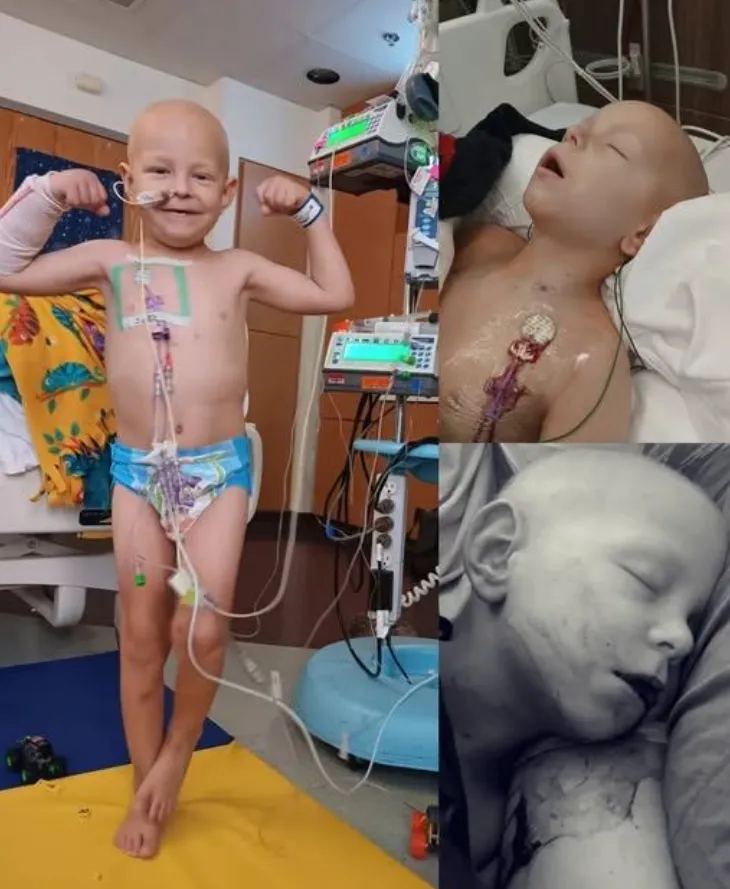
This September, let us Go Gold not only in awareness but in action, in presence, and in heart. Let us honor the children who fight unseen battles, support the families who give everything, and celebrate the victories, both small and large, that mark progress in an uncertain journey. Let every golden ribbon be a symbol of courage, every act of kindness a spark of hope, and every shared story a testament to the enduring power of love.
In the quiet moments, when the hospital corridors empty and machines hum softly, may we remember that behind each door is a child facing a battle that cannot be measured in hashtags or campaigns. Behind every smile is a story of strength. Behind every family is a narrative of resilience. And in every act of support from the world beyond, there is a reminder that compassion, solidarity, and love are forces capable of carrying the heaviest burdens.
September doesn’t just change seasons—it changes perspectives. It reminds us to cherish the ordinary, honor the extraordinary, and see the invisible struggles with clarity and compassion. In going gold, we stand together: for the children, for the families, and for a world that recognizes the courage, love, and resilience that illuminate even the darkest days.