A SON’S LETTER TO HEAVEN: THE WORDS THAT STOPPED FOOTBALL IN ITS TRACKS
In stadiums, grief is loud. It echoes in applause held for a minute too long. It trembles in chants sung through tears. But this week, the football world was brought to silence by something much smaller — a letter written in the unsteady handwriting of a five-year-old boy.
Rute Cardoso, partner of the late Diogo Jota, shared a message that cut deeper than any tribute banner ever could. While the public continues to process the tragic loss of the former Liverpool FC forward, inside their home, grief has taken on a quieter, more intimate form.

“Our little boy said he wanted to write something to you…” Rute wrote.
“He said: ‘Mom, if I write, will Dad be able to read it?’ And I didn’t know how to answer…”
There are questions that no parent is prepared for. Questions that arrive without warning and carry the full weight of absence.
What followed was a letter — short, simple, devastating.
“Dad,
today I played football and I scored a goal.
I put my hand up to the sky like you always do.
Mom said you’re up there.
Do you see me?
I miss you so much.
I will play football really well to make you proud.”

There is no rhetoric in those lines. No polished language. No attempt at poetry. Just the pure, unfiltered voice of a child trying to understand a world that suddenly feels incomplete.
For supporters who watched Jota’s career unfold, the image is almost too painful to picture. A small boy on a local pitch, raising his hand toward the sky in imitation of a celebration once seen under floodlights at Anfield. A gesture that once symbolized triumph now transformed into connection — a signal sent upward, hopeful, searching.

Jota’s journey through professional football was marked by determination and instinct. After making his mark at Wolverhampton Wanderers, he earned his move to Liverpool in 2020 under Jürgen Klopp. He scored 65 goals in 182 appearances, delivering decisive finishes in cup runs and title challenges. He lifted domestic trophies, reached European finals, and carved out a reputation as one of the Premier League’s most intelligent forwards.
But none of that appears in his son’s letter.
There is no mention of medals.
No reference to stadiums.
No statistics.
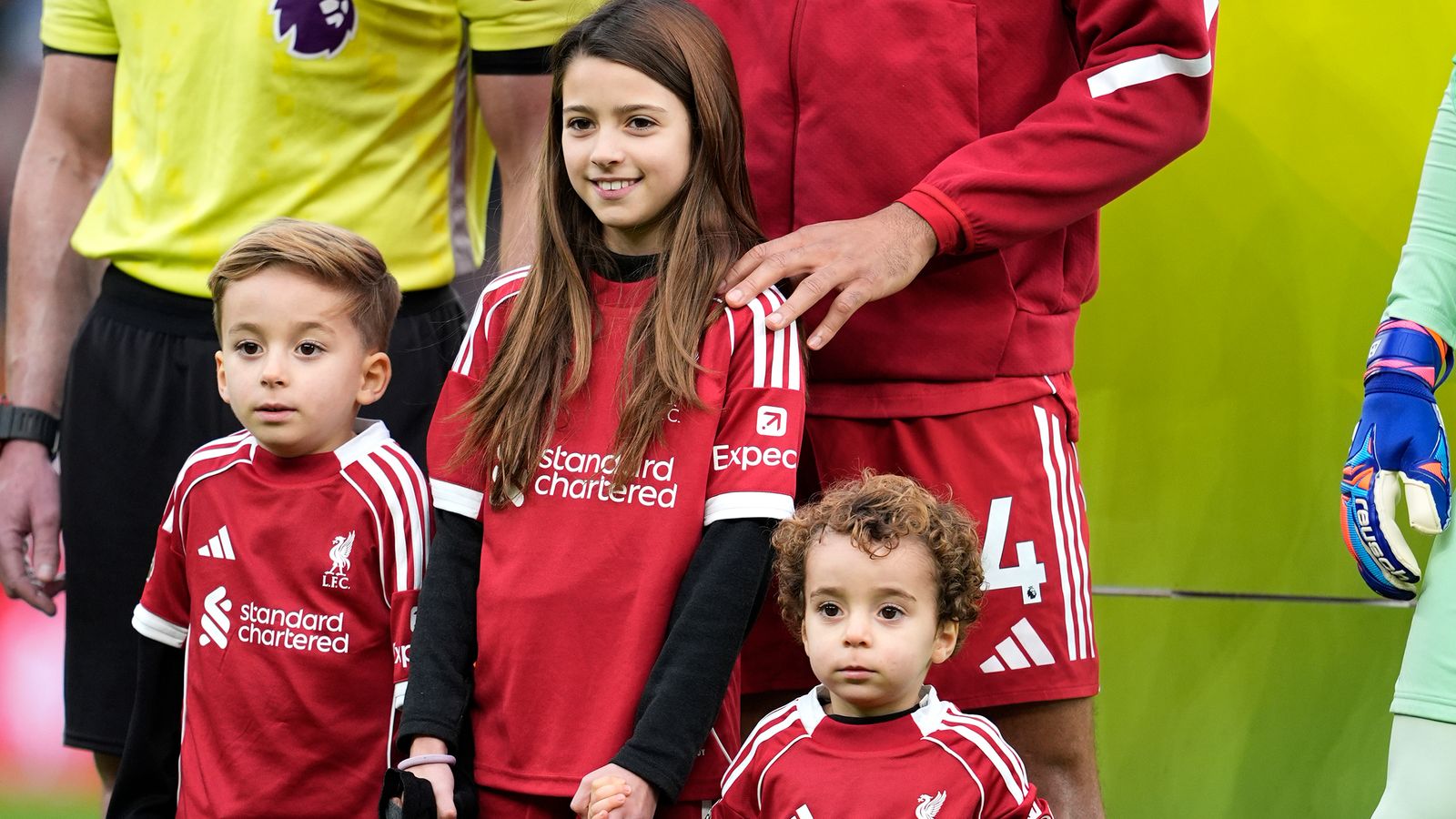
Instead, there is a boy proud of scoring a goal. A boy who wants his father to see him. A boy promising to “play football really well” to make him proud.
That is the legacy that matters now.
Rute also shared another detail that left the football community in tears. Dinis keeps his father’s jersey beside his bed. Every night, before sleeping, he places his small hand on the number printed on the back and whispers:
“Good night, Dad.”
In a sport obsessed with numbers — shirt numbers, goal tallies, transfer fees — this number has taken on a different meaning. It is no longer a squad identifier. It is a bridge between memory and presence.
Football often celebrates the visible — the dramatic volley, the last-minute winner, the roar of 50,000 voices. But grief reveals the invisible: the bedtime rituals, the unanswered questions, the quiet spaces at the dinner table.

When Rute admitted she “didn’t know how to answer” her son’s question, she spoke for countless parents navigating impossible conversations. How do you explain heaven to someone who still believes letters can be delivered there? How do you define permanence to someone who expects a reply?
There is something profoundly human about the innocence in Dinis’s words. He does not fully understand loss — but he understands longing. He understands pride. He understands love.
And love, even in grief, remains active.
Across social media, fans from rival clubs responded not with rivalry, but with compassion. In moments like this, football sheds its tribal edges. The badge on the shirt becomes secondary. What remains is empathy.
Because behind every professional athlete is a family. Behind every goal celebration is a child watching from the stands or from home. Behind every contract negotiation is a bedtime story, a school run, a small voice saying, “Dad, watch me.”
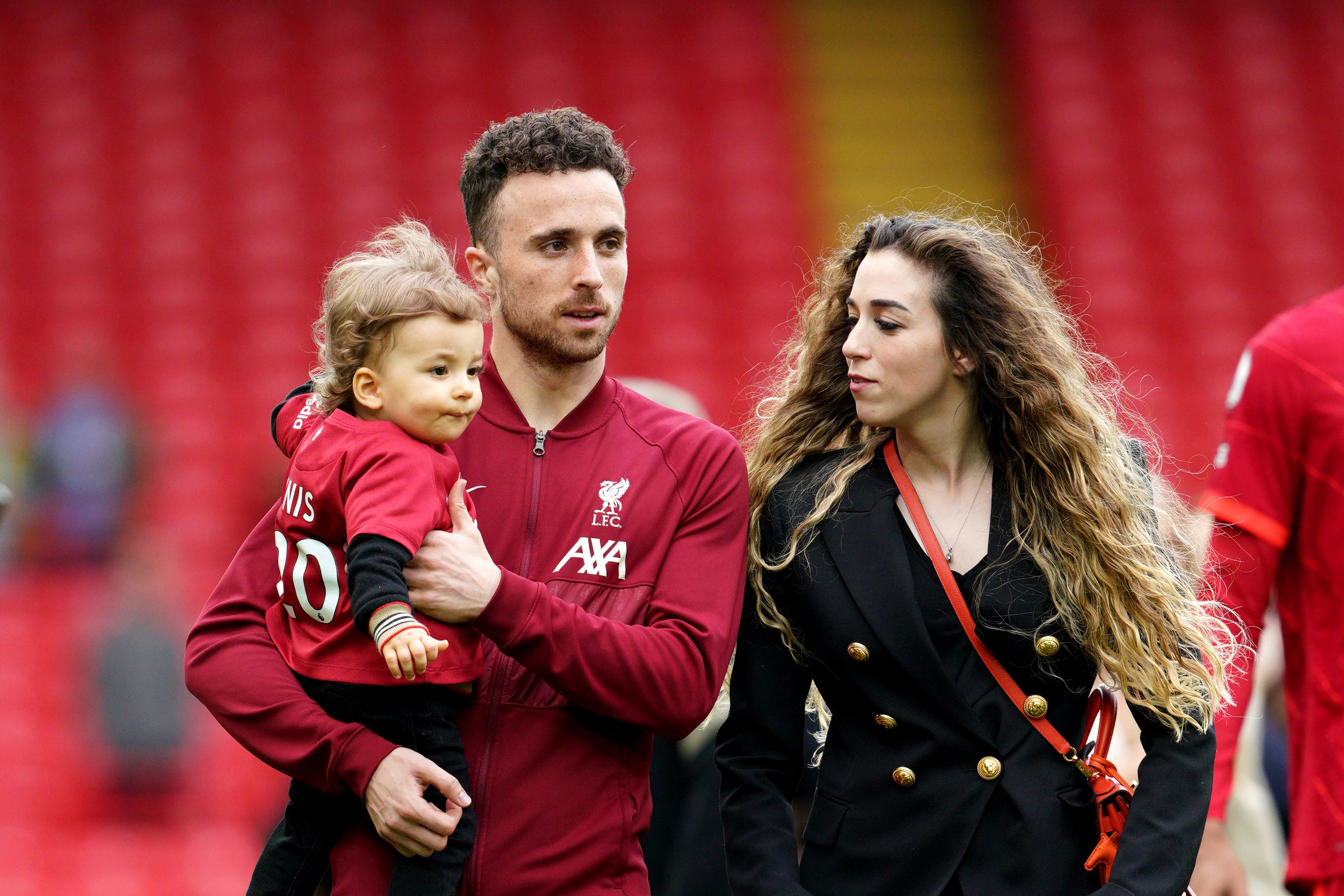
There are medals that will fade with time.
There are trophies that will be replaced by new champions.
There are records that future players will surpass.
But a son’s promise — “I will play football really well to make you proud” — does not expire.
It grows.
Perhaps one day, Dinis will step onto bigger pitches. Perhaps he will raise his hand to the sky again, not in confusion, but in remembrance. Perhaps he will understand more fully what his father meant to millions.
But today, he is simply a five-year-old boy who misses his dad.

And in that truth, football finds its most powerful reminder: that beyond contracts, beyond glory, beyond the spectacle, the game is ultimately about people.
Diogo Jota was a forward admired for his instinct, his intelligence, his composure in front of goal.
To his son, he is something else entirely.
A hero.
A presence.
A father whose love endures beyond sight.
Some symbols change with time.
Some careers are measured in silverware.
But the image of a little boy whispering “Good night, Dad” to a folded jersey will remain long after stadium lights dim.

And in that image, football is no longer just a game.
It is memory.
It is family.
It is love that does not fade.