Brentford’s Keith Andrews Hints at Tactical Advantage After 1-1 Draw at Anfield: “We Knew We Wouldn’t Lose”
Liverpool’s 1-1 draw against Brentford at Anfield was already a frustrating result for the home side—but post-match comments from Brentford head coach Keith Andrews added another layer of intrigue to an already tense evening on Merseyside.
In a match where Liverpool dominated possession but failed to convert pressure into goals, Andrews suggested his side entered the game with a clear understanding of how the Reds would approach the contest—and more importantly, where they could be contained.

“I knew we would not lose the moment I saw Liverpool’s lineup,” Andrews reportedly said after the match. “We prepared for exactly that structure. It gave us confidence.”
While the quote has circulated widely online and sparked heated reactions among Liverpool supporters, the broader context of Andrews’ comments points less to arrogance and more to Brentford’s tactical discipline and anticipation of Liverpool’s attacking patterns under Arne Slot.
A Match Defined by Control Without Cutting Edge
Liverpool started the match strongly, controlling territory and ball possession from the opening minutes. Arne Slot’s side lined up in a familiar attacking shape, with Mohamed Salah leading the right flank and a midfield trio designed to circulate possession quickly and press Brentford into their own half.
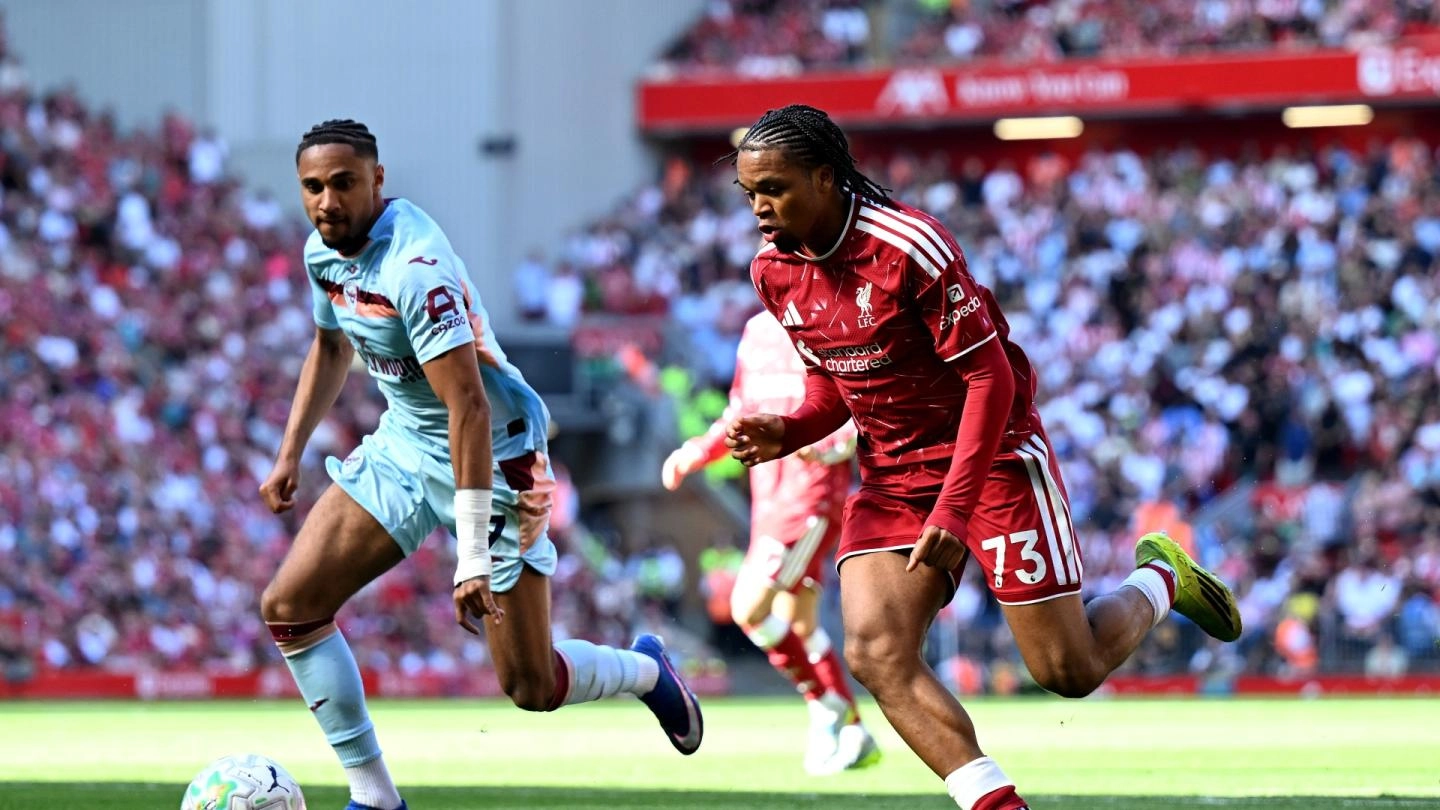
However, despite the territorial dominance, Liverpool repeatedly struggled to break through Brentford’s compact defensive structure. The visitors stayed narrow without the ball, blocked central passing lanes, and forced Liverpool into wide areas where crosses were comfortably dealt with.

Brentford’s game plan was clear: absorb pressure, deny space between the lines, and wait for transitions.
That structure proved effective.
Liverpool registered multiple shots in the first half but lacked precision in the final third. Several attacks broke down due to miscommunication in midfield and rushed decision-making near the edge of the box.
Brentford’s Tactical Discipline Pays Off
Brentford’s equaliser came after Liverpool briefly found a breakthrough through Curtis Jones, finishing off a well-worked move involving Salah. But the lead lasted only a short period.
Brentford responded with composure and directness, exploiting a momentary lapse in Liverpool’s defensive shape. Kevin Schade finished the move clinically, punishing a gap between Liverpool’s centre-backs and midfield screen.

From that moment, Brentford fully settled into their defensive rhythm again, frustrating Liverpool’s attempts to regain control.
Even as the Reds increased pressure late in the game—introducing fresh attacking options and pushing full-backs higher—Brentford held firm.
“We Identified the Spaces Before Kickoff”
The most discussed aspect of Andrews’ post-match remarks was his claim that Liverpool’s vulnerabilities were visible before the game even began.
Analysts reviewing the match pointed out that Brentford appeared well-prepared to target Liverpool’s midfield spacing in transition phases. When Liverpool pushed numbers forward, the gaps left in central midfield became predictable channels for Brentford to exploit.

This is likely what Andrews referred to when he suggested his side had “seen” Liverpool’s issues in advance.
Rather than exposing a single player, Brentford’s approach focused on structural patterns:
- Liverpool’s midfield occasionally becoming stretched when building attacks
- Limited protection in transition when full-backs advanced simultaneously
- Over-reliance on wide progression rather than central penetration
These patterns are not unusual in possession-heavy systems, but Brentford’s execution ensured Liverpool were repeatedly forced into low-percentage attacks.
Who Struggled for Liverpool?
While no single player was universally singled out for a poor performance, Liverpool’s midfield lacked its usual control during key phases of the match.
Alexis Mac Allister, in particular, found himself under pressure in transition moments, where Brentford’s compact shape forced quicker decisions than Liverpool’s midfield could consistently handle. His influence in dictating tempo was limited compared to his usual standards.
Elsewhere, Liverpool’s attacking unit struggled with final execution. Despite generating chances, the finishing lacked sharpness, and Brentford goalkeeper Thomas Strakosha produced several important interventions to preserve the draw.
Frustration at Anfield

By the final whistle, the reaction inside Anfield was one of clear frustration. Liverpool had controlled large portions of the game but walked away with only a point—another example of dropped points in matches they were expected to win.
For Arne Slot, the performance raised familiar questions about efficiency in the final third and defensive balance during attacking phases. While the system created opportunities, the lack of clinical finishing and occasional structural exposure proved costly once again.
Brentford’s Message: Preparation Wins Points
For Brentford, however, the result represented another example of disciplined game planning paying off against elite opposition. Andrews’ post-match comments—controversial as they may sound in isolation—reflect a growing trend in modern Premier League football: marginal gains achieved through detailed tactical preparation.
Whether or not Liverpool’s “weakness” was as obvious as Andrews suggests, Brentford’s ability to exploit key moments ultimately defined the result.
In the end, the 1-1 draw was not just a story of missed chances for Liverpool—but a demonstration of how well-prepared mid-table sides can neutralise even the most dominant teams when structure and discipline are executed perfectly.
And for Liverpool, it was another reminder that control of a match does not always guarantee control of the outcome.