As debate surrounding a potential salary cap intensifies across Major League Baseball, the Los Angeles Dodgers have become the focal point of discussions about competitive balance. Critics argue that the franchise’s enormous payroll has created an uneven playing field, while supporters maintain that the Dodgers’ success is built on far more than financial power. According to players, coaches, and league observers, even a future salary cap might not be enough to slow down one of baseball’s most successful organizations.
The conversation has gained momentum as MLB owners and the Players Association continue negotiating a new collective bargaining agreement that could dramatically reshape the sport. Owners are reportedly pushing for a hard salary cap and salary floor system beginning in 2027, a proposal that would significantly impact high-spending franchises such as the Dodgers, Mets, and Yankees. The suggested cap would force teams currently spending above the limit to reduce payroll while requiring lower-spending clubs to invest more heavily in their rosters.
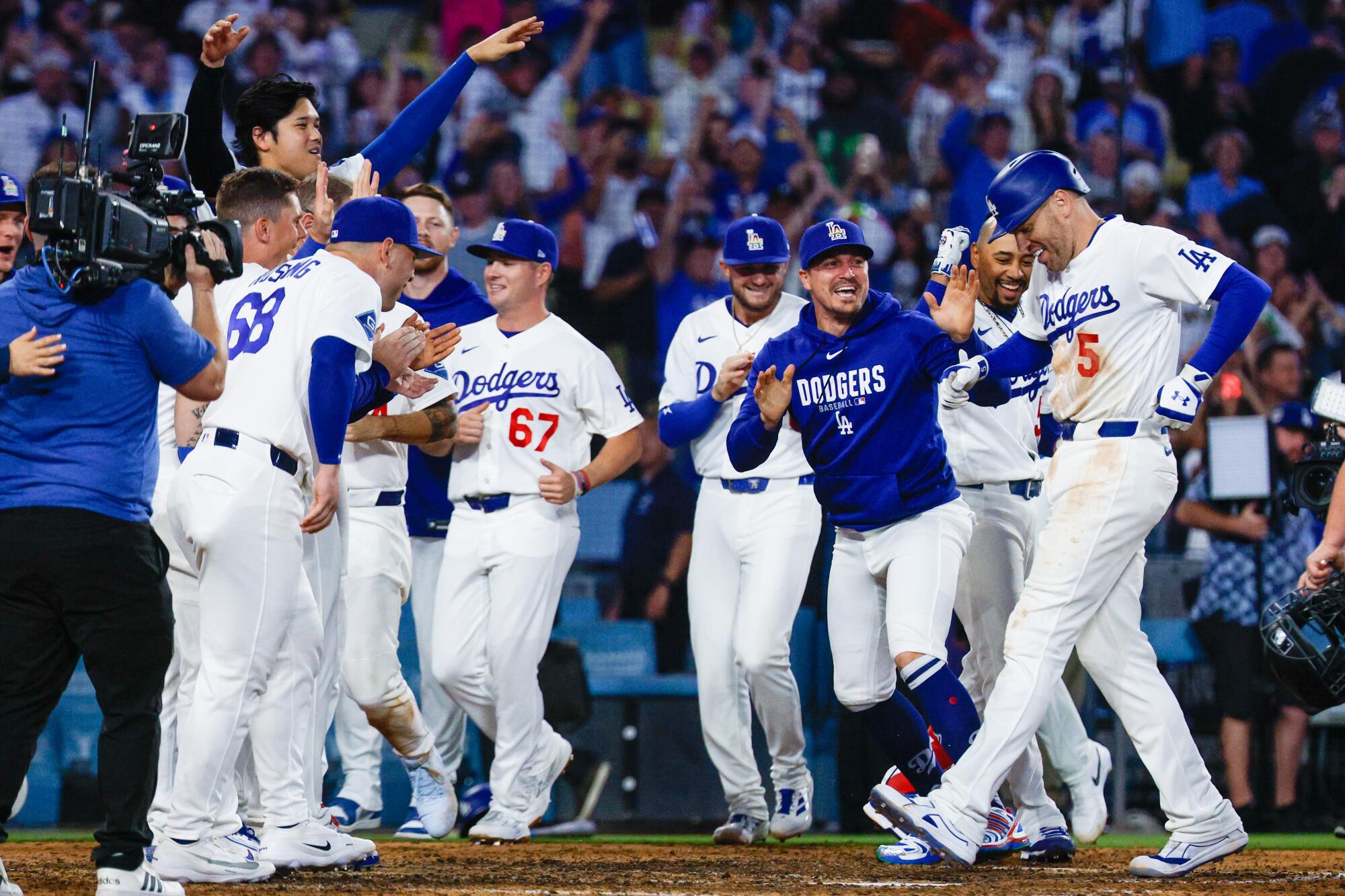

For many fans, the Dodgers represent the strongest argument in favor of a salary cap. The franchise has consistently signed elite free agents, assembled one of the deepest rosters in baseball, and maintained championship-level expectations year after year. Their ability to attract stars such as Shohei Ohtani and other top-tier talent has fueled perceptions that financial advantages are the primary reason behind their dominance.
However, players currently within the organization insist that money tells only part of the story. Several Dodgers pitchers recently pointed to the team’s player-development system, coaching staff, and organizational culture as key reasons for the club’s sustained success. They described an environment where communication is seamless, resources are plentiful, and every department works together to maximize player performance. According to those players, these advantages would remain in place regardless of any payroll restrictions.
Pitchers who joined the Dodgers from other organizations have specifically praised the club’s ability to help players improve. They noted that coaches provide detailed feedback, advanced analytical support, and individualized development plans that are not always available elsewhere. These systems allow the Dodgers to extract value from overlooked players and turn them into productive contributors, reducing the need to rely exclusively on expensive free-agent signings.
Another major advantage lies in the Dodgers’ reputation throughout the league. Players frequently view Los Angeles as one of the most desirable destinations in baseball due to its winning culture, state-of-the-art facilities, and consistent commitment to competing for championships. Even under a salary cap, many stars could still prioritize joining the Dodgers because of the opportunities the organization provides both on and off the field.
The Dodgers have also built one of baseball’s strongest front offices. Under the leadership of executives such as Andrew Friedman, the franchise has become known for identifying talent, developing prospects, and making efficient roster decisions. Many analysts believe this infrastructure is just as important as payroll in explaining the team’s long-term success. Even if spending limits were imposed, the Dodgers would still possess the scouting, analytics, and development systems that have consistently produced winning teams.
Critics of a salary cap also point out that financial restrictions do not automatically create competitive balance. Baseball history is filled with examples of high-payroll teams falling short of expectations and lower-budget teams exceeding them. Several commentators have argued that a salary cap could reduce player earnings without necessarily improving competition across the league.
The ongoing labor negotiations have therefore become about much more than the Dodgers alone. Owners believe a cap could help control costs and narrow payroll disparities, while players remain strongly opposed to restrictions on salaries. The disagreement has raised concerns about a potential labor dispute when the current collective bargaining agreement expires later this year.
For now, the Dodgers remain baseball’s standard of excellence. Their financial strength undoubtedly contributes to their ability to acquire elite talent, but many within the organization argue that their true competitive advantage comes from something harder to regulate. Coaching, player development, organizational stability, and a culture of winning have all become defining characteristics of the franchise.
If MLB eventually adopts a salary cap, the Dodgers may be forced to spend differently. Yet many around the game believe the organization’s greatest strengths would remain untouched. As a result, the franchise could continue contending for championships long after any new financial rules take effect, proving that the foundation of its success extends far beyond the size of its payroll.