White-breasted Nuthatch

(click image for larger size)
Photos by Local Color Photography
White-breasted Nuthatch
Sitta carolinensis
Size and Shape: The largest nuthatch, this is still a small bird with a large head and almost no neck. The tail is very short, and the long, narrow bill is straight or slightly upturned.
Both Sexes
Length: 5.1-5.5 in (13-14 cm)
Weight: 0.6-1.1 oz (18-30 g)
Wingspan: 7.9-10.6 in (20-27 cm)
Color Pattern: White-breasted Nuthatches are gray-blue on the back, with a frosty white face and underparts. The black or gray cap and neck frame the face and make it look like this bird is wearing a hood. The lower belly and under the tail are often chestnut.
‘Freezing’ is a well recognised defence mechanism adopted by some animals to avoid detection by or not to attract the attention of a predator. Among birds, woodpeckers and nuthatches have been observed to use this defence mechanism.
I saw this behaviour twice this year among two different species of nuthatches.
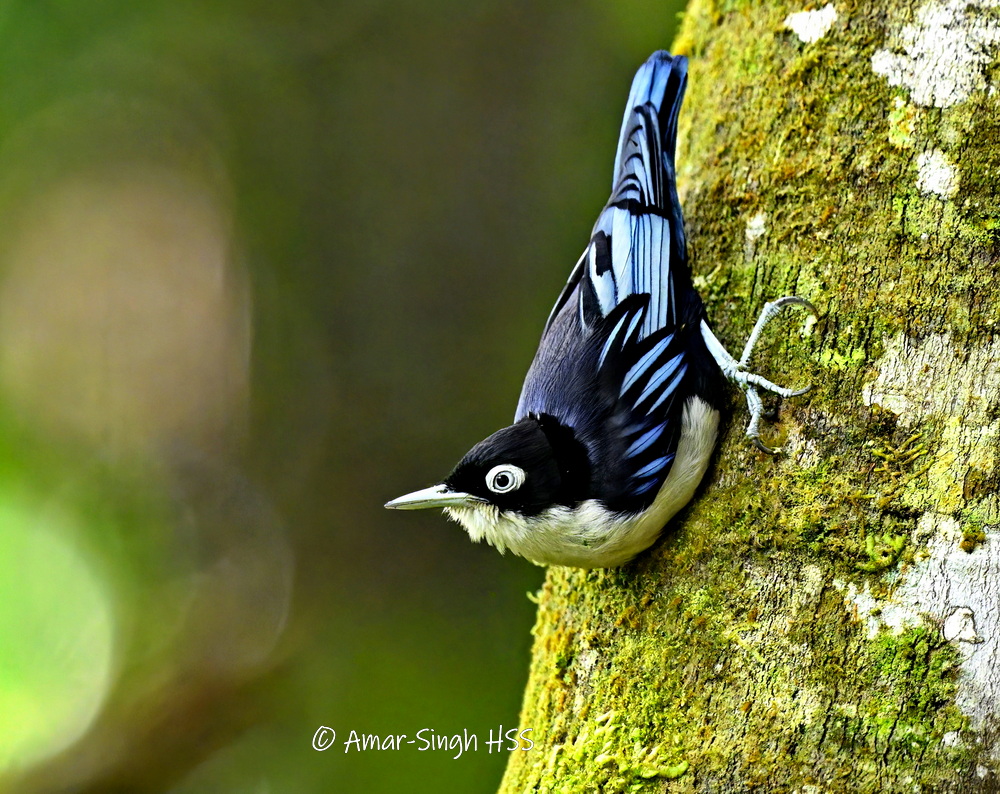
Blue Nuthatch Sitta azurea
I was at Cameron Highlands, Pahang, Malaysia on 27 March 2023 watching a pair of Blue Nuthatches high in the canopy. They were, as usual, foraging very fast, moving up and down the trunk and branches of trees. Suddenly another bird gave a warning call; I failed to remember which bird this was but I saw a Grey-faced Buzzard Butastur indicus pass by. The Blue Nuthatches immediately dropped down and froze for more than 30 seconds – this is a lifetime for a birdwatcher with a camera (see Plate 1). They also allowed me to approach closely. Once they perceived the threat had passed, they continued with their foraging activities.
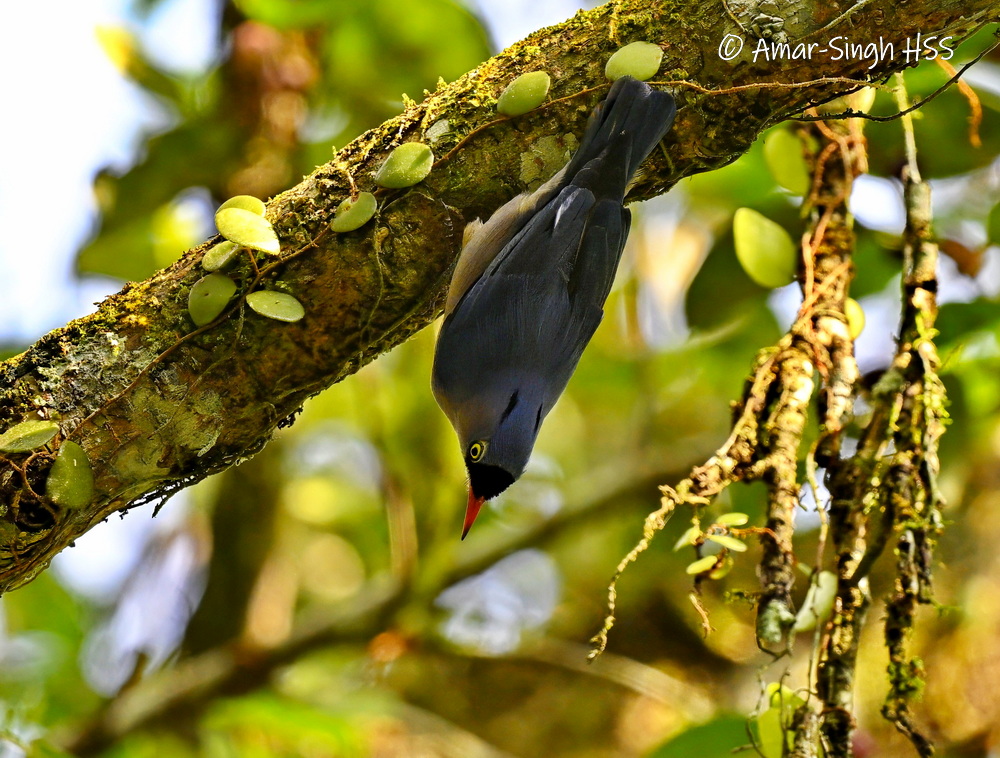
Velvet-fronted Nuthatch Sitta frontalis
On 8 September 2023 I was watching birds at a fruiting Ficus when a pair of Velvet-fronted Nuthatches came to that tree to forage. I attempted to keep track of them as they moved rapidly about. Suddenly another bird gave a warning call; I failed to identify which bird this was and was not aware of the threat. A few birds flew away, most continued feeding on the Ficus fruit but the Velvet-fronted Nuthatch froze immediately when the warning call was given (I was only watching one of the pair). For the next 55 seconds it remained immobile (see Plate 2). I had time to call two other birdwatching colleagues over to get some good images. Once it perceived the threat had passed, it remained at the same location and preened for the next 45 seconds before resuming foraging activities.
Nuthatches are well known to adopt a ‘frozen stance’ on a tree if they suspect imminent danger (see Nicholls 2019).
Wells (2007) describes an episode in a Blue Nuthatch in response to a Black Eagle passing overhead.