In a move that could shake the very foundation of the electric vehicle (EV) world, Hyundai has just unveiled its breakthrough in solid-state battery technology. If the company delivers on its promise, this innovation could render traditional lithium-ion batteries — and competitors — obsolete.
Solid-State Batteries: The “Holy Grail” of EV Tech

For years, automakers and battery developers have pursued the elusive solid-state battery — a next-generation energy source that promises:
-
2x the range
-
Faster charging (as little as 10 minutes)
-
Zero risk of fire or thermal runaway
-
Longer lifespan (up to 1,000,000 km)
What Hyundai Announced — And Why It’s So Big
In a surprise press event at its R&D center in South Korea, Hyundai Motor Group revealed a working prototype of its solid-state battery pack. The company claims:
-
500+ miles (800+ km) range on a single charge
-
80% charge in under 12 minutes
-
Twice the energy density of current lithium-ion cells
-
Operating safely even in extreme temperatures
Hyundai plans to start pilot production by 2026, with full-scale mass production targeted by 2027 — ahead of Toyota and Volkswagen, both of whom are racing toward similar goals.
A Threat to Tesla, Toyota, and Legacy Automakers
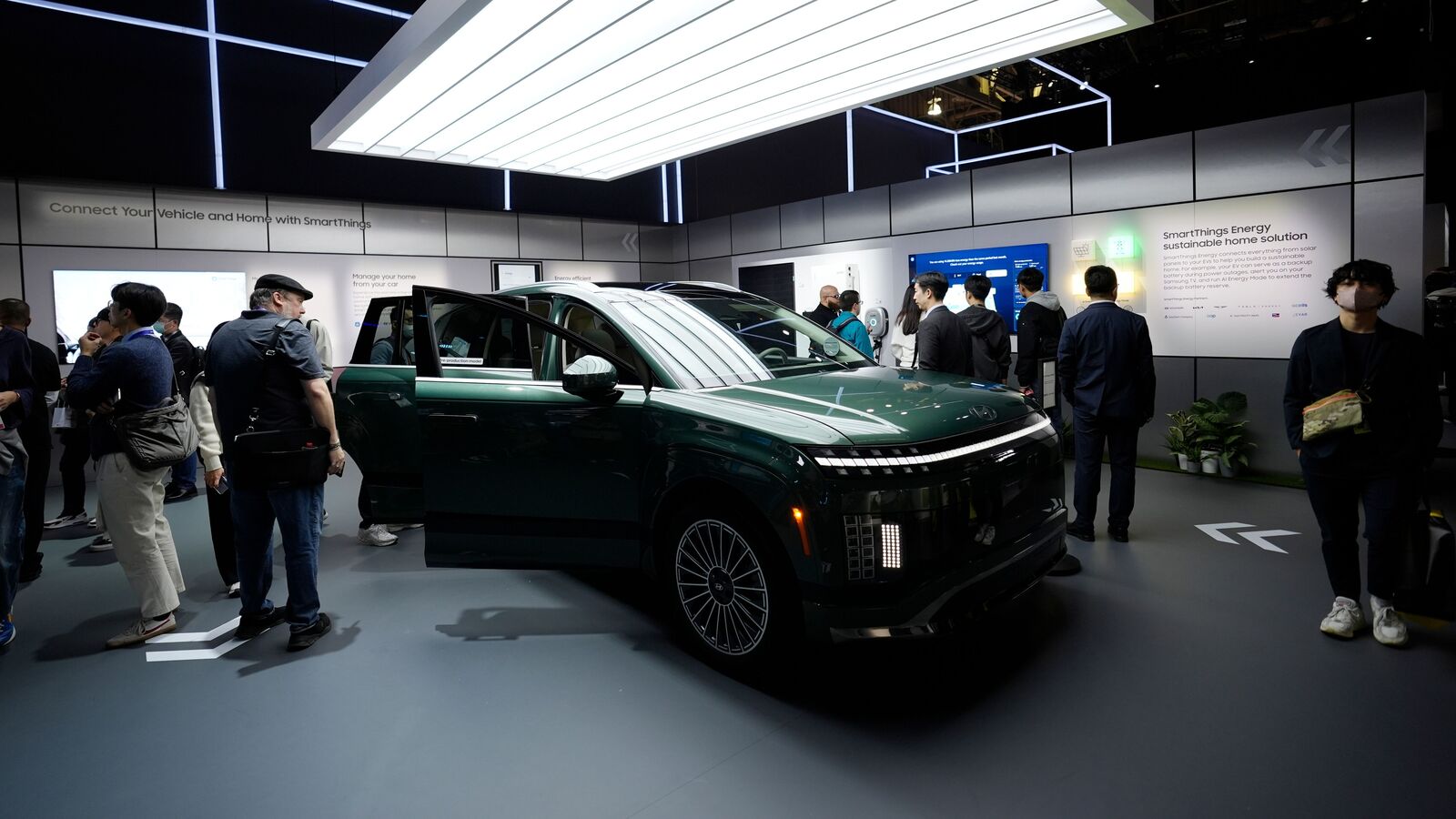
If Hyundai’s timeline holds, this move could upend the entire EV landscape:
-
Tesla: Currently reliant on lithium-ion and 4680 cell innovation — now at risk of falling behind in energy density and safety.
-
Toyota: Previously considered a leader in solid-state R&D, but now potentially outpaced by Hyundai’s real-world execution.
-
Chinese giants (BYD, NIO): Focused heavily on LFP and sodium-ion tech — both cheaper, but less advanced.
With solid-state, Hyundai could deliver EVs that are cheaper, lighter, safer, and longer-lasting — essentially ticking every box for consumers.
Which Hyundai Models Will Get Solid-State Batteries First?
Hyundai confirmed that its luxury Genesis line and high-performance IONIQ models will be the first to feature solid-state battery packs.
-
IONIQ 7: Could launch with solid-state as early as 2027
-
Genesis GV90: Flagship electric SUV that may debut the tech
-
Kia EV models: As part of Hyundai’s umbrella, Kia will also gain access
This positions Hyundai not just as a mainstream EV leader, but also a premium innovator in battery tech.
Why This Could Crush the Auto Industry As We Know It
Here’s what makes this such a disruptive moment:
-
🔋 Obsolete Battery Tech: If solid-state becomes viable, lithium-ion becomes second-tier overnight.
-
⚡ New Charging Standards: The ability to charge in 10 minutes could kill the gas station model.
-
💰 Cost Revolution: Solid-state could cut battery costs by 30–50% in the long run, slashing EV prices.
-
🌍 Global Pressure: Automakers without solid-state progress may lose competitiveness — or customers.
Investors and Analysts Are Already Reacting
Following the announcement, Hyundai’s stock surged in Asian markets. Analysts at Bloomberg and Goldman Sachs called the move “potentially industry-defining,” noting that Hyundai now has a first-mover advantage in a technology space that could define the next two decades of mobility.