Aircraft examined:
-
B-52H Stratofortress (USA)
-
Xian H-6K (China)
-
Tu-160 Blackjack (Russia)
-
B-2 Spirit (USA)
1. B-52H Stratofortress (USA): The Relentless Legacy of Strategic Deterrence

🔧 Key Specs:
-
First Flight: 1952 (B-52H: 1961)
-
Operational Range: ~14,000 km (without refueling)
-
Payload Capacity: ~32,000 kg
-
Max Speed: ~1,000 km/h
-
Engines: 8 × Pratt & Whitney TF33-P-3/103 turbofans
🎯 Strategic Role and Analysis:
The B-52H is the longest-serving military aircraft in history still in frontline service. It exemplifies the philosophy that versatility, reliability, and continuous modernization matter more than stealth or speed. It was designed during the Cold War but has been constantly upgraded with modern avionics, communications, and weapons systems.
Strengths:
-
Carries a vast array of nuclear and conventional weapons, including AGM-86B cruise missiles, JDAMs, and hypersonic missiles (in testing).
-
Long-range standoff capability allows the B-52H to strike targets without entering enemy airspace.
-
Proven in multiple conflicts, from Vietnam to Iraq, showcasing multi-theater endurance and loiter time.
Limitations:
-
Non-stealthy, highly visible to modern air defense systems.
-
Vulnerable in high-threat environments without fighter escort or electronic warfare support.
Despite its age, it is expected to remain in service until at least 2050, with the upcoming Rolls-Royce F130 re-engining program enhancing its reliability and fuel efficiency.
2. Xian H-6K (China): Platform for Regional Power Projection
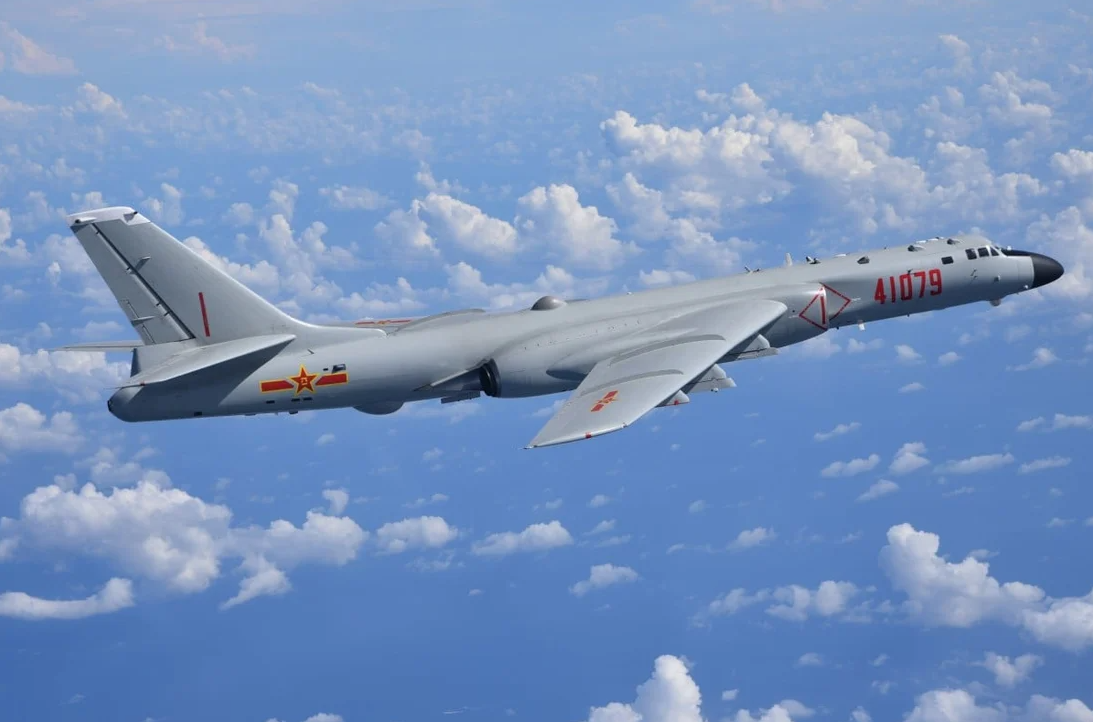
🔧 Key Specs:
-
First Flight (H-6K): 2007 (based on the Soviet Tu-16)
-
Operational Range: ~8,000–9,000 km
-
Payload Capacity: ~12,000–15,000 kg
-
Max Speed: ~1,000 km/h
-
Engines: 2 × D-30KP-2 turbofans (Russian origin)
🎯 Strategic Role and Analysis:
The H-6K represents China’s attempt to develop long-range strike capability, serving as a key part of its Anti-Access/Area Denial (A2/AD) strategy in the Western Pacific. Although based on an old Soviet airframe, it has undergone significant modernization.
Strengths:
-
Equipped with CJ-10A cruise missiles, giving it extended reach against U.S. bases in Guam, Japan, or Taiwan.
-
Modernized glass cockpit, digital avionics, and AESA radar.
-
Capable of launching standoff strikes without entering heavily defended airspace.
Limitations:
-
Limited payload and range compared to its American and Russian counterparts.
-
Lacks stealth features, making it vulnerable against modern SAM and fighter systems.
-
Based on a 1950s design, it’s technologically inferior to other strategic bombers in terms of survivability and flexibility.
The H-6K is a regional deterrent, not a global strategic bomber. However, it forms the backbone of China’s emerging long-range strike capability, soon to be complemented by the stealthy H-20.
3. Tupolev Tu-160 “Blackjack” (Russia): Supersonic Power Overmatch

🔧 Key Specs:
-
First Flight: 1981
-
Operational Range: ~12,300 km
-
Payload Capacity: ~45,000 kg
-
Max Speed: ~2,200 km/h (Mach 2+)
-
Engines: 4 × Kuznetsov NK-32 turbofans
🎯 Strategic Role and Analysis:
The Tu-160, nicknamed “White Swan” by Russian pilots, is the world’s largest and fastest strategic bomber. Unlike stealth-focused aircraft, the Tu-160 is built for speed, payload, and raw power, using high-altitude supersonic flight and long-range missiles to avoid enemy air defenses.
Strengths:
-
Can deliver 12 Kh-101/102 cruise missiles with nuclear or conventional warheads.
-
Variable-sweep wings give it excellent low-speed takeoff and high-speed dash capabilities.
-
Highly effective for long-range standoff strikes in uncontested airspace.
Limitations:
-
Lacks stealth or advanced countermeasures, making it unsuitable for penetrating modern IADS (Integrated Air Defense Systems).
-
Large radar cross-section; detectable at long ranges.
-
Limited production numbers (about 16 in active service); high operational cost.
Russia is actively modernizing the platform to the Tu-160M standard, incorporating new avionics, engines, and weapons to keep it relevant into the 2040s.
4. B-2 Spirit (USA): The Ghost That Knocks Unseen
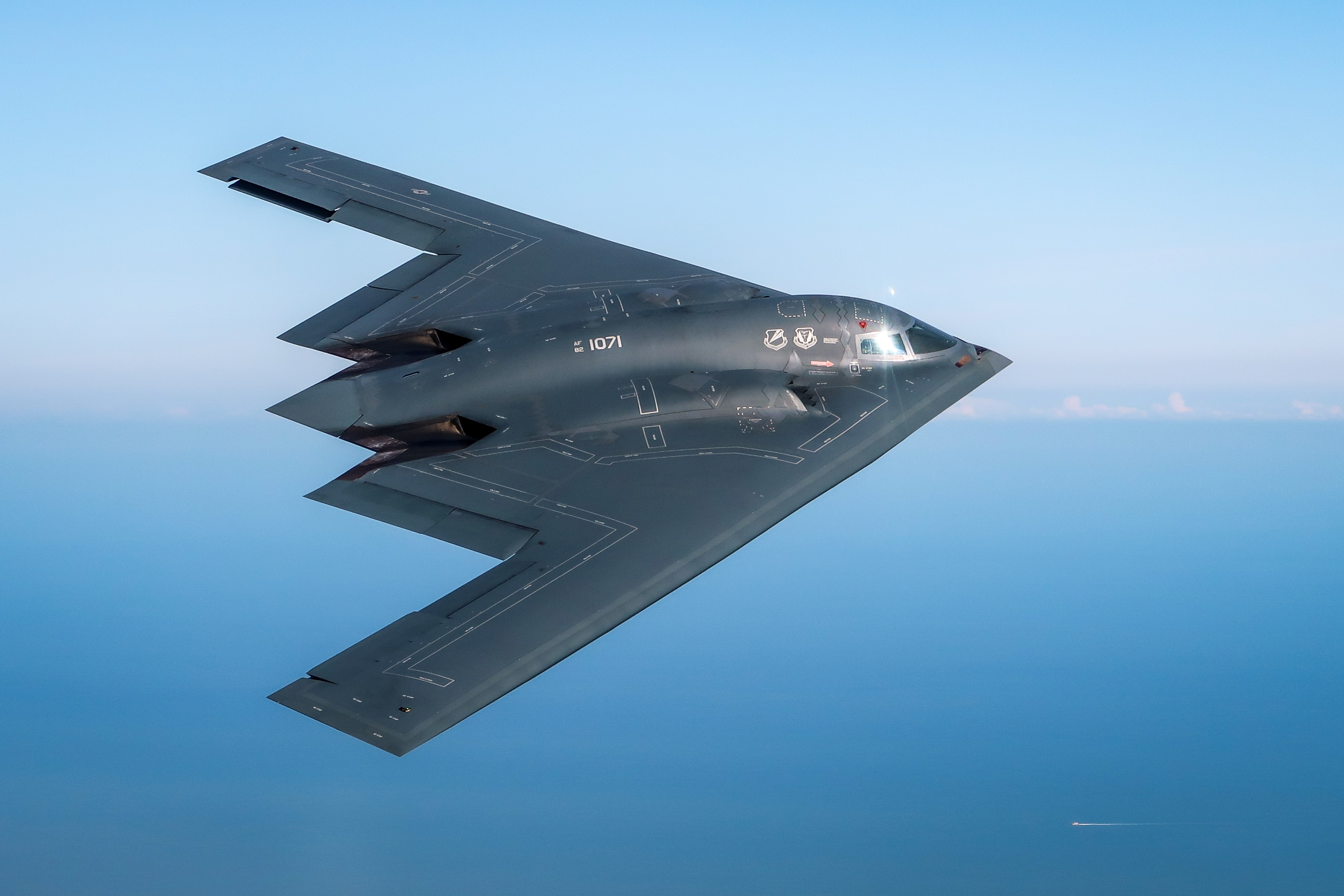
🔧 Key Specs:
-
First Flight: 1989 | Operational Entry: 1997
-
Operational Range: ~11,000 km (without refueling)
-
Payload Capacity: ~18,000–20,000 kg
-
Max Speed: ~1,010 km/h
-
Stealth Design: Flying wing, radar-absorbent material
🎯 Strategic Role and Analysis:
The B-2 Spirit is the pinnacle of stealth bomber design, allowing it to penetrate the most heavily defended airspace in the world and strike critical targets with precision and surprise.
Strengths:
-
Near-zero radar cross-section, optimized for deep strikes in high-threat environments.
-
Capable of delivering both conventional and nuclear payloads, including B61/B83 bombs, JDAMs, and MOAB-class munitions.
-
Proven in combat in Kosovo, Iraq, Libya, and against terrorist targets in Afghanistan.
Limitations:
-
Extremely expensive (~$2 billion per unit).
-
Requires special climate-controlled hangars and meticulous maintenance.
-
Only 20 units ever built, making it strategically valuable but numerically limited.
The B-2 is the cornerstone of America’s stealth triad, and its successor, the B-21 Raider, is expected to augment and eventually replace it by the 2030s.
Comparative Summary Table
| Feature | B-52H (USA) | H-6K (China) | Tu-160 (Russia) | B-2 Spirit (USA) |
|---|---|---|---|---|
| Introduced | 1961 | 2007 (upgrade) | 1987 | 1997 |
| Stealth | ❌ No | ❌ No | ❌ No | ✅ Yes |
| Max Speed | ~1,000 km/h | ~1,000 km/h | ~2,200 km/h (Mach 2+) | ~1,010 km/h |
| Combat Range | ~14,000 km | ~9,000 km | ~12,300 km | ~11,000 km |
| Payload | ~32 tons | ~12–15 tons | ~45 tons | ~20 tons |
| Weapons | Cruise missiles, nukes | CJ-10A, ASCMs | Kh-101/102, nukes | JDAMs, nukes, smart bombs |
| Strategic Value | Global deterrent | Regional deterrent | Global standoff strike | Deep penetration stealth |
| Cost | Low | Moderate | High | Extremely High |
-
B-2 Spirit: Most advanced and survivable in contested environments. Dominates in stealth and precision strike roles. Arguably the most strategically valuable bomber for high-end warfare.
-
Tu-160: Undisputed king in speed and payload. Ideal for massive standoff strikes and nuclear delivery. Less effective in stealth or contested airspace.
-
B-52H: Workhorse of strategic aviation, unmatched in endurance and mission adaptability. A true symbol of longevity and flexible deterrence.
-
H-6K: Best suited for regional power projection, lacking in global reach or survivability against peer adversaries.
Each bomber reflects its nation’s military-industrial priorities:
-
The U.S. invests in technology and precision.
-
Russia emphasizes power and overmatch.
-
China builds towards regional dominance with long-range capabilities.