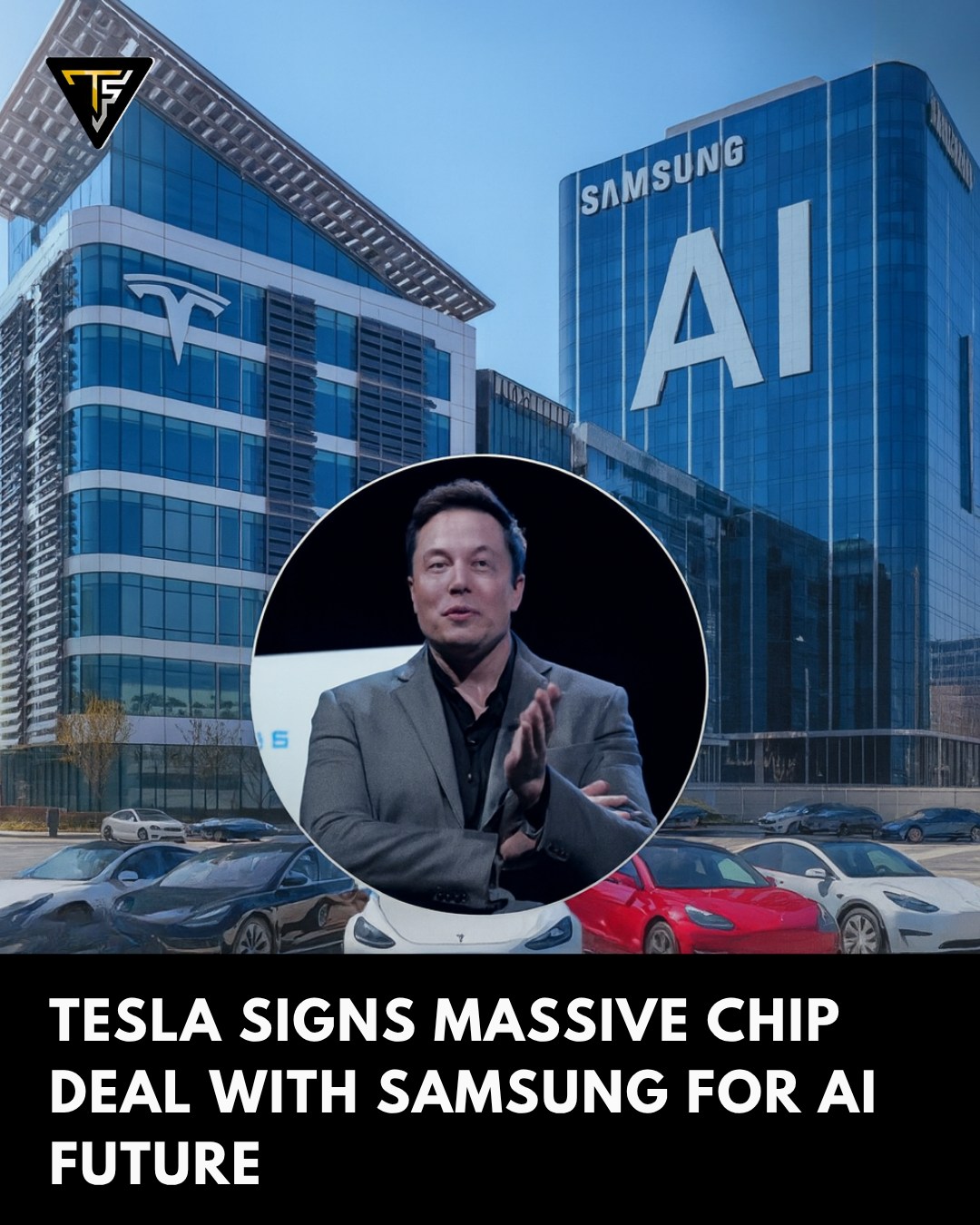
In a landmark agreement set to redefine the AI and mobility industries, Tesla has finalized a $16.5 billion deal with Samsung to produce its next-generation AI6 processors — the custom silicon designed to serve as the “brains” behind Tesla’s most ambitious projects. This deal secures Tesla’s chip supply through 2033, giving the company a critical technological edge in the global race toward fully autonomous systems.
The AI6 processors will form the core of Tesla’s self-driving vehicle platform, the Optimus humanoid robot, and a new wave of AI-driven data centers. Designed for unmatched performance and energy efficiency, these chips will process massive amounts of real-time data — from navigating complex road conditions to powering robotics capable of performing human-like tasks with precision.
Made in America, Built for the Future
Manufacturing will take place at Samsung’s state-of-the-art foundry in Taylor, Texas, reinforcing the U.S.’s position as a rising heavyweight in the semiconductor industry. The facility, one of Samsung’s most advanced, will be dedicated to producing mission-critical Tesla hardware. Elon Musk confirmed that Tesla’s engineering teams will work side-by-side with Samsung to streamline fabrication, testing, and deployment, ensuring a high-speed production pipeline from silicon design to real-world implementation.
A Win-Win for Two Industry Giants
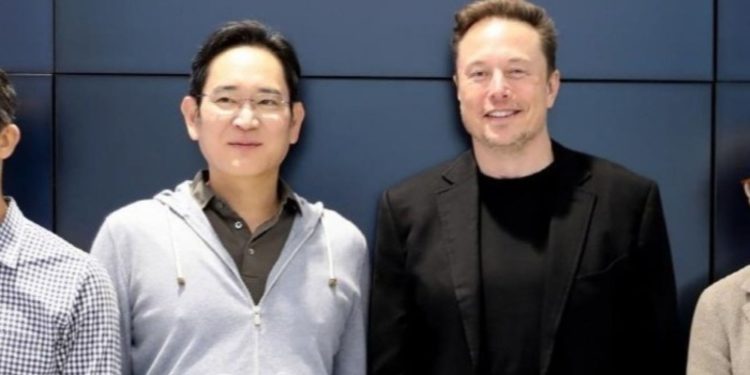
For Samsung, the partnership represents a bold leap into high-performance AI hardware tailored for mobility, robotics, and energy systems — markets poised for explosive growth over the next decade. For Tesla, it ensures full vertical integration of AI chip design and manufacturing, giving the company total control over the computational backbone that will drive its vehicles, robots, and autonomous networks.
The Bigger Picture
This collaboration is not merely a supply contract; it’s a strategic alignment that underpins Tesla’s AI-first vision. In Musk’s roadmap, AI is not just a feature — it is the central operating system of the company’s future. From robotaxis that navigate without human input, to energy grids that optimize themselves, to humanoid robots performing industrial and domestic work, the AI6 chips will be the neural core making it all possible.
Industry analysts see the Tesla–Samsung partnership as a direct challenge to AI hardware heavyweights like NVIDIA and AMD, and a signal that Tesla is betting its future on custom, proprietary silicon. The deal also reflects a broader shift in the tech world: the fusion of transportation, robotics, and artificial intelligence into a single, interconnected ecosystem.
“This is more than a chip deal,” one industry insider noted. “It’s about building the thinking power for an AI-powered civilization.”
If Tesla and Samsung execute on their vision, the AI6 processors coming off the Texas production lines in the next few years won’t just be running cars or robots — they’ll be shaping the next era of human innovation.