Fighter aircraft are the backbone of modern air forces, serving as both symbols of national technological prowess and critical instruments for air superiority. Among the most recognizable fighter jets globally are the United States’ F-15 Eagle, Russia’s Su-27 Flanker, and China’s J-10 Vigorous Dragon.
Each of these aircraft plays a unique role in its country’s military strategy, reflecting its design philosophy, technological priorities, and operational doctrine.
F-15 Eagle (USA)
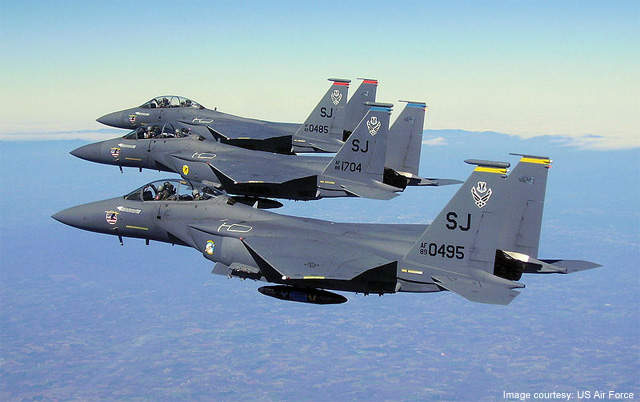
The F-15 Eagle, developed by McDonnell Douglas (now Boeing) in the 1970s, has earned a reputation as one of the most successful air superiority fighters in history.
With a top speed exceeding Mach 2.5, an operational ceiling above 65,000 feet, and a combat record boasting over 100 aerial victories without a single loss in air-to-air combat, the F-15 has become an enduring symbol of American air dominance. Its twin-engine configuration provides both high thrust and redundancy, while advanced avionics, including the AN/APG-63 radar and modernized electronic warfare suites, ensure exceptional situational awareness.
The F-15’s versatility extends to ground attack roles with the F-15E Strike Eagle variant, enhancing its strategic value. Its enduring service across decades underscores its adaptability and the United States Air Force’s commitment to maintaining technological superiority in contested airspace.
Su-27 Flanker (Russia)

Russia’s Su-27 Flanker, introduced in the 1980s by Sukhoi, represents the Soviet approach to long-range, highly maneuverable air superiority fighters. The Su-27 is renowned for its agility, partially due to its thrust-vectoring engines and aerodynamically optimized airframe, allowing it to perform advanced maneuvers such as the Pugachev’s Cobra.
Its range of over 2,000 km with external fuel tanks enables deep penetration into enemy territory without refueling, a crucial factor in Russia’s vast geographical context. Equipped with powerful radar, a robust missile arsenal including the R-27 and R-73, and capable of carrying nuclear payloads if necessary, the Su-27 embodies a philosophy of ruggedness, survivability, and multi-role flexibility. Its derivatives, including the Su-30, Su-33, and Su-35, continue to modernize Russian aerial capabilities, keeping it relevant in contemporary conflicts.
J-10 Vigorous Dragon (China)

The J-10 Vigorous Dragon, produced by Chengdu Aircraft Industry Group and entering service in the early 2000s, reflects China’s efforts to achieve self-reliance in modern fighter technology.
As a lightweight, multirole fighter, the J-10 is designed for agility, versatility, and cost-effectiveness. With a delta-canard configuration and digital fly-by-wire control system, the J-10 exhibits remarkable maneuverability, suitable for both air-to-air and air-to-ground operations. Its avionics suite, including radar capable of tracking multiple targets, and compatibility with a wide range of precision-guided munitions, make it an integral part of the People’s Liberation Army Air Force’s (PLAAF) modernization strategy.
The J-10 symbolizes China’s broader ambition to project power regionally and eventually globally, bridging the technological gap between Chinese and Western or Russian fighter aircraft.
Comparative Analysis
While the F-15 emphasizes raw speed, proven combat performance, and technological sophistication; the Su-27 prioritizes maneuverability, range, and robustness; and the J-10 focuses on versatility, agility, and cost-effective multirole capability.
Each aircraft reflects the strategic and operational doctrines of its nation: the U.S. prioritizes technological edge and global power projection, Russia emphasizes survivability and flexibility in vast airspaces, and China targets rapid modernization and regional dominance. Collectively, these aircraft underscore the diverse approaches nations take toward achieving air superiority, as well as the ongoing competition in fighter technology development.
| Feature / Aircraft | F-15 Eagle (USA) | Su-27 Flanker (Russia) | J-10 Vigorous Dragon (China) |
|---|---|---|---|
| Top Speed | > Mach 2.5 | ~ Mach 2.35 | ~ Mach 2.2 |
| Range | ~3,450 km (with drop tanks) | > 2,000 km (with external fuel) | ~1,850 km |
| Armament | Air-to-air missiles, bombs, cannon | R-27, R-73 missiles, cannon, nuclear capability | Air-to-air & air-to-ground missiles, precision-guided munitions, cannon |
| Operational Roles | Air superiority, ground attack (F-15E) | Long-range air superiority, multirole | Multirole (air-to-air & air-to-ground), regional defense |
| Notable Strengths | Proven combat record, advanced avionics, high speed | Extreme maneuverability, ruggedness, long-range | Agile, versatile, cost-effective, modern avionics |
Conclusion
The F-15 Eagle, Su-27 Flanker, and J-10 Vigorous Dragon are more than just aircraft; they are embodiments of their nations’ strategic priorities, engineering philosophies, and defense ambitions. As technological innovation accelerates and global air combat doctrines evolve, these fighters will continue to influence the balance of aerial power and serve as benchmarks for future generations of combat aircraft. Understanding their capabilities and roles provides insight into both contemporary military strategy and the broader geopolitical landscape.