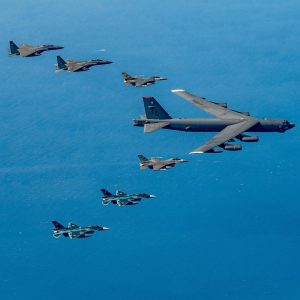
In a stunning display of strength and unity, a U.S. Air Force B-52 Stratofortress recently took to the skies, flying in tight formation alongside F-16 Fighting Falcons, Japan’s F-2 multirole fighters, and F-15 Eagles. The flight highlighted not only the enduring power of America’s long-range bomber but also the close cooperation between allied air forces in the Pacific.
The B-52 Stratofortress, a strategic bomber with a service history spanning more than six decades, remains a cornerstone of U.S. global strike capabilities. Its ability to carry massive payloads of conventional or nuclear weapons, combined with intercontinental range, makes it one of the most versatile aircraft ever built.
Accompanying the bomber were three of the most iconic fighters in the world:
-
The F-16 Fighting Falcon, prized for its agility and combat-proven versatility.
-
Japan’s F-2, a unique derivative of the F-16, enhanced with advanced radar and avionics to suit the needs of the Japan Air Self-Defense Force.
-
The F-15 Eagle, renowned for its unmatched record in air superiority missions, capable of dominating the skies with speed and firepower.
Flying together in formation, these aircraft showcased the seamless interoperability of U.S. and allied forces. The sight of the massive B-52 flanked by sleek fighter jets symbolized both deterrence and reassurance—a message that strength in numbers and unity remains at the heart of security in the Indo-Pacific region.
For aviation enthusiasts and defense observers alike, the formation was not just breathtaking—it was a vivid reminder of the importance of alliances, readiness, and collective defense in today’s strategic environment.