There are moments when life holds its breath — when hope trembles on the edge of despair, and the only thing standing between life and loss is time. That is where little Gosha’s story begins — a story of a one-and-a-half-year-old boy whose fragile heart is fighting its final battle, and whose parents are praying for a miracle that must come
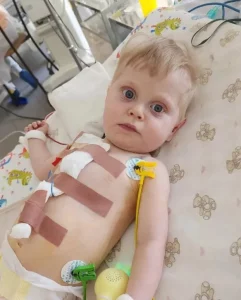
The deadline is fixed. The doctors have made it clear: surgery or death.
And yet, even in the shadow of those words, Gosha’s parents refuse to let go. Because somewhere beyond the machines, beyond the fear, beyond the sterile walls of the hospital, they still believe — miracles do happen.
A Tiny Heart, A Deadly Defect
From the moment he entered the world, Gosha’s life has been a war.
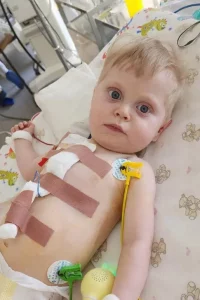
He was born with a severe, life-threatening heart defect — one so complex that doctors said his survival depended on timing, precision, and luck. Within just four days of life, the baby’s body went into crisis. His tiny limbs turned blue, his breathing faltered, and half of his body grew cold.
The diagnosis was merciless: a congenital heart defect that prevents oxygen from reaching his organs. His little heart, barely the size of a walnut, was unable to do the one thing every heart must — keep him alive.
He was rushed to intensive care, where doctors fought for hours to stabilize him. Tubes, machines, IV lines — his entire world became a battlefield of wires and alarms.
“He was so small,” one nurse whispered later. “Too small for so much pain.”
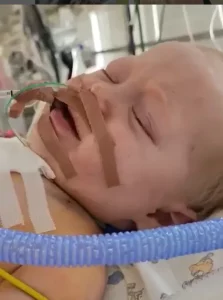
And yet, even then, Gosha fought.
He survived seizures, infections, and the unimaginable agony of his own body working against him. At just a few days old, his lymphatic system began to collapse, leaking up to 300 milliliters of lymph fluid every day — a catastrophic number for a baby weighing only 3 kilograms.
For one and a half months, his body drained life drop by drop.
But somehow, against every medical prediction, Gosha made it out of the ICU. He was fragile, scarred, and weak — but he was alive.
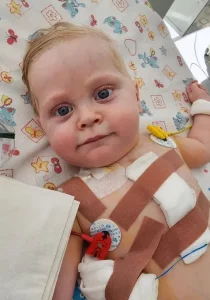
The Battle That Never Ended
For most families, leaving the hospital would mean relief. For Gosha’s parents, it meant waiting for the next emergency.
Every breath, every small fever, every shift in color could mean the difference between stability and catastrophe. They learned to live in vigilance, sleeping in shifts, listening to every sound of their baby’s breathing.
But as months passed, Gosha began to smile again. His laughter — soft and bright — filled the air like a promise. He was learning to live, even as his heart continued to betray him.
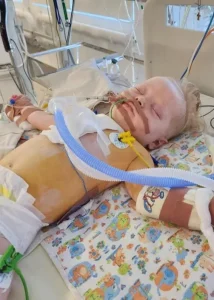
The doctors warned that without major heart surgery, his condition would worsen. His oxygen levels were dropping, his lips often turning blue. He tired quickly, his little body constantly fighting for air.
Still, his parents believed they had time.
They were wrong.
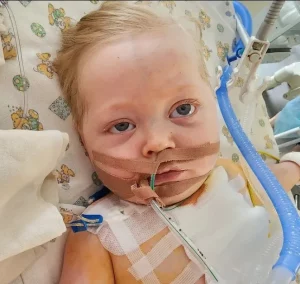
The Doctor’s Call
Two weeks ago, the call came.
The cardiology team reviewed his latest scans — and the results were devastating. The defect had progressed. The heart muscle was failing. Fluid was building up around his lungs.
The words were clear and final:
“He cannot survive without immediate surgery.”
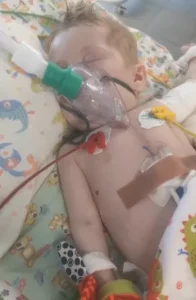
A deadline was set — days, not weeks. The surgical team made the arrangements, but the clock was already ticking. Every hour without intervention meant another step closer to irreversible damage.
The problem? The cost.
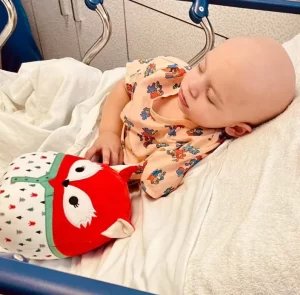
The surgery — complex, high-risk, and time-sensitive — requires a specialized clinic equipped to handle pediatric cardiac reconstruction. The hospital offered a slot, but only if the family could cover the full cost before admission.
And that’s when the nightmare began.
A Race Against Time
The clock was no longer counting in hours — it was counting in heartbeats.
Gosha’s parents, desperate and terrified, began reaching out for help. Social media posts, calls to charities, messages to friends and strangers alike — anything that might bring their son one step closer to the operating room.
Each day, they visit the hospital, clinging to updates that fluctuate between hope and despair.
“The doctor said we have to act now,” Gosha’s mother says, her voice trembling. “He can’t wait. His heart won’t hold.”
But acting now means money — and money means time they no longer have.
The Weight of Helplessness
There is a kind of pain that goes beyond grief — the pain of watching your child slip away while the world moves too slowly to save them.
For Gosha’s parents, that pain has become daily reality.
Every morning, they wake to the sound of their son gasping softly in his sleep, his chest rising and falling in shallow breaths. His skin is pale, his eyes tired, but when he looks at them, he still smiles.
That smile breaks them and strengthens them all at once.
They feed him carefully, knowing that too much effort can send his oxygen levels plummeting. They whisper songs instead of lullabies, because he can’t handle too much excitement.
And every night, they pray — for strength, for help, for a miracle that hasn’t come yet.
What Surgery Means
The operation Gosha needs is one of the most complicated pediatric heart procedures — open-heart surgery that will repair the defective structure and restore proper blood flow.
It’s dangerous. The risks are enormous. Complications can occur at every stage.
But it’s his only chance.
Without it, his organs will begin to shut down. His heart, already strained, will fail completely.
Even the doctors, usually guarded in their words, have been brutally honest. “He cannot survive without surgery,” they said again. “This is not a choice. This is life or death.”
The deadline is set. The surgical team is ready. The only missing piece is the support needed to make it possible.
The Strength of a Child
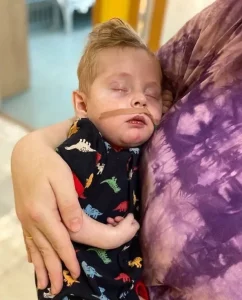
Despite the tubes and wires, despite the exhaustion and pain, Gosha remains a fighter.
He still reaches for his parents’ hands. He still tries to play. He still watches cartoons with wide, curious eyes.
There is something extraordinary about children like him — something unbreakable in their innocence.
“He doesn’t understand what’s happening,” his mother says softly. “He just knows that we’re here. That we love him. And somehow, that’s enough for him to keep going.”
Each day he survives is a miracle in itself. Each heartbeat is defiance against the odds.
The Plea for a Miracle
The family’s message to the world is simple and raw: Help us save him.
There is no luxury of time left. No safety net. No backup plan.
“We’re living minute by minute now,” his father says. “Every hour we wait, we risk losing him. I can’t bear to imagine that moment. I just want him to live.”
The words carry a desperation that pierces through language and borders.
Somewhere, there is a child who should be learning to walk, to talk, to laugh — not fighting to breathe. Somewhere, there is a mother who can only hold her baby and beg the world to notice.
And somewhere, beyond all this fear, there might still be a miracle waiting — if it comes in time.
The Human Side of Hope
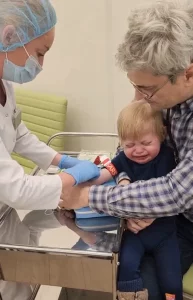
It’s easy to look at stories like Gosha’s and see tragedy. But look closer, and you’ll see something else — an entire community holding its breath for a child they’ve never met.
Messages pour in from strangers: words of encouragement, small donations, prayers from across the world. Every gesture, no matter how small, becomes a thread in the lifeline that keeps Gosha’s hope alive.
Because in the end, it’s not just medicine that saves lives — it’s people.
It’s the collective belief that one tiny heartbeat is worth fighting for.
The Countdown Continues
The doctors are ready. The hospital is waiting. The deadline is closing in.
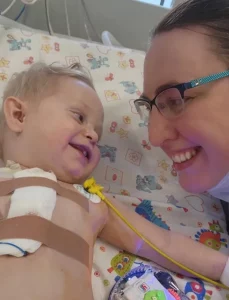
And Gosha — fragile, brave, and beautiful — is still fighting.
There’s no way to predict what tomorrow will bring. But tonight, as his parents sit beside his bed, they hold on to the only thing stronger than fear — love.
Because love, even in the face of death, refuses to surrender.
And sometimes, that’s all it takes to make a miracle possible.