Teddy was only four years old when the world began to tilt beneath his feet — though he had no idea why. At first, there were small things: moments when he seemed to look past people instead of at them, times when his parents caught a strange reflection in his right eye, flashes of white in photos where there should have been red. Nothing that screamed emergency, but nothing that felt quite right either.
By September 2023, the truth finally came crashing in.
Doctors told his parents the word no family ever wants to hear — Retinoblastoma, a rare and aggressive childhood eye cancer. And just like that, childhood innocence collided with medical reality. The teddy bear he carried into the hospital suddenly seemed too small to hold all the fear that filled the room.
But what happened next would show just how extraordinary a four-year-old can be.

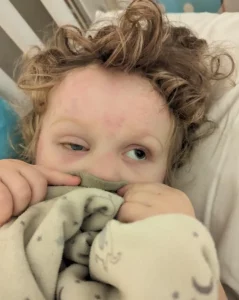
A LIFE-CHANGING DIAGNOSIS
The tumour in Teddy’s right eye was large — too large for doctors to save the eye. Chemotherapy alone wouldn’t stop it. Radiation wouldn’t be enough.
There was only one option: enucleation, the complete surgical removal of his eye.
No parent is ever prepared to hear that surgeons must remove part of their child to save the rest of them. Teddy’s mum later said she felt the world “fold in on itself,” as though reality was suddenly too heavy to carry.
The operation was scheduled quickly. There was no time to sit with the fear.
No time to bargain.
No time to ask “why us?”
Just time to act — because acting meant saving Teddy’s life.
And on the day of the surgery, Teddy walked into the operating room holding his favourite toy car, bravely trusting the adults who promised he would be okay.

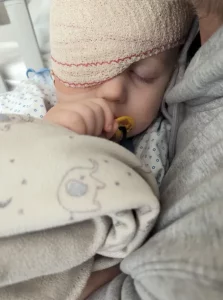
THE DAY THE WORLD WENT DARK ON ONE SIDE
Enucleation is a word most people never hear. But for Teddy’s family, it became the turning point.
When he woke up from surgery, one side of his world was gone — not blurred, not dimmed, but replaced by stitches and swelling where his eye once was. The tumour had been removed completely, but the absence left behind a different kind of wound.
He reached up, touched the bandage, and asked the question no parent can ever truly prepare for:
“Will my eye come back?”
His parents held him tightly, fighting their own tears as they told him the gentlest truth they could. What mattered most was that Teddy was still here — still warm, still breathing, still theirs.
And even though he didn’t understand everything that had happened, he understood one thing deeply:
He had survived.

FREQUENT CHECKS — AND THE FEAR OF WHAT THEY MIGHT FIND
Unlike many children with Retinoblastoma, Teddy didn’t need chemotherapy. The tumour was removed before it could spread, and for that, his family will forever be grateful.
But cancer rarely leaves quietly.
A mutation was discovered in the tumour, one that raised questions and worries none of them had expected. To make sure nothing had spread or gone unnoticed, Teddy now travels regularly to
Great Ormond Street Hospital (GOSH) and Royal London for continuous monitoring:
- eye examinations,
- MRI scans,
- detailed check-ups that peel back every layer of uncertainty.
Every visit brings a small, quiet fear. What if they find something this time? What if the mutation means more trouble is waiting?
It is a fear the family carries silently — but Teddy, in his innocent resilience, never lets it stop him from smiling.

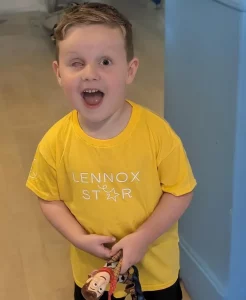
LEARNING TO LIVE WITH A PROSTHETIC EYE
Every few months, Teddy visits the
National Artificial Eye Service, where skilled specialists create his fitted prosthetic eye. For adults, this process would be intimidating. For a four-year-old, it is overwhelming.
Moulds have to be taken. Measurements made. Adjustments refined. All while Teddy sits patiently, trying his best not to flinch as strangers lean close to his face.
The prosthetic eye helps him look like the little boy he was before cancer — whole, bright, unchanged on the surface. But beneath the surface, he is someone transformed. Someone who has already survived what many adults never will.
Soon, Teddy will begin play therapy — a gentle, child-centered way to help him overcome his fear of hospitals and people touching his face. These fears didn’t exist before cancer. They were learned through pain, through procedures, through the countless hands and tools that came too close too often.
Therapists will help him build trust again, rebuild a sense of safety, and relearn what it feels like to breathe easily in a hospital corridor.
It is healing not for his body — but for his heart.

A LITTLE BOY WHO REFUSES TO BE DEFINED BY WHAT HE LOST
Despite everything — the surgery, the follow-ups, the fear, the prosthetic eye — Teddy still shines.
He still laughs at silly jokes.
He still runs faster than his parents can catch him.
He still plays with his toy cars like the world is one big racetrack.
He still wakes up every morning ready to explore, ready to be loud, ready to live.
Retinoblastoma took his eye, but it did not take his spirit.
His family says he amazes them every single day — with his courage, his sweetness, and the quiet strength that seems too large for such a small child. It is the kind of strength that makes adults stop and wonder how children, in all their innocence, can be so incredibly brave.

A STORY THE WORLD NEEDS TO HEAR
Teddy’s journey is now part of the Go Gold campaign for Childhood Cancer Awareness Month — a campaign created not just to share stories of survival, but to remind the world of something urgent:
Childhood cancer doesn’t always look like what we expect.
It doesn’t wait.
And it doesn’t discriminate.
Sometimes, it shows up as a strange glow in a child’s eye.
Sometimes, it’s a headache, a limp, a fever.
Sometimes, it’s invisible until it suddenly isn’t.
But what it always brings — always — is a child who must grow up too fast and a family forced into a world they never asked to enter.
Teddy’s story is not just about loss or illness.
It is about resilience.
About love.
About a little boy who will not be broken.

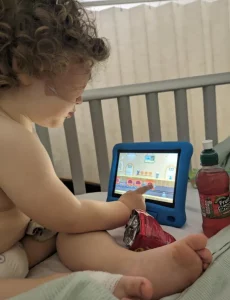
A FUTURE FILLED WITH HOPE
Today, Teddy moves through the world with one eye — and more courage than most people will ever know. His prosthetic fits beautifully. His check-ups continue. His spirit continues to glow brighter than anything cancer tried to take.
His parents say they look at him and see not what he has lost, but everything he still is — joyful, curious, mischievous, unstoppable.
And though the road ahead will include more appointments, more MRIs, and more adjustments to his prosthetic eye, one thing remains certain:
Teddy is here.
Teddy is thriving.
And Teddy is showing the world exactly what it means to be brave.
His story is one piece of a much larger fight — a fight for awareness, for early detection, for research, and for every child who deserves a chance to live a full, beautiful life.
Go Gold for them.
Go Gold for Teddy.
At 100 Years Old, She Found Love Again—in a Senior Rescue Dog.584
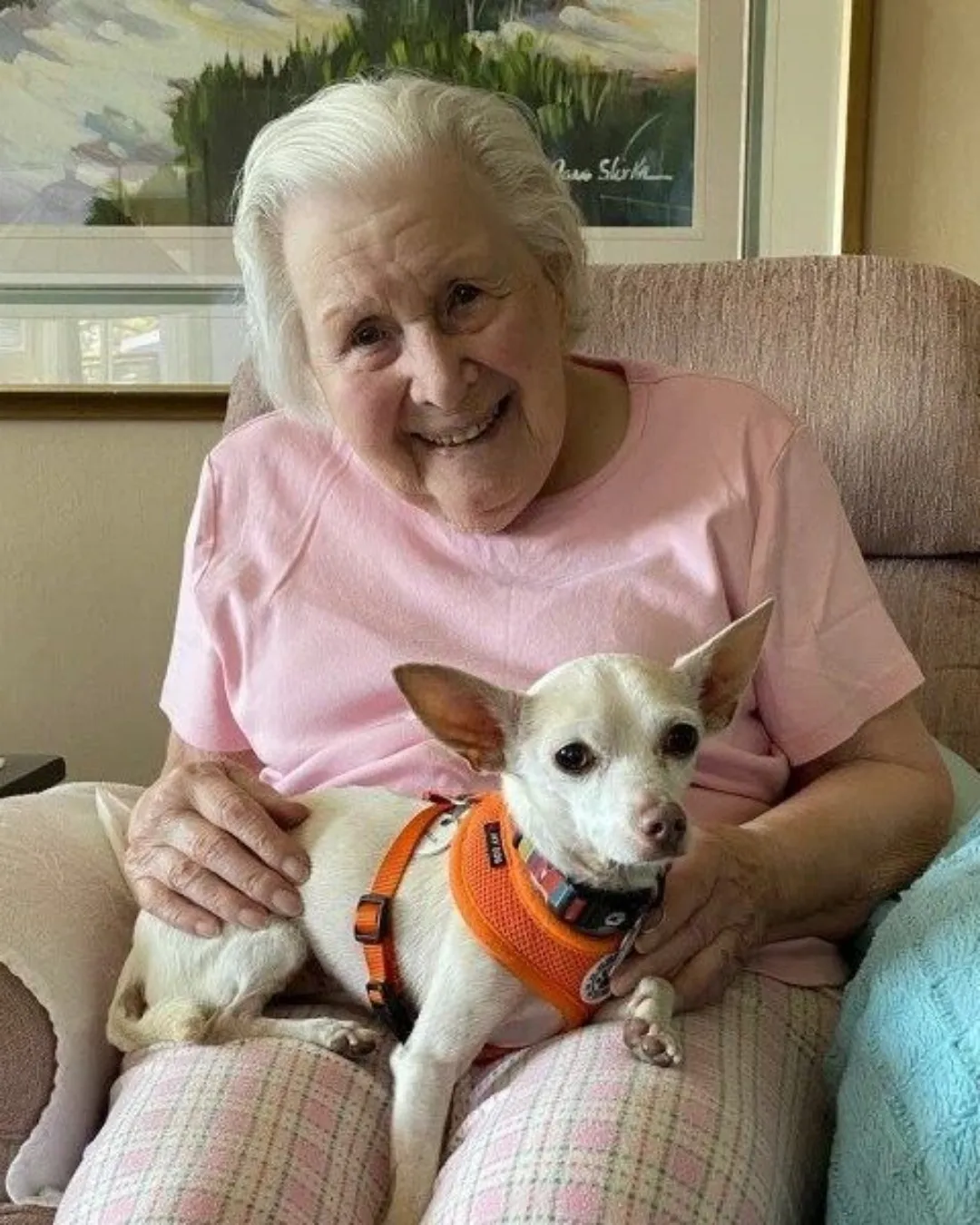
At 100 years old, Johanna has lived through a century of history—wars, triumphs, losses, and countless changes in the world around her. She has seen generations grow, said goodbye to loved ones, and adapted to a life where time feels both long and fleeting. But even after all those years, nothing could quite prepare her for the silence that filled her home when her beloved Rocky, her longtime companion, passed away.
For years, Rocky had been her shadow—padding softly across the floor, warming her lap, and offering comfort on days when the weight of age pressed heavier than usual. His passing left Johanna not only grieving a friend but also facing a kind of loneliness that words could never fully capture. At her age, such loss can feel like an ending too final, an emptiness too vast.

But sometimes, love finds its way back when you least expect it.
Not long after Rocky’s passing, Johanna was introduced to Gucci, a senior dog rescued from a hoarding situation that involved 22 neglected animals. His past was filled with hardship—overcrowded conditions, little care, and far too much fear. Yet when Gucci met Johanna, something extraordinary happened.
He didn’t hesitate, didn’t shy away. Instead, he ran straight into her lap as though he had always belonged there. And with a flurry of kisses and wagging tail, he seemed to say: “I choose you.”
From that moment, their bond was sealed.

Now, the pair is inseparable. Each day unfolds with a rhythm of gentle companionship. Gucci, once forgotten, now thrives in the spotlight of love and care. He relishes in daily back rubs, his eyes closing in bliss as Johanna’s frail but steady hands soothe him. On their walks, he trots proudly in his cozy sweaters, turning heads in the neighborhood with his charm. And without fail, he looks forward to his favorite 4 PM treats, waiting by Johanna’s chair as though it were the most important appointment of the day.
For Johanna, Gucci has brought back more than just routine—he has brought back joy. The emptiness that lingered after Rocky’s passing has been replaced by laughter, warmth, and the comforting sound of paws padding across her floor once again. She often says that while her body may rely on a walker to move steadily, her heart is carried forward by Gucci.

When asked about her long life, Johanna is quick to credit her healthy habits—balanced meals, staying active, and caring for her body as best she can. But she also insists that love, both given and received, is the truest secret to her longevity. “Having someone to care for, and someone who cares for you,” she says, “that’s what keeps you going.”
And in Gucci, she has found exactly that.
For Gucci, the transformation is just as powerful. Once neglected and overlooked, he now knows the comfort of a home where he is not only safe but cherished. Gone are the days of uncertainty and scarcity. Now, he has a human who whispers to him, dresses him warmly, and makes sure that every need—physical and emotional—is met.
It is a story of two souls, both in the later chapters of their lives, finding healing in each other. A centenarian who thought her days of deep companionship were behind her, and a senior dog who feared he might never know the tenderness of love. Together, they have rewritten the ending.
Their bond is more than heartwarming—it’s a reminder that it is never too late. Never too late to love, never too late to heal, and never too late to find joy again.
As Johanna strokes Gucci’s fur, and as Gucci curls up beside her with a contented sigh, it’s clear: they saved each other.
And though neither knows how many years or seasons they have left together, one thing is certain—each day will be filled with care, comfort, and unconditional love. ❤️🐾