It started like any ordinary Easter weekend in 2024.
Tommy, a bright-eyed two-year-old from the UK, wasn’t himself.
He was being sick, had a spike in temperature, and seemed unusually lethargic.
At first, his parents, Nicole and her family, thought it was a virus.
Just a stomach bug, they told themselves.
But as hours passed, the signs became impossible to ignore.
Tommy refused to eat or drink.
He clung to his mother in ways that felt different, heavier.
Something wasn’t right.
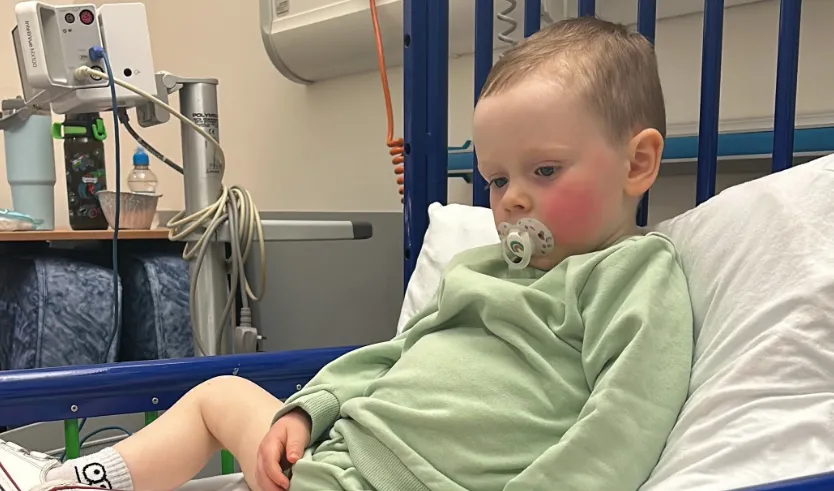
Nicole called NHS 24, seeking guidance.
She was given an out-of-hours appointment.
They went in.
They were sent home with advice that, in hindsight, would haunt them.
The next day, Tommy vomited again.
His parents knew they couldn’t wait.
They returned to A&E, desperate for answers.
Doctors first suggested constipation.
But when the Registrar came to examine Tommy, her face changed.
Instantly.
Nicole knew something serious had been uncovered.
Blood was taken, IV access inserted, and a consultant was called immediately.
It was 10 p.m. — a time when most hospital wards slow down.
But for Tommy, the night had just begun.
The consultant palpated his tiny abdomen and delivered a chilling truth: this was unlikely constipation.
It was likely something much worse.
Cancer.
The word hung in the air, impossible and unthinkable.
Tommy had a mass in his tummy.
But the severity was only just beginning to reveal itself.
Over the next two weeks, his world — and his family’s — turned upside down.
Bone marrow samples were taken.
MRI scans.
MiGB scans.
CT scans.
Each test added layers of fear, uncertainty, and heartache.
Then came the diagnosis: Stage 4 High-Risk Neuroblastoma.
A rare and aggressive childhood cancer.
A disease with a survival rate hovering at just 50 percent.
The tumor had formed on Tommy’s adrenal gland, spreading to his lymph nodes, thorax, and spinal cord.
Everything changed.
Every plan, every expectation, every dream.
Tommy’s treatment began immediately.
A central line was inserted to allow for the grueling chemotherapy ahead.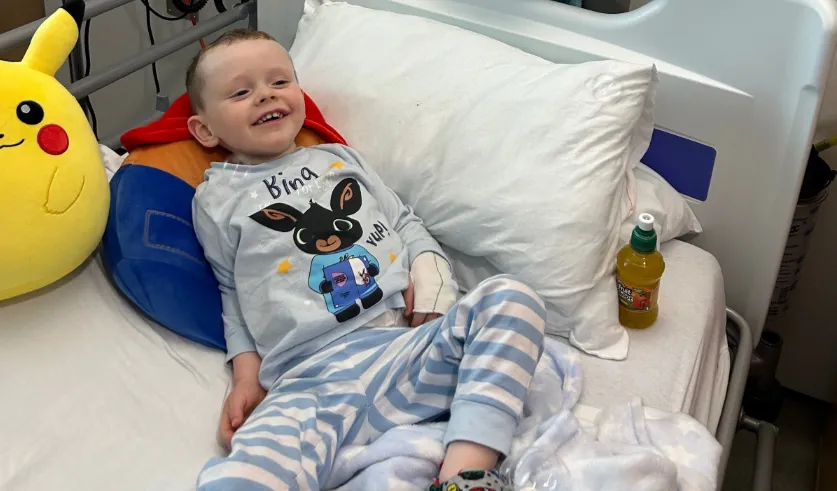
Seven powerful drugs coursed through his tiny body.
The effects were brutal.
Vomiting. Hair loss. Fatigue that made standing a battle.
But Tommy faced each day with a mischievous grin, earning him the nickname “little lion” from the staff who cared for him.
His fight didn’t stop there.
He endured multiple bone marrow procedures, blood transfusions, MIBG scans, and G-CSF injections.
Stem cell harvest.
Tumor resection.
Two stem cell transplants as part of the HR-NBL 2 trial.
A sternotomy.
Twelve rounds of radiotherapy.
Six rounds of immunotherapy.
And countless line and platelet replacements.
The intensity of treatment was staggering.
And just when the family thought they could breathe, disaster struck again.
Six days after being discharged following his second stem cell transplant, Tommy required an emergency sternotomy due to complications while refitting his central line.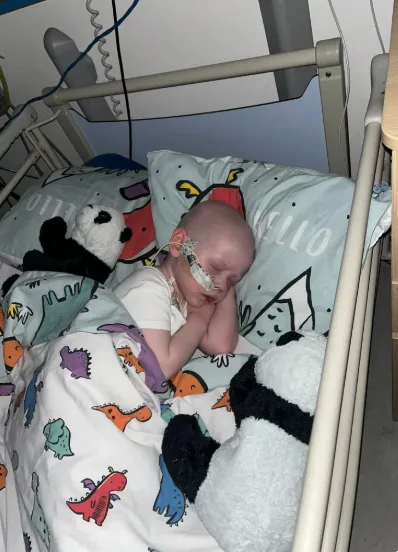
Another six-and-a-half weeks in the hospital.
Every step forward felt matched by an unpredictable setback.
Every small victory carried a shadow of fear.
Through it all, Tommy’s spirit never wavered.
Despite the pain, he smiled.
He played.
He found ways to be a child even in the harshest of circumstances.
Nicole describes him as “resilient, cheeky, and brave beyond his years.”
Months of treatment left lasting marks.
Tommy’s high-frequency hearing was damaged, requiring hearing aids.
His hair fell out.
His tiny body endured sickness and fatigue that most adults could hardly imagine.
Yet he continued to meet every challenge with courage.
Every laugh.
Every smile.
Every mischievous sparkle in his eye was a declaration: he would not be broken.
After 18 months of grueling treatment, there was finally hope.
Tommy is now in remission.
DFMO treatment continues to keep the cancer at bay.
Thanks to the NHS, he received cutting-edge therapy that isn’t yet widely available in Europe.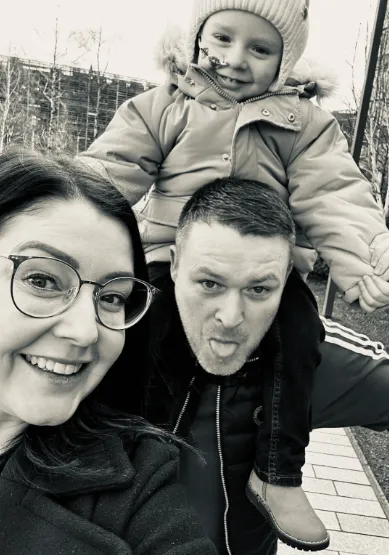
But while remission is a miracle, the risk of relapse remains.
The battle is not over.
Every day is a reminder of the fragility of childhood and the extraordinary resilience required to survive.
Nicole has become a tireless advocate for research, raising awareness for Neuroblastoma UK.
She knows firsthand that better funding and stronger research could save children like Tommy.
This fight is bigger than one family.
It’s a mission to ensure no child faces this disease without options.
Every donation, every campaign, every story shared matters.
Because Neuroblastoma is rare, aggressive, and often overlooked.
Tommy’s story brings it into focus.
It makes people stop scrolling.
It makes hearts ache.
And it makes communities act.
Parents, families, and strangers alike are reminded that life is fragile.
That childhood can be stolen in an instant.
That courage is sometimes measured in the smallest frames, the youngest voices, and the quietest smiles.
For Tommy, each day of remission is a triumph.
A testament to the skill of doctors, the dedication of nurses, and the bravery of a two-year-old who refused to surrender.
For Nicole, it’s a mix of relief and vigilance.
She knows the journey continues.
Every scan, every treatment, every milestone carries weight.
But the love surrounding Tommy — family, medical staff, and a wider community — builds strength.
He has shown that even in the darkest times, hope can endure.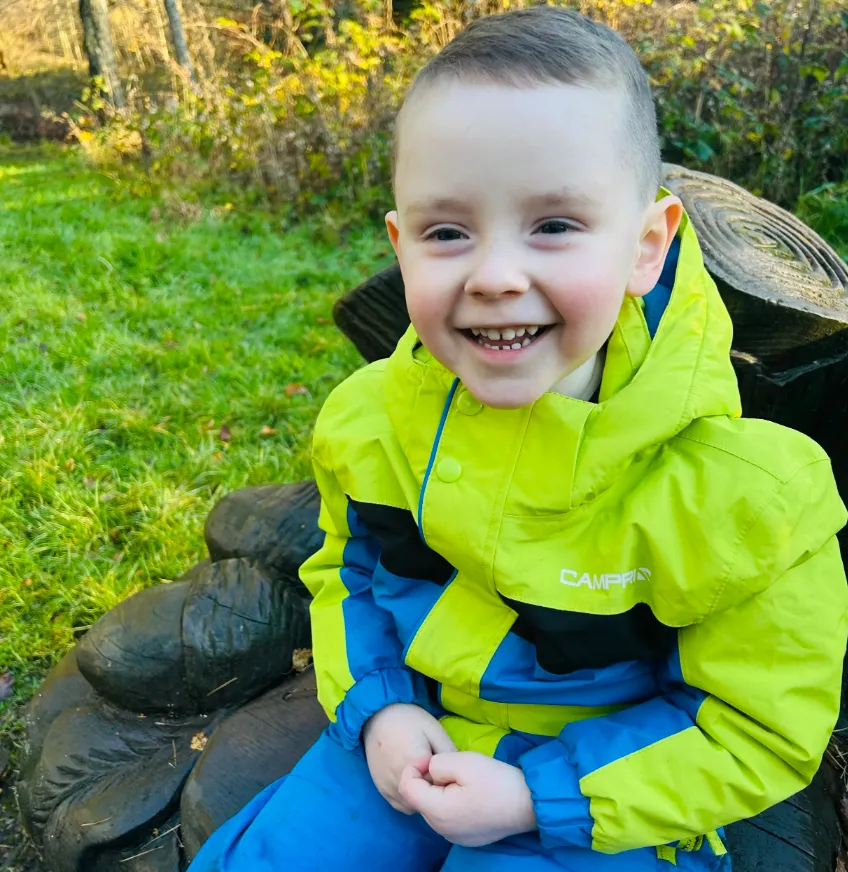
That laughter can exist alongside pain.
That mischief and cheer can thrive even in hospital rooms filled with beeping monitors and medical machines.
Tommy has become a symbol.
A little lion facing enormous odds.
A reminder that every child deserves a chance.
That research matters.
That communities can come together to fight rare diseases.
That resilience, courage, and love can conquer fear, even at two years old.
His story isn’t just a personal journey.
It’s a call to action.
A plea for awareness.
A testament to the human spirit.
Even amidst the most overwhelming odds, strength and hope can shine.
Tommy’s mischievous grin, his resilient laughter, and his cheeky personality remain untouched by the disease that tried to define him.
He reminds us that children are warriors, even when they are tiny.
That families can be heroes, even when exhausted.
That science and compassion together can save lives.
As Tommy continues DFMO treatment, as he regains energy and adapts to the lasting effects of therapy, he embodies survival.
Every hug, every playful moment, every milestone reached is a victory.
A victory over cancer.
A victory for research.
A victory for hope.
Nicole’s advocacy ensures that Tommy’s experience does not remain isolated.
Through fundraising and awareness, she fights so that other children may have brighter futures.
Each story shared, every donation made, strengthens that fight.
Tommy is more than a patient.
He is a little lion.
He is a survivor.
He is a symbol of courage, endurance, and the possibility of life after unimaginable adversity.
And while his body bears the marks of intensive treatment, his spirit remains untamed.
For parents reading his story, it is a reminder to cherish every moment.
To recognize the bravery in the smallest smiles.
To understand that hope is a powerful force, capable of carrying families through months of uncertainty, fear, and pain.
For the world, Tommy’s journey is proof that even the youngest among us can inspire.
Even the tiniest fighters can lead us to action, empathy, and change.
Tommy’s fight is far from over.
But for now, he rests in remission.
A little lion who roars quietly, fiercely, and triumphantly, leaving everyone who meets him in awe.
His story will live on — a tale of courage, survival, and the relentless will of a family determined to fight alongside him.
And as Nicole shares each milestone, each small victory, and each challenge overcome, Tommy continues to remind the world: childhood can be magical, resilience can be fierce, and hope can endure, even in the face of Stage 4 High-Risk Neuroblastoma.
“The Boy Who Hugged the World: The Story of Chase — A Journey of Courage, Hope, and the Fight to Keep Smiling”
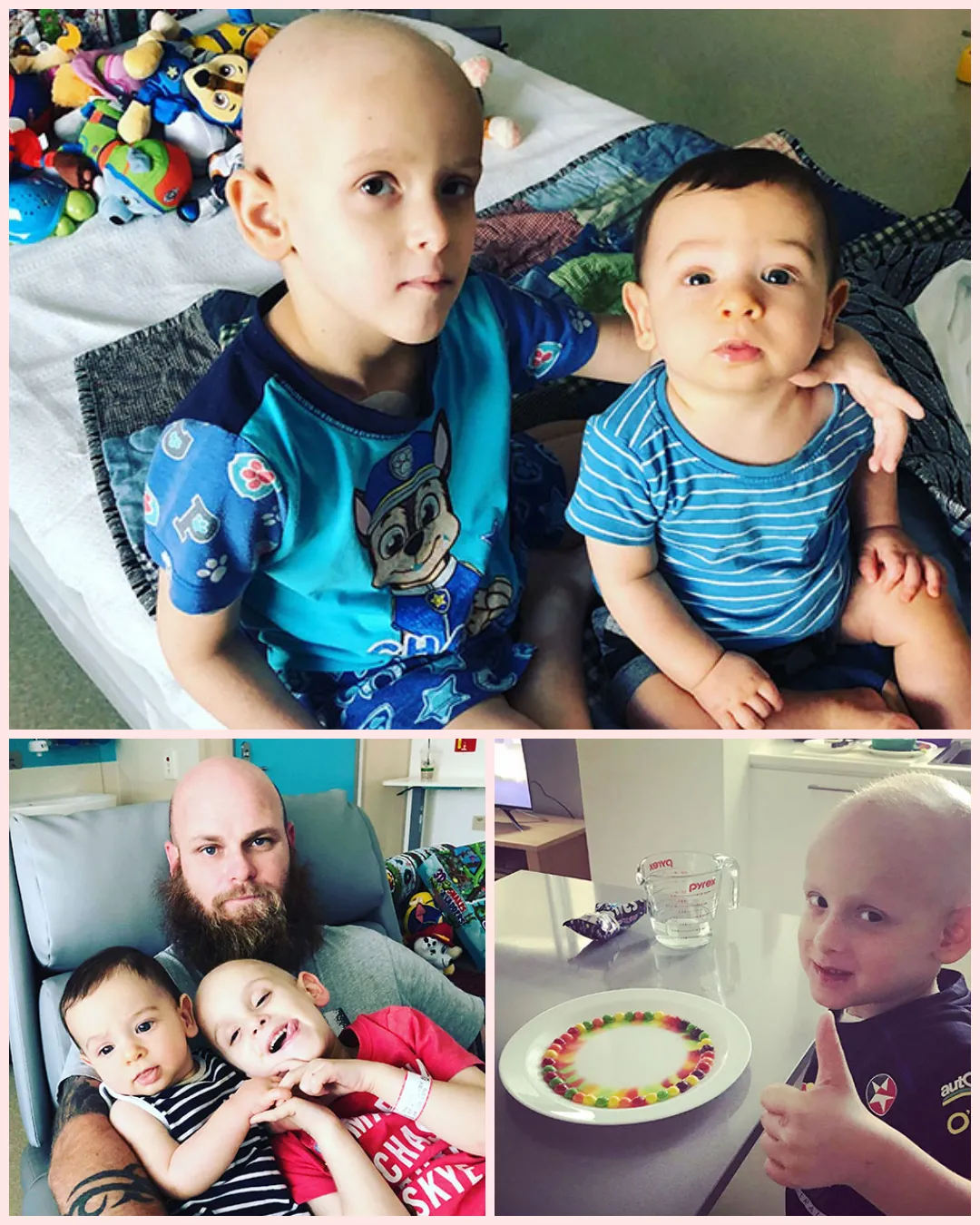
The first thing people noticed about Chase wasn’t his big brown eyes or his wild hair — it was the way he hugged.
He hugged his friends, his teachers, strangers at the supermarket — anyone who stood still long enough. His arms were small, but his love for the world was too big to contain. His mum, Prue, used to laugh and say, “Chase doesn’t meet people, he collects hearts.”

He was four years old, full of life and sunshine, living with his parents, Prue and Jamie, in a quiet rural town in Queensland. Their life was simple — morning coffees on the veranda, muddy boots by the back door, and a boy who loved trucks, animals, and adventure.
There was nothing in those golden days that hinted at what was coming — no warning, no shadow on the horizon.
Then one day, Chase spiked a fever. Nothing unusual, they thought. Kids get sick all the time. The doctor said it was likely the flu — rest, fluids, paracetamol. But the fever wouldn’t go away.
Soon, Chase began to complain about pain when sitting down. Then one night, as Prue was helping him get ready for bed, she noticed tiny red spots on his hip — like freckles that weren’t there before. They didn’t fade when she pressed on them. A friend who was a doctor told her gently, “Take him to the hospital. Tonight.”
At the small local hospital, a blood test was done. The nurse’s smile faded as she looked at the results. Within hours, they were on their way to a larger hospital. The word urgent echoed in Prue’s mind like thunder.
At Queensland Children’s Hospital in Brisbane, the final diagnosis came. The doctor sat them down, his voice calm but heavy.
“Chase has acute myeloid leukaemia — AML.”

The words didn’t fit in the room.
Prue remembers looking at the floor tiles, counting them just to stay upright. Jamie held her hand so tightly it hurt. Four-year-old Chase sat on the hospital bed, swinging his legs, asking if he could still go home for his cousin’s birthday.
From that moment on, their world shrank to hospital walls and white coats.
Chase began chemotherapy almost immediately. The first few weeks were a blur of IV lines, beeping machines, and the chemical smell of antiseptic. He was brave — braver than any adult could have been. He joked with the nurses, called his IV pole “Blinky,” and insisted on decorating it with stickers.
After the first round of chemo, the doctors smiled. “He’s in remission,” they said. Prue wept with relief. For a brief moment, it felt like the storm had passed. They started to dream again — maybe, just maybe, he would get to go home soon.

But cancer has a cruel way of circling back.
During the second round of treatment, genetic testing came back with new information. Chase’s leukaemia had a mutation — one that placed him in the “high-risk” category. He would need a bone marrow transplant if he was going to survive.
And then came another blow: Chase was also diagnosed with Fanconi anaemia, a rare inherited condition that makes the body unable to repair DNA properly. It meant his body would struggle to handle the same treatments that save other children. It meant his time might be shorter, even if the cancer went away.
Prue felt the ground disappear beneath her feet. “It was like being hit twice,” she said later. “Two diagnoses, one little body.”
Still, she refused to give up.
They would do everything — everything — to give him a chance.
Life in the oncology ward became their new normal. Days were filled with blood tests, transfusions, and medication schedules that blurred into each other. Nights were long — the quiet hum of machines, the flicker of the hallway light, the sound of Prue whispering lullabies while Chase slept.

He lost his appetite. Every bite was a battle. “Come on, my brave boy,” Prue would coax. “Just one spoon.” But the smell of food made him gag. Most of the day, she sat beside him, holding his hand, reading stories, singing softly when words ran out.
Through it all, Chase stayed Chase — cheeky, affectionate, and impossibly kind. He called every nurse “friend,” drew hearts on the whiteboard, and offered to share his stickers with other kids on the ward. His smile, though tired, still had the power to light up the room.
Christmas came and went inside the hospital. There were no Santa photos that year, no family gatherings, no smell of roasted ham or laughter around the tree. Prue says that was the hardest moment — realizing how cancer steals not only health, but all the small rituals that make a family feel whole. “You think you’ll have forever,” she said. “And then suddenly, forever feels fragile.”
Months passed. Chase endured treatment after treatment, facing pain no child should ever know. When the nurses told him he was “the bravest boy in the world,” he grinned and replied, “That’s because I’ve got superpowers.”
And maybe he did.
Despite every setback — infections, transfusions, exhaustion — Chase kept fighting. After countless nights in hospital beds, he began to get stronger. He walked the corridors again, pulling Blinky along, waving to other children. Slowly, his color returned.
Finally, after long months, the doctors had news: his cancer was in remission again. He could go home.
The first night back, Prue didn’t sleep. She sat beside his bed, watching him breathe, the rise and fall of his small chest like a miracle she didn’t dare take for granted. In the morning, Chase woke up, looked around his room full of toy trucks, and smiled. “Mum,” he whispered, “I missed my dinosaurs.”
Home was different now. There was joy — but also fear. Every fever, every cough, every bruise sent a bolt of panic through her heart. Fanconi anaemia meant Chase’s body would always be fragile, more vulnerable than other children’s. There were doctor appointments, scans, and follow-ups that never seemed to end. But there was also laughter again — in the backyard, in the kitchen, in the simple act of being together.

Years have passed since that first terrible day. Today, Chase is eight years old — a bright, playful boy in Year 3 who still loves hugs, still loves trucks, and still lights up every room he walks into. He’s small for his age, but strong in all the ways that matter.
He carries the scars of his battle — physical and invisible — but he wears them like medals. Every check-up is a reminder of how far he’s come. Every blood test is another silent prayer.
For Prue and Jamie, the fear never fully disappears. They know that Fanconi anaemia brings its own challenges — that one day, Chase may face new medical battles. But they’ve learned to live with uncertainty, to hold hope and grief in the same breath.
Prue says she looks at how far medical science has come and feels something she hasn’t felt in a long time: faith. “When I was young,” she says, “kids like Chase didn’t survive this. Now, because of research, he’s here. That’s everything.”
Next year will mark five years since Chase’s diagnosis — a milestone that once felt impossible.
And for the first time since that awful Christmas in the hospital, Prue is planning to take new Santa photos — with Chase grinning in front of the tree, arms wide open for another hug.
Because that’s who he is — the boy who hugs the world, even after the world broke his heart.
He doesn’t remember every needle, every night of pain, every doctor’s whisper. But he remembers the people who loved him through it — his parents, his nurses, his doctors. He remembers kindness. And in his small, unshakable way, he gives it back every single day.
When asked what he wants to be when he grows up, Chase thinks for a moment and says, “A scientist. So I can help other kids not be sick.”
And in that moment, the room fills with light — the kind of light that only comes from a child who’s seen darkness and still chooses to believe in tomorrow.