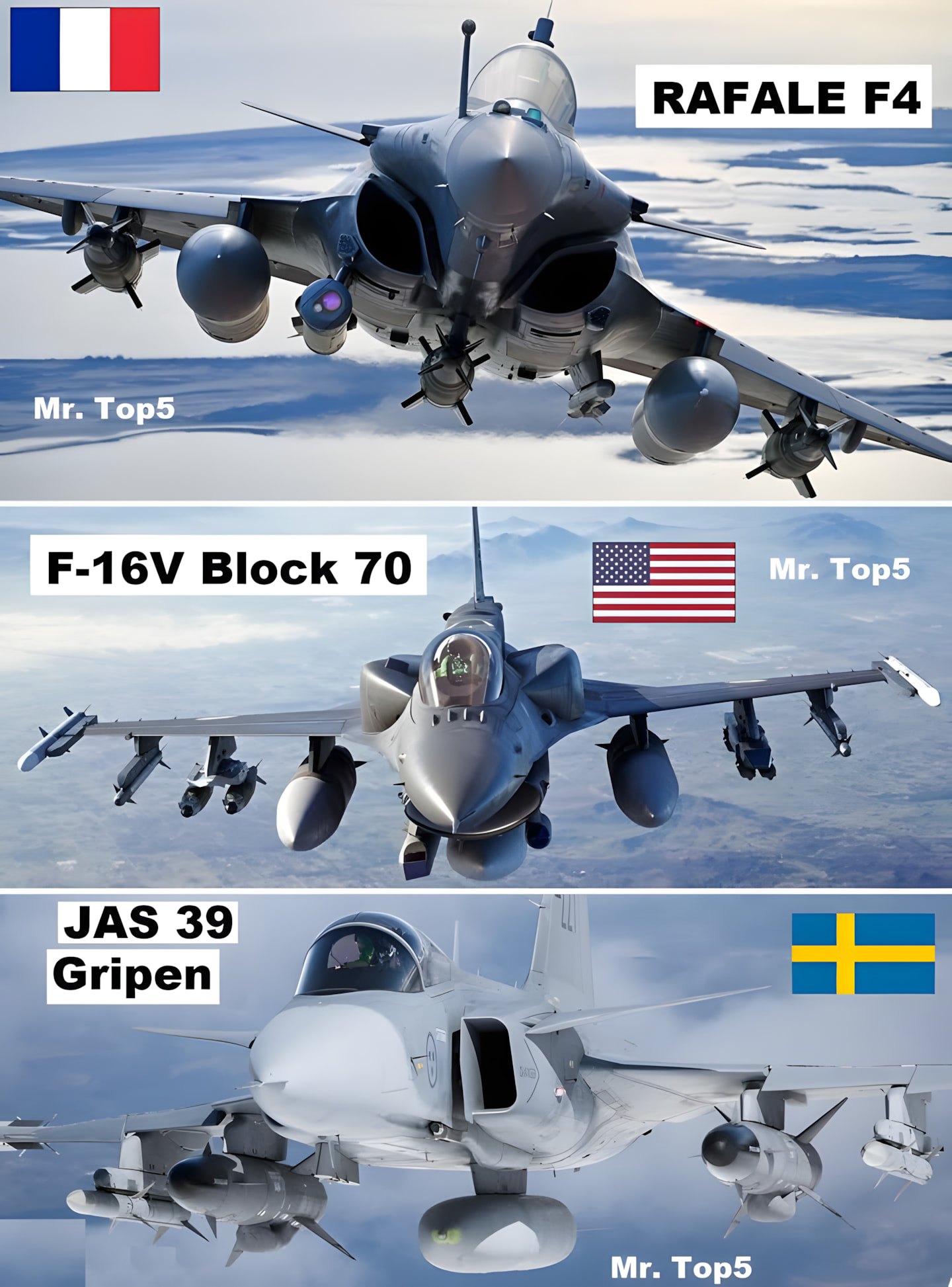
In the high-stakes realm of 21st-century air combat, a few fighter jets have risen above the rest—not just through sheer firepower, but through adaptability, efficiency, and cutting-edge technology. Among these elite few stand three modern marvels: France’s Rafale F4, America’s F-16V Block 70, and Sweden’s JAS 39 Gripen. Each aircraft reflects the strategic doctrine, industrial priorities, and battlefield expectations of their respective nations. But how do they truly compare?
🇫🇷 Dassault Rafale F4: The Multi-Role Maestro
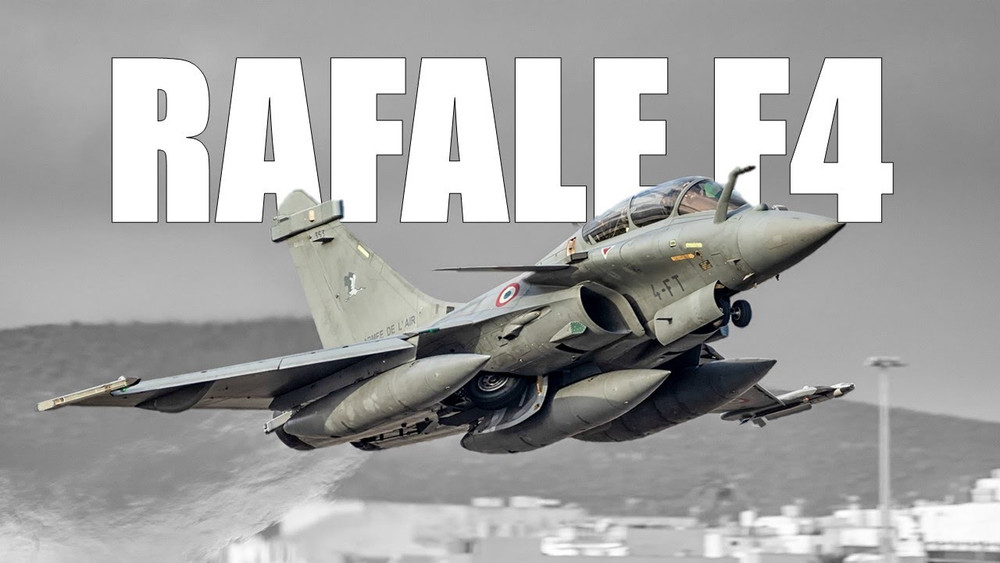
The Rafale F4 is the latest evolution of Dassault Aviation’s versatile workhorse. It builds on the combat-proven legacy of the Rafale, now equipped with enhanced radar, sensor fusion, AI-based pilot assistance, and network-centric warfare capabilities. The F4 standard introduces:
-
Thales RBE2-AA AESA radar for improved target tracking and electronic warfare.
-
Upgraded SPECTRA EW system for survivability in contested airspace.
-
New weapon integrations like Meteor BVR missiles and ASMP-A nuclear capability.
-
Cloud-based mission data and faster communication links with allies.
💡 Best for: Air forces that demand full-spectrum dominance—air-to-air, air-to-ground, and naval operations—with deep strike potential and long-term upgrade pathways.
🇺🇸 F-16V Block 70: The World’s Most Advanced Viper

The F-16 Fighting Falcon has been flying for over four decades—but don’t let its age fool you. The Block 70/72 “Viper” variant is a highly modernized version of the battle-tested jet, aimed at affordability and capability in one sleek package.
-
Equipped with Northrop Grumman AN/APG-83 AESA radar.
-
Features new avionics, cockpit displays, and improved data links.
-
Integrated with precision-guided munitions, advanced jamming pods, and modern EW systems.
-
Lower operating costs and proven reliability in over 25 air forces worldwide.
💡 Best for: Nations looking for a balance of cost, capability, and interoperability with U.S. and NATO assets.
🇸🇪 JAS 39 Gripen E/F: The Nordic Ninja
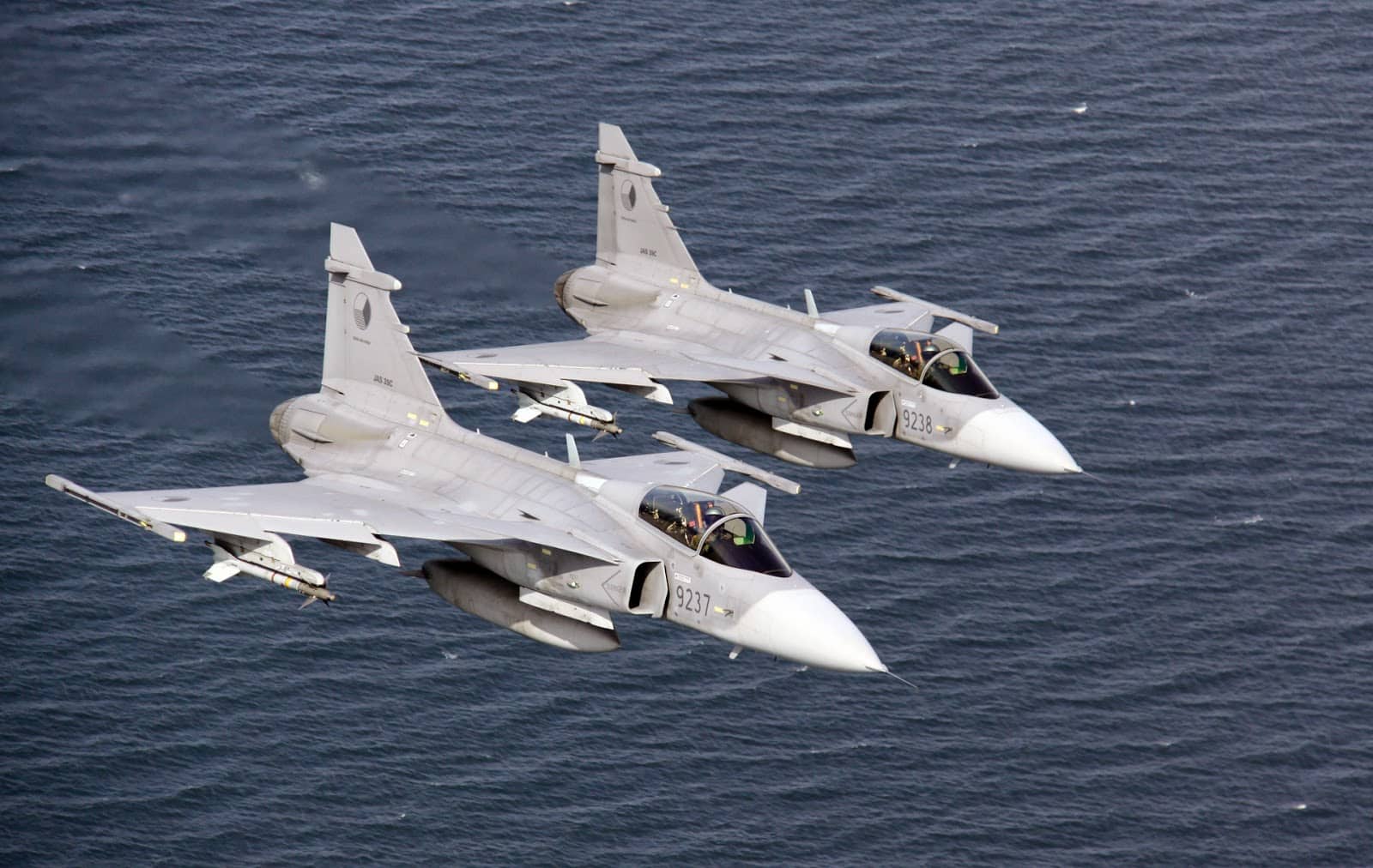
Sweden’s Saab Gripen is the epitome of smart design—built for quick turnaround, modular upgrades, and superb performance at a fraction of the cost of heavier jets.
-
The Gripen E/F variant features a powerful General Electric F414 engine.
-
Raven ES-05 AESA radar, IRST sensors, and advanced EW suite.
-
Known for superior BVR (Beyond Visual Range) combat with the Meteor missile.
-
Lightweight and ideal for dispersed operations with low logistical footprint.
💡 Best for: Countries seeking a high-performance, cost-effective fighter with rapid deployment and ease of maintenance—even from roads or makeshift airstrips.
🔍 Comparative Summary
| Feature | Rafale F4 | F-16V Block 70 | Gripen E/F |
|---|---|---|---|
| Radar | RBE2 AESA | APG-83 AESA | Raven ES-05 AESA |
| Engine | Twin-engine | Single-engine | Single-engine (F414-GE) |
| Max Speed | Mach 1.8 | Mach 2.0 | Mach 2.0 |
| Combat Range | ~1,850 km | ~1,740 km | ~1,500+ km |
| Unit Cost (est.) | $100–120 million | ~$70–80 million | ~$60–65 million |
| Operational Costs | High | Moderate | Low |
| Weapons Integration | Broad (Meteor, Scalp) | NATO-standard | Meteor, IRIS-T, etc. |
| Ideal For | Full-spectrum warfare | Interoperable missions | Agile, cost-effective ops |
🧠 Final Thoughts
Each of these fighters serves a different strategic niche:
-
The Rafale F4 is a heavyweight multi-role powerhouse built for NATO-level warfare.
-
The F-16V Block 70 is the upgraded classic: versatile, affordable, and proven.
-
The Gripen E/F is the clever tactician—lean, fast, and fierce where it counts.
Choosing among them is less about which is “best” overall and more about what a country needs in terms of doctrine, geography, and budget. But one thing is clear: this trio represents the cutting edge of modern fourth-plus-generation airpower—and they’ll shape the skies for years to come.