As the Cold War reached its peak, America needed more than just a fast aircraft—it needed a machine that could carry a message of deterrence. From that ambition, a symbol was born: the B-1 Lancer—a bomber that pushed the boundaries of speed, range, and firepower.
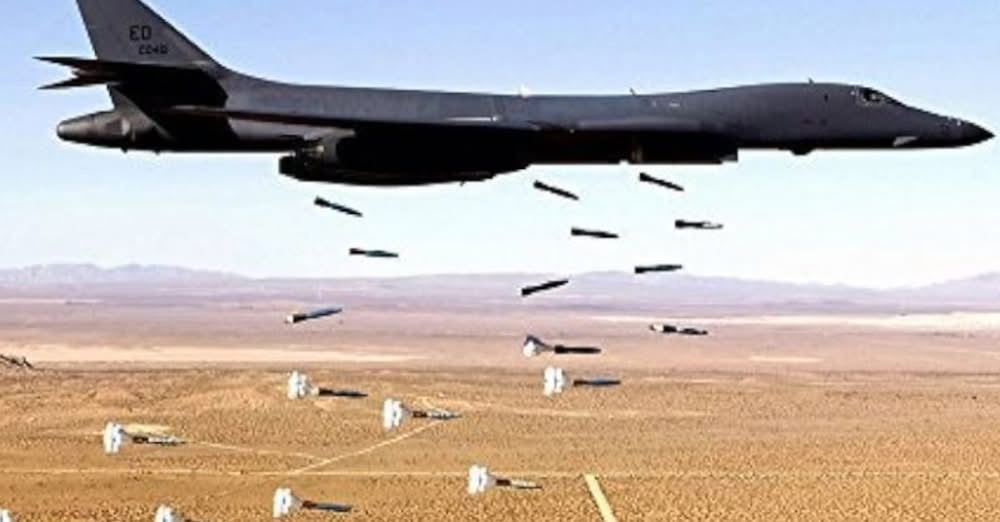
On December 23, 1974, the B-1A prototype took to the skies for the very first time. Capable of reaching Mach 2.2 at high altitude and cruising steadily at Mach 0.85, it was a marvel of engineering. Even more astonishing was its payload capacity: 94,000 pounds—a record that remains unmatched by any bomber to this day.
Rising From Political Death
The B-1 program nearly met its end when President Jimmy Carter canceled it in 1977 due to soaring costs. But just a few years later, under Ronald Reagan, the aircraft was resurrected. America needed a “steel hammer” to counter the increasingly advanced air defenses of the Soviet Union.
Boeing took over the project and redesigned it into the B-1B. Though its top speed dropped to Mach 1.2, its low-altitude, radar-evading capability was significantly enhanced. By 1985, “The Bone” officially entered service with the U.S. Air Force, first as a nuclear deterrent.
From Nuclear Weapon to Global Campaigns
With the Cold War fading, the B-1B shed its nuclear role and was converted into a conventional bomber. From Desert Fox in 1998, to Kosovo in 1999, and later Afghanistan after 9/11, the Lancer proved its adaptability. Precision strikes, relentless sorties, and devastating payloads made it a nightmare for adversaries—striking military installations, command centers, and air defense networks with ease.
For decades, whenever the B-1B appeared in the sky, it carried more than bombs. It carried a message of strategy and resolve: America can strike, anytime, anywhere.
The Final Journey
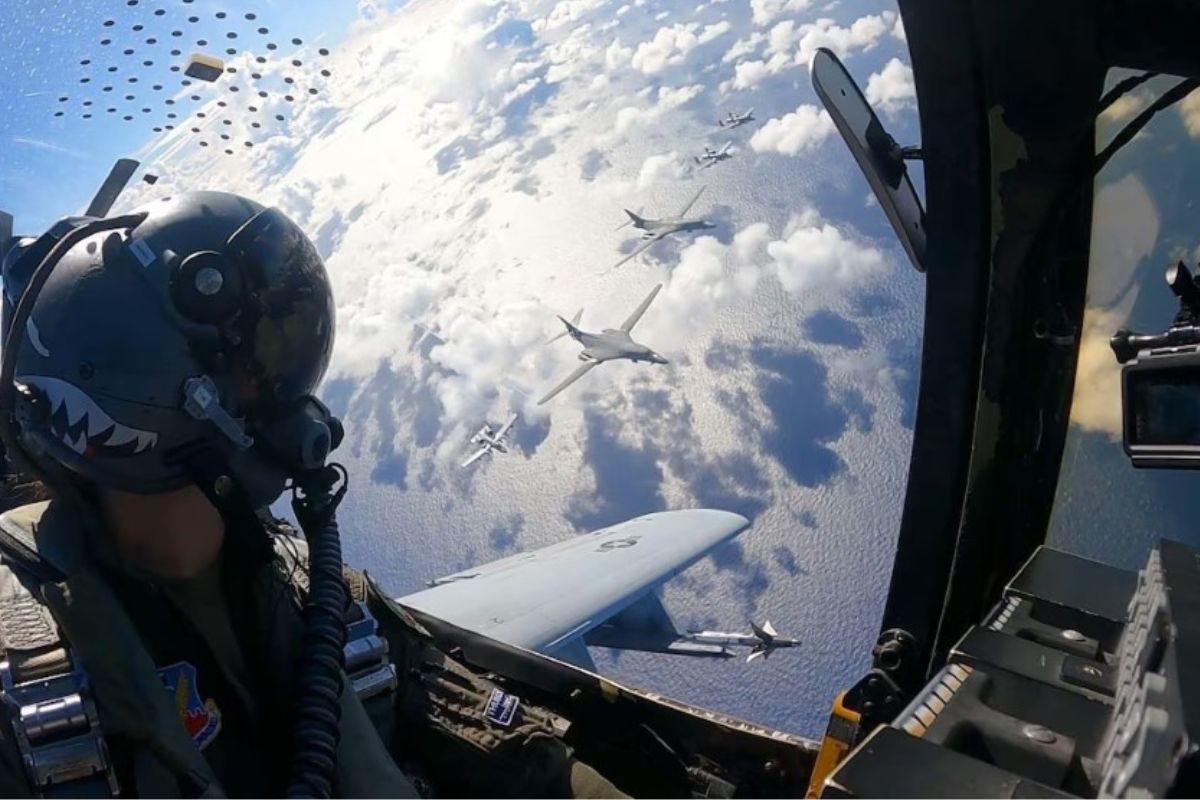
Today, only about 45 B-1Bs remain in service, stationed at Ellsworth (South Dakota) and Dyess (Texas). Nearly half a century old, they still serve as a powerful deterrent—until the arrival of the next generation bomber, the B-21 Raider.
Eventually, like the legends before it, the B-1B will make its way to the “boneyard” at Davis-Monthan Air Force Base in Arizona. Some will be scrapped, others cannibalized for parts to sustain future aircraft.
No matter its fate, the B-1B Lancer will forever remain an icon of American airpower—a war machine that carved its own epic chapter in the skies.