Introduction
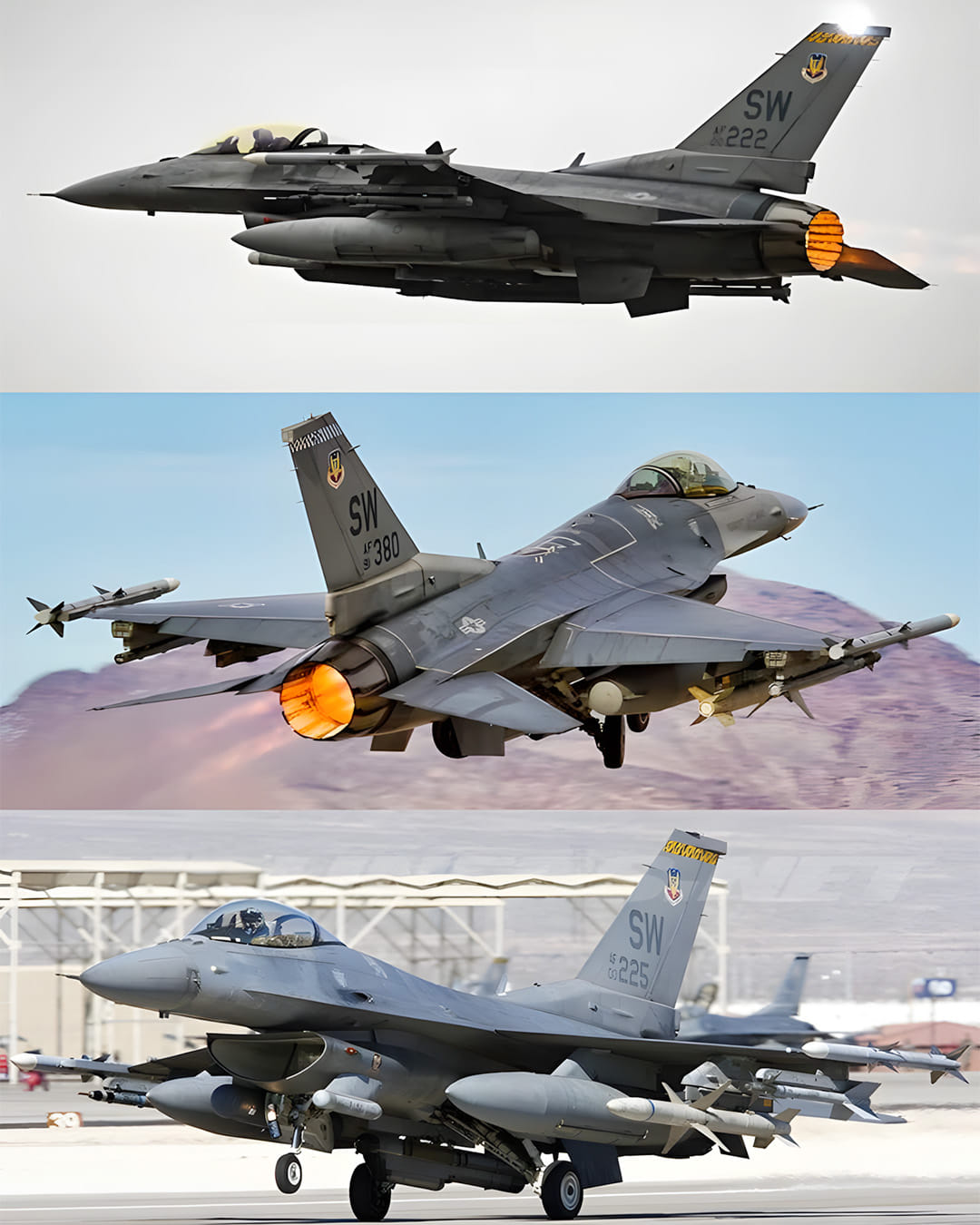
The F-16 Fighting Falcon is widely regarded as one of the most successful multirole fighters of the modern era. Developed by General Dynamics (now Lockheed Martin) in the 1970s, it has evolved into a highly adaptable platform capable of performing a wide range of missions—from air superiority to precision strike operations. This analysis takes a different view of the F-16, focusing on its operational relevance in today’s complex military environment.
Airframe and Performance
-
Design Philosophy: Lightweight, aerodynamically optimized for agility and high maneuverability.
-
Thrust-to-Weight Ratio: High, enabling excellent acceleration, tight turn performance, and dogfight superiority.
-
Speed & Altitude: Capable of speeds exceeding Mach 2 and operational ceilings above 50,000 ft.
-
Range: Combat radius of approximately 550 km with full weapons load; ferry range over 2,200 km with drop tanks.
-
Survivability: Though lacking inherent stealth, its small radar cross-section, high speed, and agility allow it to evade detection and intercept threats effectively.
Avionics and Sensors
-
Equipped with modern radar systems such as the AN/APG-83 SABR in upgraded variants, enabling air-to-air tracking, ground mapping, and precision targeting.
-
Advanced electronic warfare suites provide defensive countermeasures against radar-guided and infrared threats.
-
Integration of targeting pods and sensor fusion allows precision strikes even in contested environments.
Weapons and Payload
The F-16’s versatility is evident in its extensive armament capabilities:
-
Air-to-Air: AIM-120 AMRAAM, AIM-9 Sidewinder, and other short- and medium-range missiles.
-
Air-to-Ground: JDAMs, laser-guided bombs, and anti-armor missiles.
-
Guns: M61A1 Vulcan 20mm cannon for close-range engagements.
-
Payload Capacity: Up to 7,700 kg across 11 hardpoints, enabling simultaneous multirole mission profiles.
Operational Roles and Combat History
-
The F-16 has proven its combat effectiveness in multiple theaters, including the Middle East, Europe, and Asia.
-
Its multirole flexibility allows rapid switching between air superiority and ground attack, critical for modern hybrid warfare scenarios.
-
Allied Integration: Widely exported and interoperable with NATO systems, providing strategic cohesion and force multiplication.
Strengths
-
Agility: Superior in dogfights and low-altitude penetration missions.
-
Upgradeability: Continuous modernization ensures relevance alongside 5th-generation fighters.
-
Cost-Effectiveness: Lower operational cost compared to newer stealth platforms, allowing larger fleet maintenance.
Limitations
-
Stealth: Lacks the low observability of 5th-generation aircraft, making it vulnerable in heavily contested airspace.
-
Aging Airframes: While upgraded, older models may face fatigue issues without proper maintenance.
-
Payload vs. Range Tradeoff: High payloads reduce operational radius, limiting deep-strike capabilities without refueling support.
Strategic Implications
The F-16 continues to act as a force multiplier for air forces worldwide. Its blend of maneuverability, multirole capability, and upgrade potential allows nations to maintain credible air combat power without the prohibitive costs of newer stealth fighters. In coalition operations, F-16s often serve as the backbone of tactical air support, reconnaissance, and rapid response missions.
Conclusion
Viewed from a modern military perspective, the F-16 Fighting Falcon is far more than a legacy fighter. Its adaptability, proven combat record, and ongoing modernization make it a key component of both defensive and offensive air strategies. While not a stealth platform, its agility, avionics, and armament flexibility ensure it remains highly relevant in 21st-century aerial warfare.