The concept of the flying wing—an aircraft design that eliminates the conventional fuselage and tail to form a seamless aerodynamic body—has fascinated engineers and military planners for nearly a century. This radical design offers both aerodynamic efficiency and stealth advantages. Among the most iconic milestones in the evolution of the flying wing are the German Horten Ho-229 of World War II and the American B-2 Spirit stealth bomber. Though separated by decades, these aircraft share a lineage of innovation that reflects the persistent appeal and challenges of the flying wing concept.
The Horten Ho-229: A Visionary Beginning
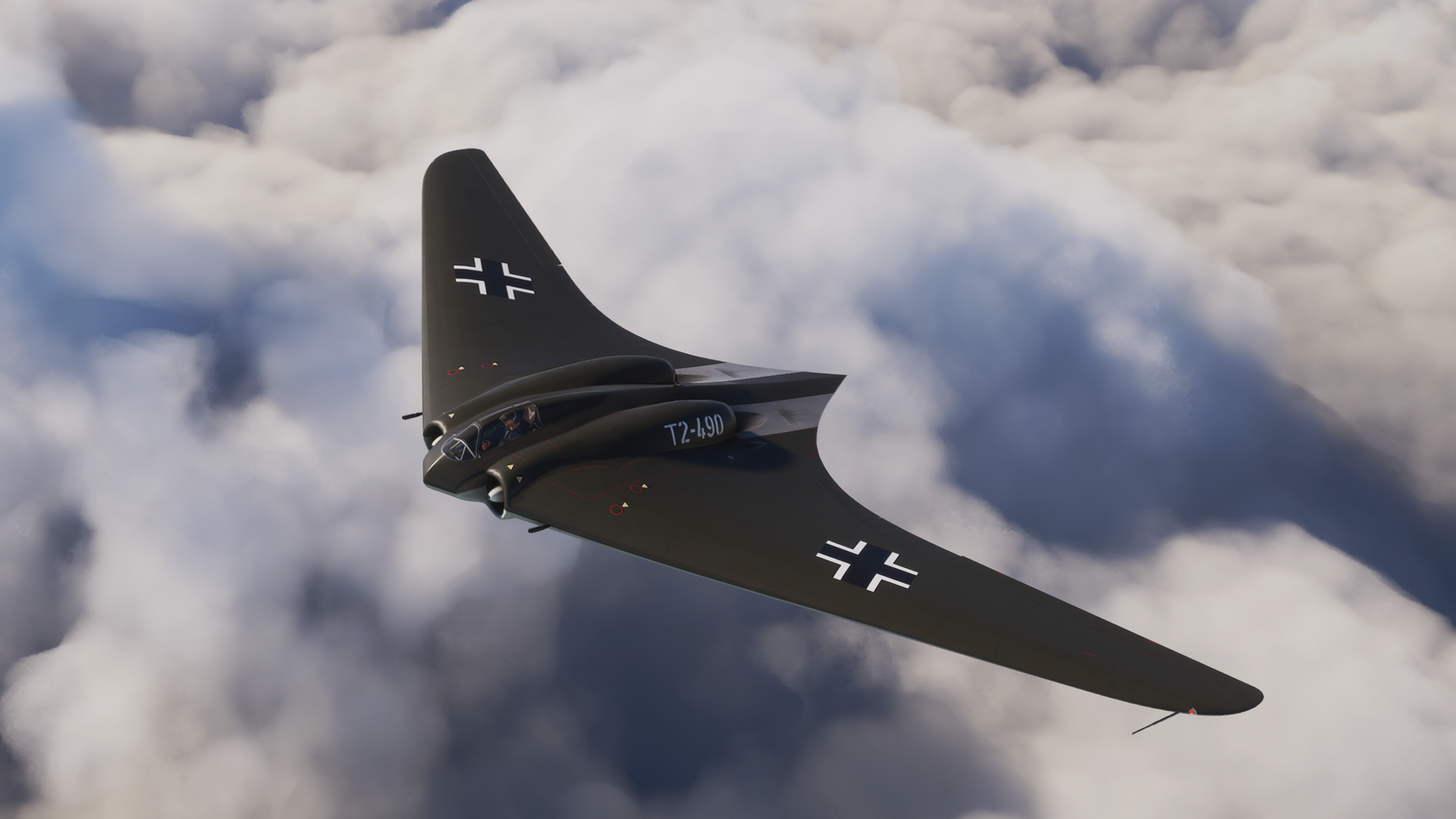
The Horten Ho-229, developed by German brothers Reimar and Walter Horten during the closing years of World War II, was the world’s first jet-powered flying wing. Originally designated as the Horten H.IX, the aircraft was conceived as part of Nazi Germany’s desperate push to counter the Allied bombing campaign. It represented an extraordinary leap in aeronautical thinking, incorporating twin turbojet engines (Jumo 004s), blended wing-body design, and radar-evading features.
What made the Ho-229 particularly remarkable was its stealth-oriented shape. Although radar technology was primitive at the time, the aircraft’s low radar cross-section was an unintentional precursor to stealth technology. The wooden construction helped reduce its radar signature, while the swept wings reduced drag and increased speed.
However, the Ho-229 never saw operational service. Only a few prototypes were built, and the program was halted with Germany’s defeat. Still, it left a legacy: it proved that the flying wing could be viable and offered compelling advantages in terms of lift-to-drag ratio and speed.
The B-2 Spirit: Maturity of the Flying Wing
More than four decades after the Ho-229, the United States Air Force unveiled the B-2 Spirit, a strategic stealth bomber developed by Northrop Grumman. First flown in 1989 and entering service in the early 1990s, the B-2 is a direct descendant of early Northrop flying wing experiments—and indirectly, the Ho-229.
The B-2 embodies the culmination of advanced materials science, computer-aided design, and stealth technology. Unlike the Ho-229, the B-2 was purpose-built for low observability, with its radar-absorbing coatings, engine inlets shielded from radar, and sawtooth trailing edges. Its flying wing configuration eliminates vertical stabilizers and fuselage structures that typically reflect radar signals.
With intercontinental range and the ability to carry both conventional and nuclear payloads, the B-2 Spirit became a critical asset for U.S. strategic deterrence. The aircraft’s design minimizes infrared, acoustic, and visual signatures, giving it unprecedented survivability in hostile environments.
![DVIDS - Images - B2 Spirit Infographic [Image 1 of 2]](https://d1ldvf68ux039x.cloudfront.net/thumbs/photos/1912/6003921/1000w_q95.jpg)
Technological and Strategic Evolution
The technological leap from the Ho-229 to the B-2 reflects profound advances in aerodynamics, propulsion, avionics, and stealth engineering. The Horten brothers were working with slide rules and intuition; Northrop Grumman had supercomputers and decades of radar science. Yet both teams grappled with the same core challenges: stability without a tail, engine integration, and structural integrity.
Moreover, the strategic context shifted. While the Ho-229 was a tactical fighter-interceptor concept, the B-2 is a long-range strategic bomber capable of global precision strikes. Its role is not just military but political—projecting power while avoiding detection.
Legacy and Future Prospects
The flying wing’s appeal endures. Modern drones like the RQ-170 Sentinel and B-21 Raider (the B-2’s successor) continue to use flying wing architectures. These designs benefit from improved stealth, efficiency, and reduced radar cross-sections—key elements for modern aerial warfare.
In hindsight, the Ho-229 was ahead of its time. It laid the groundwork, both conceptually and technically, for the B-2 and modern stealth aircraft. The journey from the misty forests of WWII Germany to the high-tech labs of the United States reflects not only technological progress but also the continuity of bold aerodynamic vision.
Conclusion
The flying wing design, once considered a futuristic anomaly, has become a cornerstone of stealth aviation. From the experimental Ho-229 to the formidable B-2 Spirit, this evolution exemplifies how visionary ideas, even when born in war, can seed transformative innovations that shape the future of airpower.