When Republic Aviation rolled out the F-105 Thunderchief in the 1950s, it was meant to be the ultimate supersonic fighter-bomber. Capable of reaching Mach 2, carrying a massive payload, and bristling with cutting-edge avionics, it looked like the perfect Cold War warrior on paper. In reality, its story is far more complicated—and fascinating. Here are five fast facts that reveal why the “Thud” remains one of the most talked-about jets of its era.

1. A Jet With Nicknames Nobody Would Want
Most fighter jets earn nicknames that sound intimidating or heroic. The F-105? Not so much. Early mechanical failures—including engine shutdowns, hydraulic problems, and avionics glitches—earned it some less-than-flattering monikers: Lead Sled, Squat Bomber, Thug, and most famously, Thud.
Where did “Thud” come from? Some say it was borrowed from a TV character named Chief Thunderthud. Others insist it was the sound the aircraft made when it hit the ground. Either way, the name stuck.

2. Low-Level Speed Demon
Built for low-altitude strike missions, the Thunderchief was incredibly fast where it mattered most. With a top speed of Mach 2.1 (2,240 km/h / 1,390 mph), it could scream past enemy MiG-17s and MiG-21s at treetop height.
During combat operations in Southeast Asia, the F-105 proved it wasn’t just about speed. The jet scored three confirmed MiG kills while flying with the USAF’s 355th Tactical Fighter Wing in Thailand. Later, it became one of the first aircraft to fly “Wild Weasel” missions, hunting down enemy surface-to-air missile sites—one of the most dangerous jobs in the sky.

3. A Flying Gas Tank
If you thought muscle cars were gas guzzlers, the F-105 took it to another level. Its massive frame required enormous amounts of fuel:
-
770 gallons inside fuselage tanks
-
390 gallons in a converted bomb-bay tank
-
650–750 gallons in a centerline drop tank
-
Two 450-gallon underwing tanks
Total: 2,810 gallons (10,600 liters). That fuel capacity gave the Thunderchief the legs for long, punishing strike missions deep into enemy territory.

4. High-Tech Avionics—High Maintenance Headaches
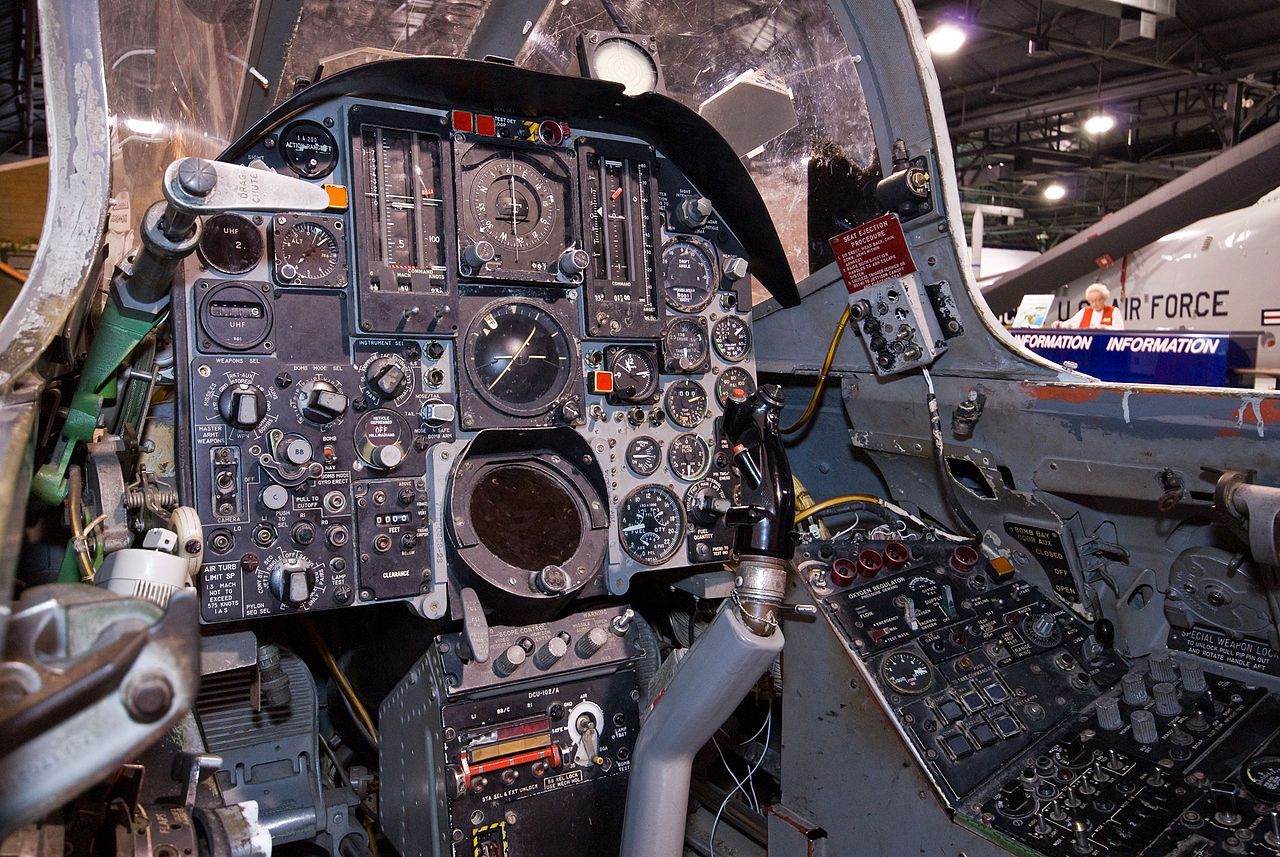
For its time, the F-105 carried some of the most advanced avionics in the world. Its NASARR R-14A radar, AN/ASG-19 “Thunderstick” fire control system, and long-range LORAN navigation gave pilots precision attack capability.
But all that technology came at a cost. Early F-105s were plagued with reliability problems. At one point, it was said the jet required 150 hours of maintenance for every single hour of flight—a logistical nightmare that nearly grounded the entire fleet.
5. A Whole Family of Variants
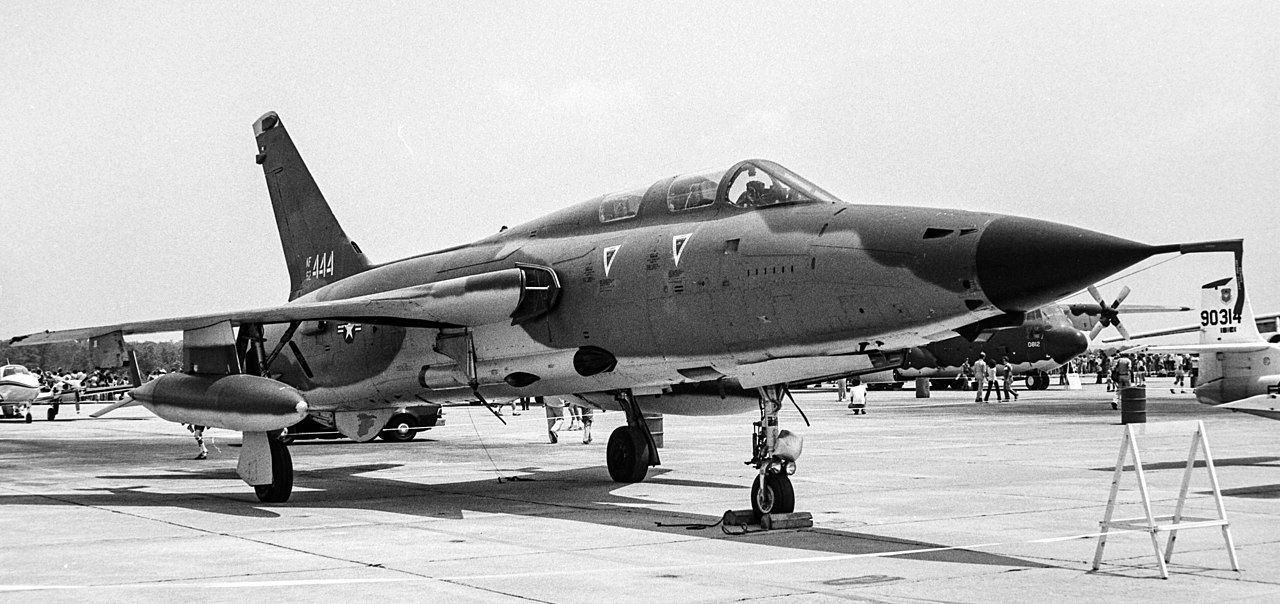
Between prototypes, trainers, and combat-ready versions, Republic Aviation produced 13 different variants of the Thunderchief. The workhorse of the family was the F-105D, an all-weather fighter-bomber, with 610 units built.
The two-seat F-105F added training capability without sacrificing combat punch, while later conversions like the EF-105F and F-105G specialized in Wild Weasel missions. By the time production wrapped up in 1964, a total of 833 Thunderchiefs had been built.
Legacy of the Thud
Love it or hate it, the F-105 was a jet that couldn’t be ignored. Heavy, fast, and temperamental, it embodied both the brilliance and the flaws of Cold War engineering. Today, the Thunderchief stands as a symbol of an era when aviation pushed limits—and sometimes paid the price for it.