In the heart of Toledo, Ohio, a wave of excitement swept through the Toledo Zoo in early December 2022. For the first time in over a decade, visitors and staff alike were greeted with the miraculous sight of polar bear twins, healthy and full of vitality. These cubs, born to Crystal, a 23-year-old polar bear with an impressive maternal history, and Nuka, an 18-year-old male, represent a beacon of hope and conservation for one of the world’s most vulnerable species. The story of their birth is not just a tale of cuteness—it is a story of resilience, expert care, and the dedication of humans committed to the preservation of wildlife.
Polar bears (Ursus maritimus) are classified as vulnerable on the International Union for Conservation of Nature (IUCN) Red List. Climate change has drastically reduced their natural habitat, and conservation efforts have become increasingly critical. The successful birth and early nurturing of these twins underscore the significance of zoos and wildlife sanctuaries in maintaining genetic diversity, providing research opportunities, and fostering public awareness about environmental stewardship.
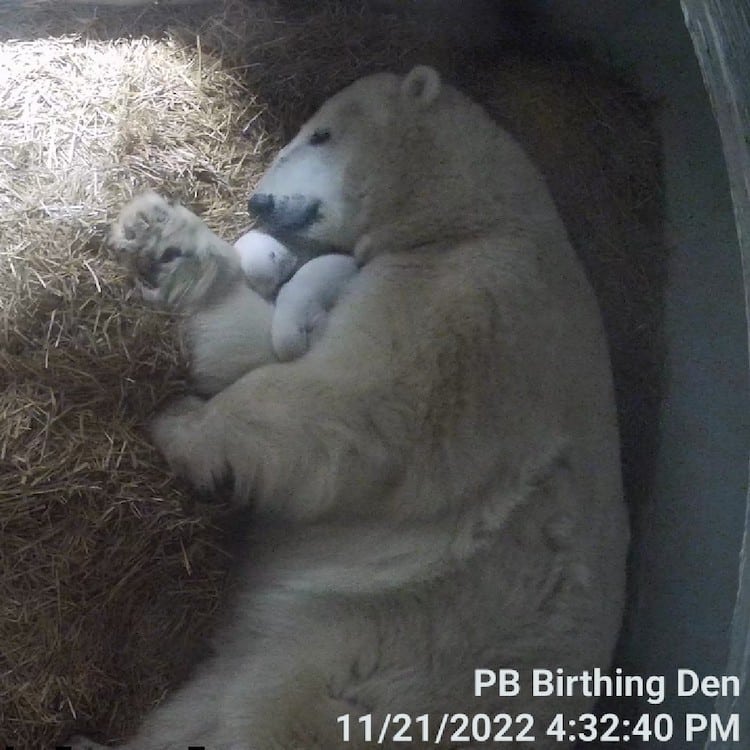
Crystal, the mother, had already proven her capability in raising healthy offspring. With seven cubs previously, she had established herself as a strong, nurturing figure within the Toledo Zoo’s mammal exhibit. Nuka, the father, contributed genetically and socially to the new family unit. Together, they created a safe environment where these twin cubs could begin life under careful supervision.
The birth itself was met with anticipation and cautious excitement. Staff monitored Crystal closely, providing necessary medical interventions while respecting her natural instincts. Newborn polar bears are delicate, and their first few weeks are critical for survival. In the wild, cubs are vulnerable to harsh conditions, predation, and maternal rejection. In captivity, dedicated staff can intervene, ensuring these fragile lives are given the best possible start.
Once the cubs were born, the Toledo Zoo took steps to maintain both safety and enrichment. Each cub’s health was meticulously monitored—weight, hydration, activity levels, and overall well-being were checked multiple times a day. Crystal, with her experienced maternal instincts, received support rather than direct interference. Veterinary staff ensured she had proper nutrition and stress-free conditions to care for her offspring. The success of these measures was evident as the cubs grew strong and active, a testament to both Crystal’s care and the zoo’s expertise.
The arrival of the twins generated a surge of interest from the public. Visitors streamed to the zoo, eager to catch a glimpse of these tiny ambassadors of conservation. The Toledo Zoo quickly adapted, offering educational programs, live-streamed videos, and interactive content to allow audiences worldwide to witness the early days of these cubs’ lives. The cubs’ playful antics and innocent curiosity became instant viral sensations, bringing attention not only to their charm but also to the broader issues facing polar bears in the wild.
Beyond their undeniable cuteness, these cubs offer valuable insights into the development of polar bears in a controlled environment. Observing their behaviors—play fighting, social interactions, and environmental exploration—provides data for researchers studying growth patterns, behavioral health, and maternal bonding. For instance, play behavior is critical for developing coordination, strength, and survival skills. Even interactions with enrichment devices, such as floating toys in water tanks or manipulable objects on land, help build cognitive abilities and problem-solving skills that will serve them well throughout life.
The zoo also prioritized environmental enrichment for both the mother and cubs. Crystal and her twins were given spaces designed to mimic aspects of the Arctic environment, including pools of varying depths, rocky outcrops, and shaded areas to regulate body temperature. These adaptations are vital for encouraging natural behaviors and reducing stress, as polar bears are highly intelligent and curious creatures that thrive in stimulating conditions.
As the cubs began exploring their surroundings, they displayed individual personalities. One cub showed early signs of boldness, venturing further from Crystal and engaging more with enrichment objects. The other demonstrated a more cautious temperament, closely shadowing the mother and observing before interacting. Staff noted these differences as they planned long-term enrichment activities to ensure both cubs had the opportunity to develop confidence, physical skills, and social competence.
The Toledo Zoo leveraged the excitement surrounding the twins to educate the public about conservation challenges facing polar bears. While the cubs thrive under human care, their counterparts in the wild face threats from melting sea ice, declining prey populations, and human encroachment. Educational programs highlighted the connection between global climate patterns, conservation efforts, and individual actions that can make a difference. By seeing the cubs’ vulnerability and playful resilience, visitors gain empathy and a deeper understanding of the importance of environmental stewardship.
The viral appeal of the twins also attracted attention from artists, photographers, and social media influencers. Creative works celebrating their arrival—illustrations, videos, and digital content—spread across platforms, reaching millions and sparking conversations about wildlife conservation. The story of these cubs demonstrates how public engagement can be intertwined with conservation messaging, using emotional resonance to foster awareness and action.
Moreover, the cubs’ arrival has implications for future breeding programs. By successfully raising twins, the zoo gains valuable experience in maternal care techniques, cub development monitoring, and environmental enrichment strategies that can be applied to other polar bear populations in captivity. Such knowledge supports broader conservation objectives, including genetic diversity management and reintroduction strategies where feasible.
As the months passed, the twins grew rapidly. Their play became more elaborate, including mock wrestling, chasing games, and interactions with water features. Staff observed improvements in coordination, strength, and social understanding. These activities were carefully monitored to ensure safety while promoting independence and healthy development. Crystal continued to exhibit strong maternal behaviors, guiding the cubs, teaching them essential skills, and providing comfort. The bond between mother and cubs, reinforced by expert care and thoughtful observation, remains central to the twins’ thriving early life.
Visitors continue to be enchanted by the cubs. Educational signage, interpretive talks, and live demonstrations provide context for their behavior, highlighting the balance between natural instincts and human-managed care. For many, witnessing the cubs’ first months offers a window into a world that most people will never see firsthand—the delicate early life of one of the Arctic’s most iconic species.
In addition to public education, the twins’ presence has a profound effect on staff. Caretakers report emotional fulfillment, noting that seeing the cubs interact, explore, and grow provides daily motivation and a tangible connection to conservation efforts. The twins become not just zoo residents but living symbols of hope, resilience, and the impact of dedicated human stewardship.
The Toledo Zoo has maintained transparency with the public, sharing updates on social media, live-streams, and educational resources. This engagement creates a sense of shared guardianship, allowing the broader community to feel invested in the cubs’ well-being. Audiences worldwide can track growth, witness play behaviors, and learn about polar bear ecology and conservation strategies in an immersive way.
Looking ahead, the cubs’ development will continue to be closely monitored. Future milestones will include weaning, increased independence, and gradual exposure to more complex environmental stimuli. Staff anticipate that as the cubs mature, they will exhibit more pronounced individual behaviors, demonstrating personality, intelligence, and social skills that reflect both genetics and early experiences.
The story of these polar bear twins is more than a celebration of cuteness; it is a reminder of the intricate balance between species survival, human intervention, and conservation education. It demonstrates how zoos can play a crucial role in preserving endangered species, fostering empathy, and inspiring action to protect the natural world.
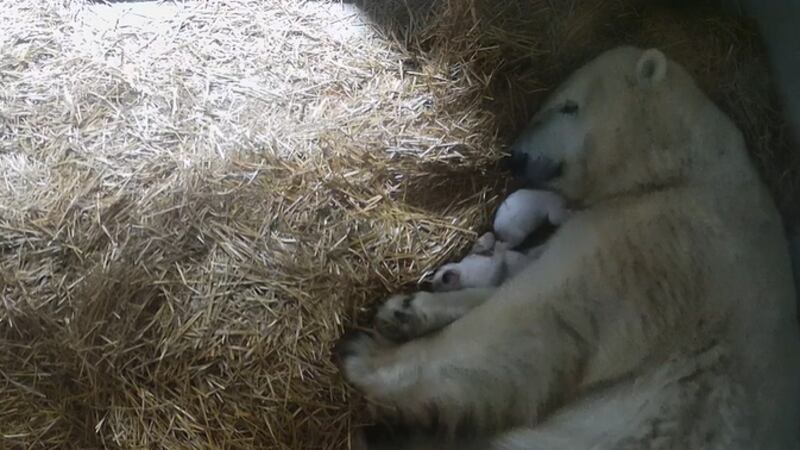
In conclusion, the arrival of Crystal’s polar bear twins at the Toledo Zoo marks a remarkable moment in wildlife conservation and education. These cubs symbolize hope for the species, the success of dedicated human care, and the power of sharing nature’s marvels with the world. Their playful adventures, tender interactions with their mother, and the attention they garner from visitors and online audiences alike create a narrative that is both heartwarming and educational.
As the cubs grow, they will continue to teach lessons about resilience, curiosity, and the importance of environmental stewardship. Crystal, the devoted mother, and her twins serve as ambassadors not only for polar bears but for the countless species whose survival depends on human awareness, compassion, and commitment.
Through this story, the Toledo Zoo has highlighted the importance of scientific expertise, emotional intelligence, and the dedication required to nurture life in captivity. The cubs’ journey is ongoing, a living testament to the delicate interplay of nature and human care, and a reminder of the joy, wonder, and responsibility that come with protecting our planet’s most vulnerable creatures.
For families, conservationists, and animal lovers around the globe, Crystal’s twins are more than a viral sensation—they are a source of inspiration, a reason to hope, and a celebration of life at its most tender and miraculous.