At first glance, it looks like nature couldn’t make up its mind.
A bill like a duck. A tail like a beaver. Feet like an otter. The platypus feels less like a real animal and more like a living puzzle—yet it exists, quietly thriving along the rivers of eastern Australia and Tasmania.
What makes it even more unbelievable?
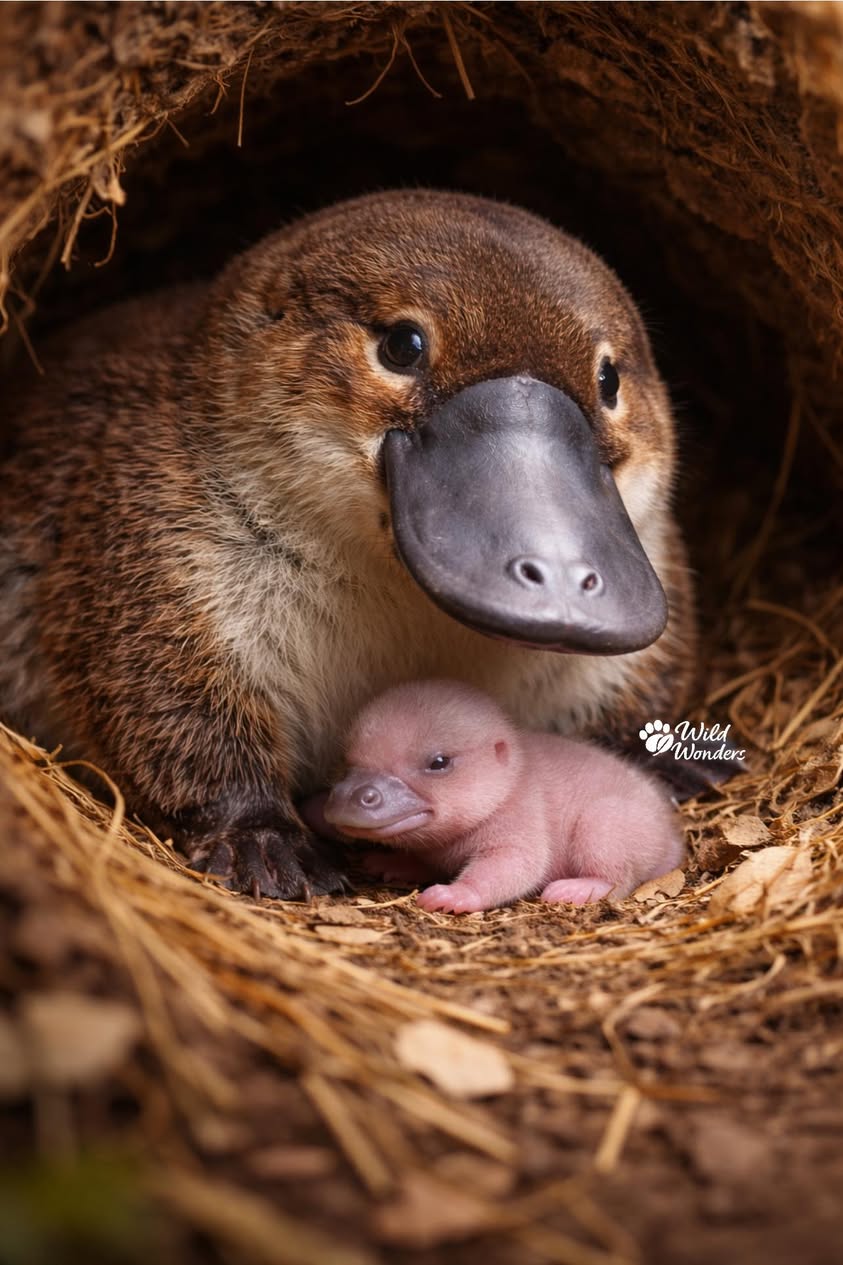
Platypuses are one of the only mammals that lay eggs. After laying them, the mother retreats into a carefully dug burrow in the riverbank, lining it with leaves to create a warm, hidden nursery. There, she raises her hatchlings far from the rushing water above—a scene that feels ancient, almost prehistoric.
But underwater is where the platypus truly becomes extraordinary.
When it dives, it closes its eyes and ears completely. Instead of seeing or hearing, it uses its bill as a living sensor, detecting tiny electrical signals released by the muscles of prey. Every movement sends a pulse, and the platypus “reads” the river like a map of invisible energy. No other mammal hunts quite like this.
Then there’s the part that surprises almost everyone.
Platypuses don’t have nipples. Instead, milk seeps from specialized skin glands, and the babies lap it directly from their mother’s fur. It’s strange, tender, and unlike anything else in the mammal world.
And just when you think it can’t get more unexpected—male platypuses carry venomous spurs on their hind legs, capable of delivering an intensely painful sting.
The platypus isn’t just different. It’s proof that nature doesn’t follow rules—it invents them.
💙 Like if this amazed you.
💬 Comment with the strangest platypus fact you learned today.
🔁 Share to spread one of nature’s greatest wonders.