Introduction
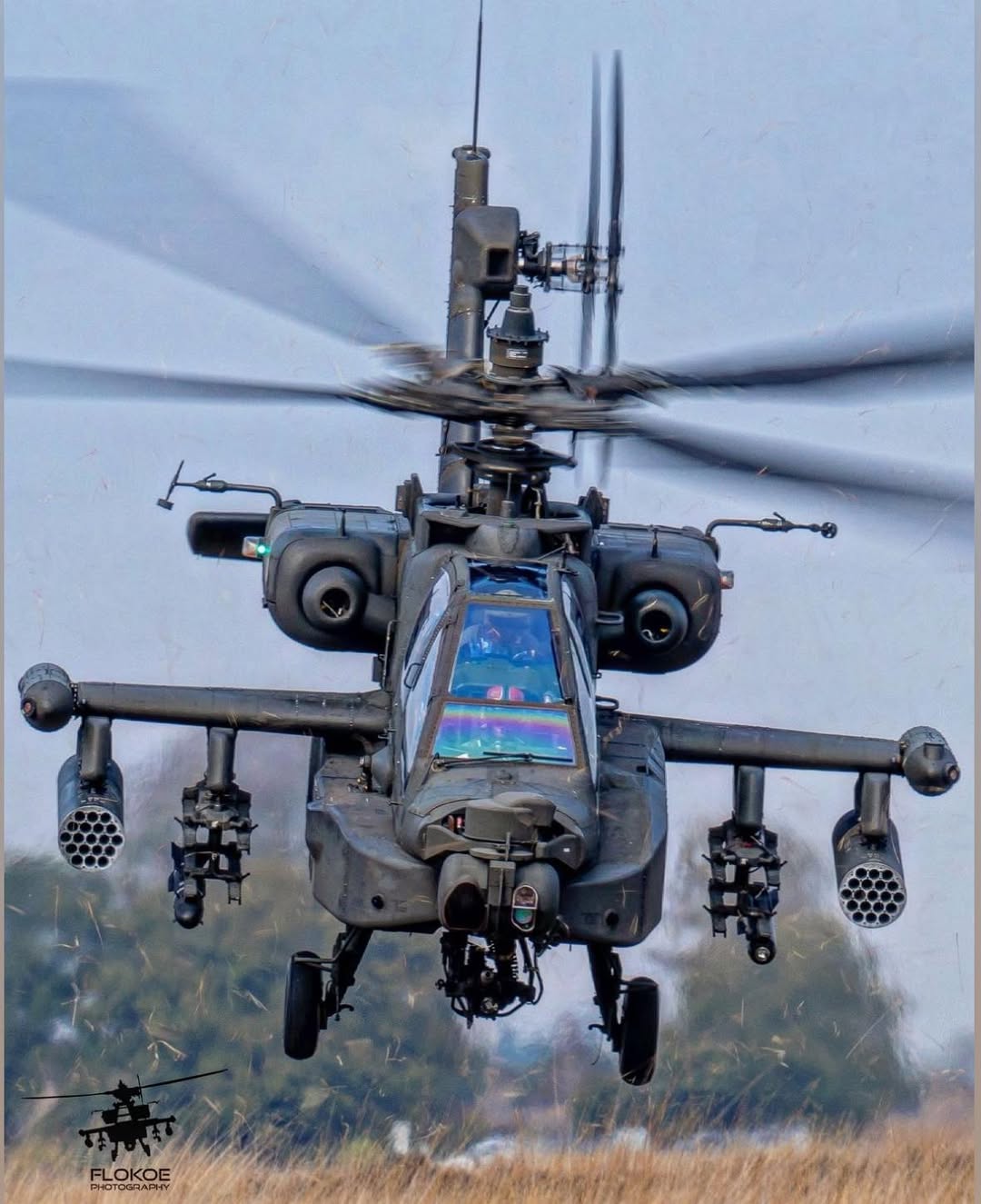
The AH-64 Apache remains the premier attack helicopter in modern militaries, combining lethality, survivability, and advanced avionics to dominate both conventional and asymmetric battlefields. Developed by Hughes Helicopters (later Boeing), the Apache has evolved through multiple variants, including the AH-64D Longbow and AH-64E Guardian, integrating advanced targeting, communications, and weapons systems.
Airframe and Survivability
-
Design Philosophy: Tandem cockpit for pilot and gunner; armored fuselage and rotor hubs to withstand small arms and shrapnel.
-
Redundancy & Resilience: Dual engines, redundant hydraulic and electrical systems, crashworthy seats, and self-sealing fuel tanks.
-
Survivability Enhancements: Radar warning receivers, infrared suppression, and countermeasure dispensers increase battlefield endurance.
Performance Metrics
-
Speed: Maximum 365 km/h (227 mph); cruising ~265 km/h (165 mph)
-
Combat Radius: ~480 km (mission-dependent; can extend with aerial refueling)
-
Service Ceiling: 6,400 ft standard, higher with auxiliary power
-
Maneuverability: Agile in low-altitude nap-of-the-earth flight, capable of terrain masking to evade radar and missile threats.
Avionics and Targeting Systems
-
Target Acquisition & Designation System (TADS): Day/night surveillance, target tracking, and laser designation.
-
Pilot Night Vision System (PNVS): Infrared vision for low-light and adverse weather operations.
-
Longbow Radar (AH-64D/E): Millimeter-wave fire-control radar capable of tracking multiple targets simultaneously in all weather conditions.
-
Battlefield Integration: Link-16 and networked communications for real-time situational awareness and joint-force coordination.
Weapons and Payload
-
Primary Cannon: 30mm M230 Chain Gun, precision and high cyclic rate for close combat support.
-
Air-to-Ground: AGM-114 Hellfire missiles (anti-armor, precision strike)
-
Air-to-Air: Stinger missiles for defensive engagements
-
Rockets: Hydra 70 70mm unguided rockets for area suppression or soft-target engagements
-
Load Capacity: Up to 16 Hellfire missiles and/or a combination of rockets and cannon ammunition per mission profile.
Operational Roles and Doctrine
-
Anti-Armor Operations: Primary platform for destroying main battle tanks and armored columns.
-
Close Air Support (CAS): Supports ground troops with precise and sustained firepower.
-
Reconnaissance & Target Acquisition: Conducts armed reconnaissance in contested environments.
-
Network-Centric Warfare: Provides real-time target data to command-and-control networks, enhancing battlefield integration.
Strengths
-
Lethality: Precision-guided munitions and 30mm cannon provide unmatched strike capabilities.
-
All-Weather, Day/Night Capability: Integrated sensors allow operations in adverse conditions.
-
Survivability: Armored airframe and countermeasures reduce vulnerability to small arms, MANPADS, and surface fire.
-
Interoperability: Easily integrated into multinational and joint-force operations.
Limitations
-
Logistical Footprint: High maintenance requirements and operational costs.
-
Vulnerability: While survivable, advanced surface-to-air systems (SAMs) pose significant threats.
-
Payload vs. Endurance Tradeoff: Maximum weapons load reduces flight time and maneuvering flexibility.
Strategic Impact
The Apache has transformed rotary-wing operations, becoming a force multiplier in both conventional and asymmetric conflicts. Its ability to provide direct fire support, anti-armor engagement, and real-time intelligence enables ground forces to operate with increased speed, flexibility, and survivability. In modern hybrid warfare, the Apache integrates effectively with drones, ISR assets, and precision strike networks.
Conclusion
The AH-64 Apache continues to exemplify the evolution of attack helicopters: combining advanced targeting, lethal firepower, and battlefield resilience. Despite high operational costs, its combat-proven capabilities and adaptability ensure it remains an essential platform for modern air-land operations, capable of dominating both traditional armored threats and complex asymmetric environments.