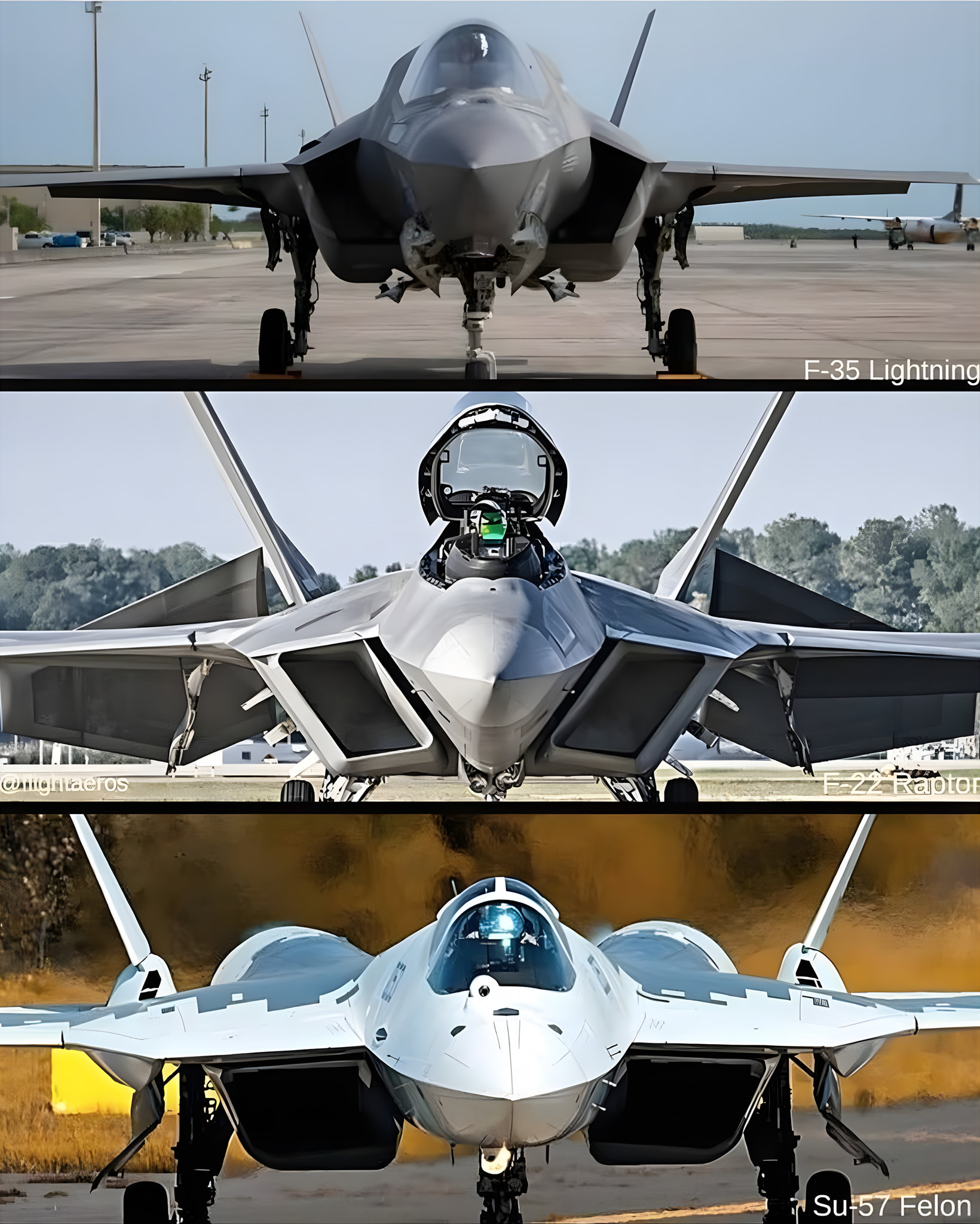
Fifth-generation fighter aircraft represent the cutting edge of military aviation, combining stealth, advanced sensors, and superior maneuverability. Among the most formidable of these are the U.S. F-35 Lightning II, the U.S. F-22 Raptor, and Russia’s Su-57 Felon. While they share common fifth-gen traits, each was designed with distinct strategic philosophies and battlefield roles in mind.
1. Design Philosophy & Roles
-
F-22 Raptor:
Built as an air dominance fighter, the Raptor was engineered during the Cold War to ensure U.S. aerial superiority against Soviet threats. Speed, stealth, and supermaneuverability define its core strengths. It excels in air-to-air combat, with unmatched agility and stealth in high-threat environments. -
F-35 Lightning II:
Conceived as a multirole fighter, the F-35 prioritizes versatility, affordability (relative to the F-22), and interoperability among allied forces. With advanced sensors, network-centric warfare capabilities, and stealth optimized for strike missions, it’s less about raw dogfighting and more about dominating the information battlefield. -
Su-57 Felon:
Russia’s answer to American stealth fighters, the Su-57 aims to blend stealth with the maneuverability of the Su-27 family. While less stealth-optimized than its U.S. counterparts, it emphasizes agility, range, and weapons flexibility, reflecting Russia’s doctrine of multi-role combat under electronic warfare-heavy conditions.
2. Stealth & Survivability
-
F-22:
Considered the stealthiest of the three, the Raptor’s airframe and coatings prioritize radar cross-section reduction from all angles. Combined with its high speed and altitude performance, the Raptor is designed to “first see, first shoot, first kill.”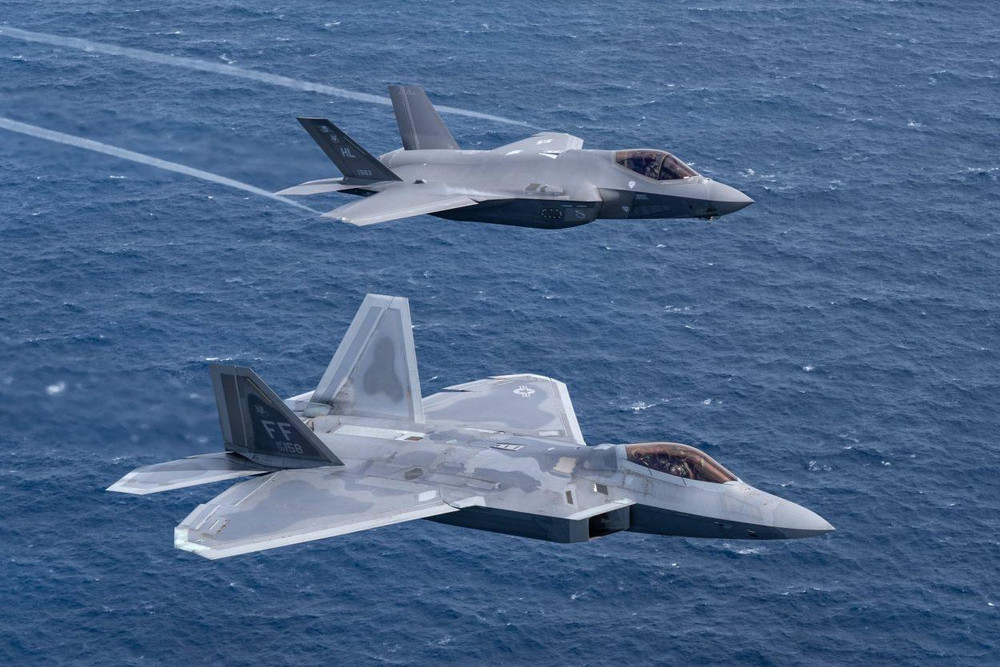
-
F-35:
While stealthier than most non-U.S. aircraft, the F-35’s low observability is optimized against ground-based radars rather than air-to-air threats. It trades some stealth refinements for cost-efficiency and broader mission adaptability.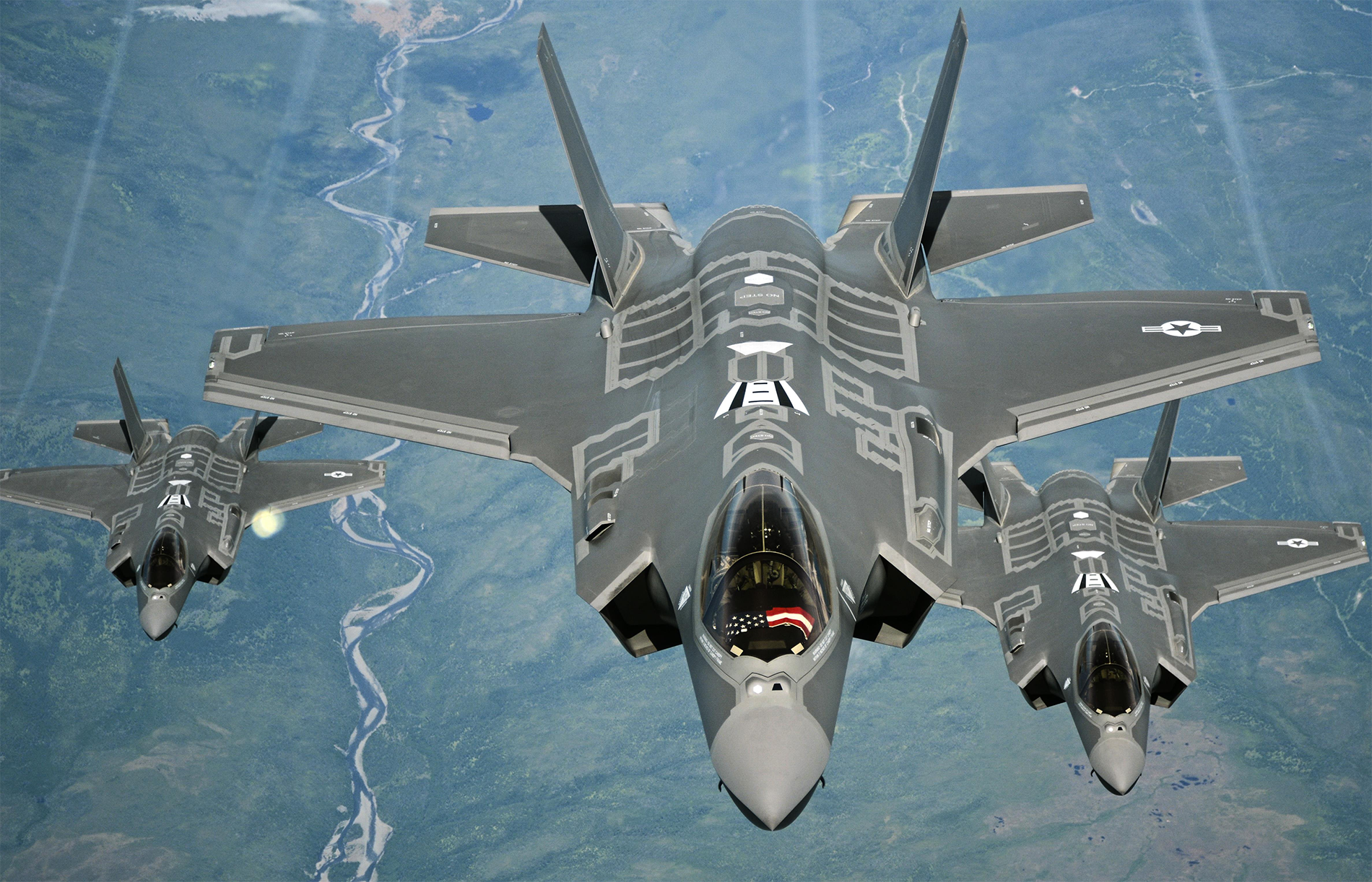
-
Su-57:
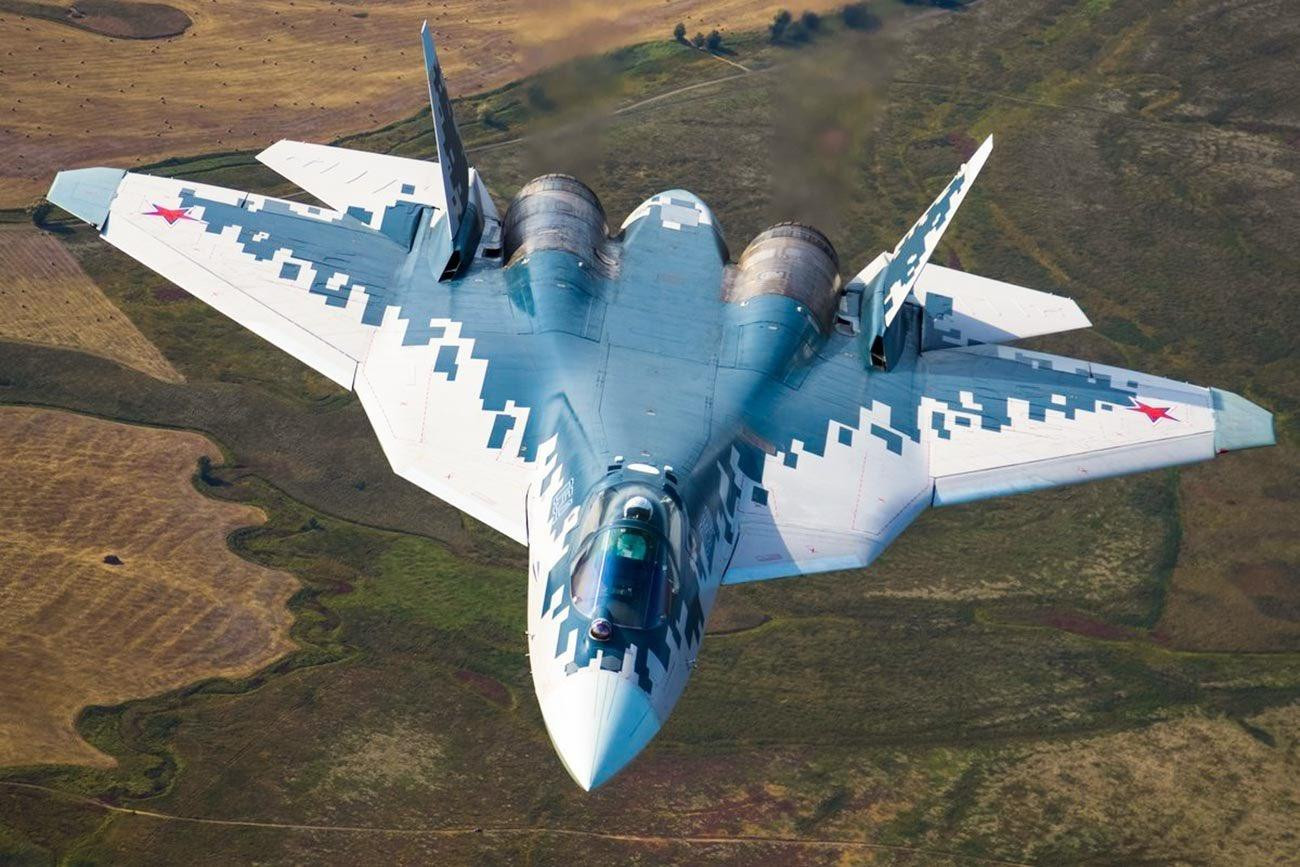
Features stealth shaping and radar-absorbent materials but does not match the low observability of the American jets. Larger radar signature is a compromise to retain aerodynamic performance and internal weapon flexibility.
3. Agility & Performance
-
F-22:
With thrust-vectoring engines, supercruise capability (sustained supersonic flight without afterburners), and extreme maneuverability, the Raptor is unmatched in aerial agility. -
F-35:
Less agile and slower compared to the Raptor, with a lower maximum speed (Mach 1.6). Its strength lies not in dogfighting but in beyond-visual-range engagements aided by advanced sensors. -
Su-57:
Highly maneuverable with thrust-vectoring and aerodynamic agility inspired by Flanker designs. It emphasizes close-in dogfight capability, aligning with Russia’s tradition of highly agile fighters.
4. Avionics & Sensor Fusion
-
F-22:
Advanced but somewhat limited by its older computing architecture. While lethal, its closed design restricts rapid upgrades. -
F-35:
The most advanced in terms of sensor fusion and network-centric warfare. Its Distributed Aperture System (DAS) and helmet-mounted display give pilots unparalleled situational awareness, allowing the F-35 to act as a battlefield “quarterback.” -
Su-57:
Incorporates modern avionics and multi-band radar systems, though real-world performance remains less proven. Russia claims advanced electronic warfare systems, but battlefield validation is limited.
5. Weapons & Payload
-
F-22:
Internal bays carry air-to-air missiles (AIM-120 AMRAAM, AIM-9X) with some limited ground-attack capability. Its weapons focus reflects its pure air superiority role. -
F-35:
Smaller internal bays but capable of carrying precision-guided bombs, air-to-air missiles, and electronic warfare pods. Can switch between stealth mode (internal weapons only) and “beast mode” (external pylons). -
Su-57:
Designed with larger internal bays to carry a variety of missiles, including long-range hypersonic weapons in development. Greater emphasis on versatility and firepower.
6. Strategic Impact & Deployment
-
F-22 Raptor:
With fewer than 200 in service, the Raptor is an elite, niche weapon for U.S. air dominance. Its production was capped due to cost, but it remains peerless in aerial combat. -
F-35 Lightning II:
With over 1,000 delivered across multiple countries, the F-35 is the most widely deployed fifth-gen fighter, reshaping allied air forces and standardizing NATO combat capabilities. -
Su-57 Felon:
Still in limited production, with fewer than 30 operational units as of now. Its true impact remains untested, though Russia positions it as a counterweight to Western stealth aircraft.
🔎 Conclusion
-
F-22 Raptor: unmatched in air-to-air combat, a pure predator in the skies.
-
F-35 Lightning II: the most versatile and technologically advanced, revolutionizing modern warfare through data dominance and coalition strength.
-
Su-57 Felon: a hybrid of stealth and agility, representing Russia’s attempt to balance cost, maneuverability, and firepower.
Each fighter embodies the strategic doctrine of its nation:
-
The U.S. builds for global dominance and coalition warfare.
-
Russia builds for adaptability and high-maneuver combat.
In the end, the F-22 remains the king of the dogfight, the F-35 the networked warfighter of the future, and the Su-57 a formidable but still maturing challenger.