From the soft shadows of a hay-lined den, two tiny jaguar cubs make their first hesitant steps into the world. Their coats, dappled with golden rosettes, catch the morning light as they tumble over one another in playful, clumsy bursts of energy.
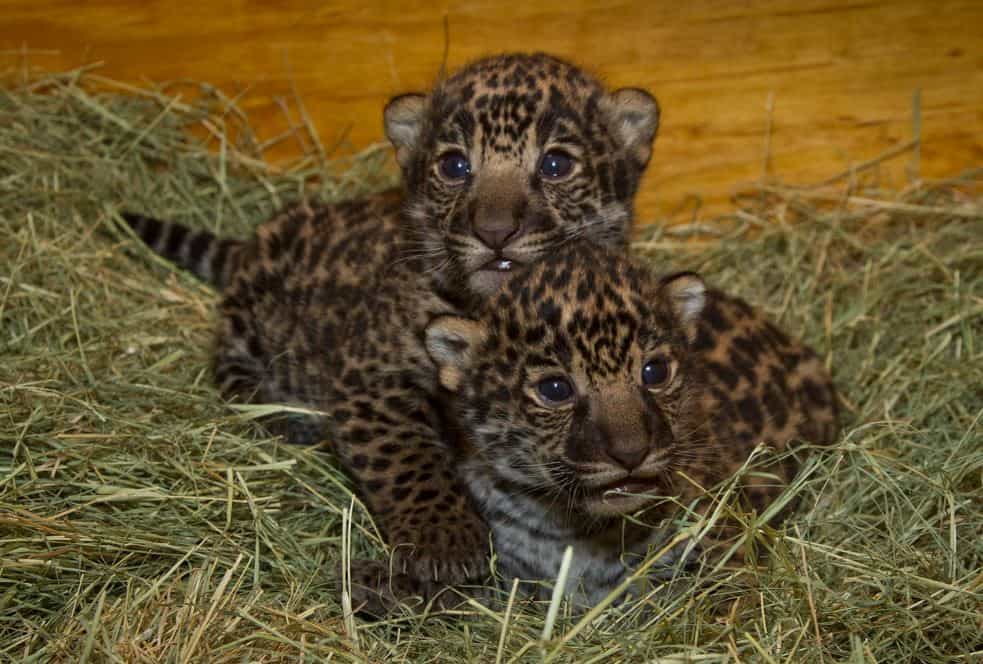
One, weighing just four pounds, pauses mid-step to stretch and yawn—a gesture both endearing and full of promise. This is not merely a display of charm; it is the first flicker of a wild spirit destined for the forests and riversides of its ancestors.
Nearby, Nindiri, their vigilant seven-year-old mother, keeps a watchful eye. With the gentlest grip, she lifts her young between her teeth, moving them to safety as jaguar mothers have done for millennia.
Born on March 12, the cubs began their lives at a mere two pounds each. Now, their small bodies are growing stronger, doubling in size under the constant care of their mother. For weeks, they remained tucked away from the public eye—eyes sealed shut, limbs still unsure—until the day their vision cleared and their steps steadied.

That day came during the Zoo’s “Play Days,” when visitors gathered to witness the cubs’ first public appearance. Keepers had prepared the habitat with hay, stones, and gentle slopes to encourage exploration. Every movement was tentative yet full of curiosity, a living reminder of how fragile and precious new life can be.
Senior keeper Chad Summer notes that such births are more than joyful moments—they are crucial victories. In the wild, fewer than 10,000 jaguars remain, their numbers dwindling as hunters seek their fur and ranchers view them as threats. Each cub born offers hope, a step toward reversing the decline.

Here, in the safety of the Zoo, these young jaguars will grow—not just as animals, but as ambassadors for their species. One day, perhaps, they may roam in the wild places that inspired their kind’s legend.
For now, they are content to tumble in the morning light—symbols of resilience, beauty, and the delicate balance of nature.