Getty
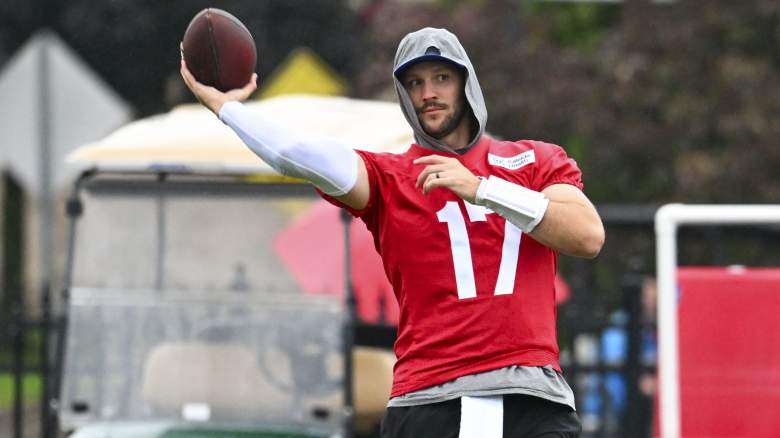
Josh Allen knows the Bills don’t have the best track record in the playoffs as of late, but he believes the team is more than capable of finding its way to the Super Bowl
Josh Allen is preparing to enter his ninth NFL season, and there is little question about how important he has become to everything the Buffalo Bills are trying to accomplish. After spending nearly half a decade among the NFL’s elite quarterbacks, Allen has earned considerable influence within the organization.
But with that influence comes an interesting question: Could Buffalo’s franchise quarterback eventually have too much control over how the offense operates?
That discussion has surfaced after The Athletic NFL insider Mike Sando revealed that he has heard concerns from people around the league regarding the amount of freedom Allen has, particularly when it comes to pass protection.
“I’ve heard whispers of people complaining a little bit in the league about the fact that Josh Allen kind of gets to do the pass protection how he wants them, and I think that’s been a source of frustration for the staff at times in the past,” Sando said Monday during an appearance with Damon Amendolara.
Those comments do not necessarily suggest that Buffalo has a serious internal problem. Veteran quarterbacks regularly receive significant freedom at the line of scrimmage, especially players with Allen’s experience and accomplishments.
Still, the situation becomes more interesting because of one major change in Buffalo this offseason: Joe Brady is now the Bills’ head coach.
Joe Brady’s Promotion Changes the Dynamic With Allen
Brady and Allen already developed a close working relationship while Brady served as Buffalo’s offensive coordinator. Now that Brady has moved into the head coaching position, their relationship will naturally evolve.
Under former head coach Sean McDermott, Buffalo had a defensive-minded coach at the top of the organization. McDermott could provide a different perspective and potentially serve as a counterbalance when offensive decisions were being discussed.
With Brady now running the entire team, Sando wondered whether Allen could have even greater influence.
“Is it too much of a good thing when your playcaller goes from kind of being your confidant and maybe a little bit more of a friend and now going into that head coaching job? That’s an interesting transition to make,” Sando said.
He also pointed toward the different dynamic that existed with McDermott.
“When clearly, before with Sean McDermott, when he was in charge, he also had a defensive pedigree. I’m sure he went along with a lot of what Allen wanted to do, but there was a little bit more of a check and balance there, I think.”
That potential change is worth monitoring throughout the 2026 season.
Allen was also involved in Buffalo’s head coaching search. According to The Athletic’s Tim Graham, the quarterback participated in interviews and was viewed as having approved Brady’s promotion.
That should hardly be surprising.
When an organization possesses one of the NFL’s premier quarterbacks, his opinion is naturally going to matter when selecting the coach responsible for guiding the next stage of the franchise.
But Buffalo must still make sure that collaboration does not become complete control.
Allen and Brady Must Find the Right Balance
There is nothing inherently wrong with Brady trusting Allen.
In fact, allowing an experienced quarterback to make adjustments at the line of scrimmage can be an enormous advantage. Allen has seen virtually every defensive coverage and pressure package imaginable during his career.
Giving him freedom to identify pressure and adjust protection could make Buffalo’s offense more difficult to defend.
The challenge will be maintaining accountability.
Brady is no longer simply the offensive coordinator responsible for helping Allen succeed. He is responsible for the entire football team.
That means there may be situations where Brady has to challenge his quarterback, reject an idea or make a decision Allen does not necessarily agree with.
How both men handle those moments could tell Buffalo a great deal about whether their new arrangement can succeed.
Tom Brady and Bill Belichick Offer an Interesting Comparison
The original discussion also raised Tom Brady and Bill Belichick as an example of a quarterback-coach relationship that maintained accountability despite enormous success.
Brady became one of the greatest quarterbacks in NFL history, but Belichick remained willing to coach him aggressively and hold him accountable.
Their relationship was not built around the quarterback always getting what he wanted. It was based on respect, high standards and a shared expectation of winning.
Together, they won six Super Bowl championships with the New England Patriots.
Buffalo does not need Allen and Joe Brady to copy that relationship exactly. Every quarterback and coach partnership operates differently.
But the underlying principle remains relevant.
Allen needs a head coach who trusts his instincts while still being willing to challenge him when necessary.
Brady, meanwhile, needs Allen’s experience and football intelligence without allowing the offense to become dependent entirely on what the quarterback wants.
That balance could become particularly important when Buffalo encounters adversity.
Winning tends to make relationships easy. Losing games, struggling offensively or making costly mistakes is when the strength of a quarterback-coach partnership is truly tested.
There is currently no indication that Allen and Brady have reached that kind of conflict.
Instead, the comments surrounding Allen’s influence raise an intriguing question as Buffalo enters a new era.
Allen has earned the right to have a significant voice. He is the franchise quarterback and the player around whom Buffalo’s championship hopes revolve.
But Brady is now the head coach.
Finding the right balance between empowering Allen and maintaining coaching authority could become one of the most important storylines of the Bills’ 2026 season — particularly for a franchise still searching for the Super Bowl breakthrough that has remained just out of reach.