The Ka-52 Alligator, developed by Russia’s Kamov design bureau, is a cutting-edge attack helicopter that represents a significant leap forward in rotary-wing combat technology. Designed as a twin-seat variant of the legendary Ka-50 “Black Shark,” the Ka-52 combines firepower, speed, and advanced avionics to operate effectively in modern high-threat environments.

Design and Airframe
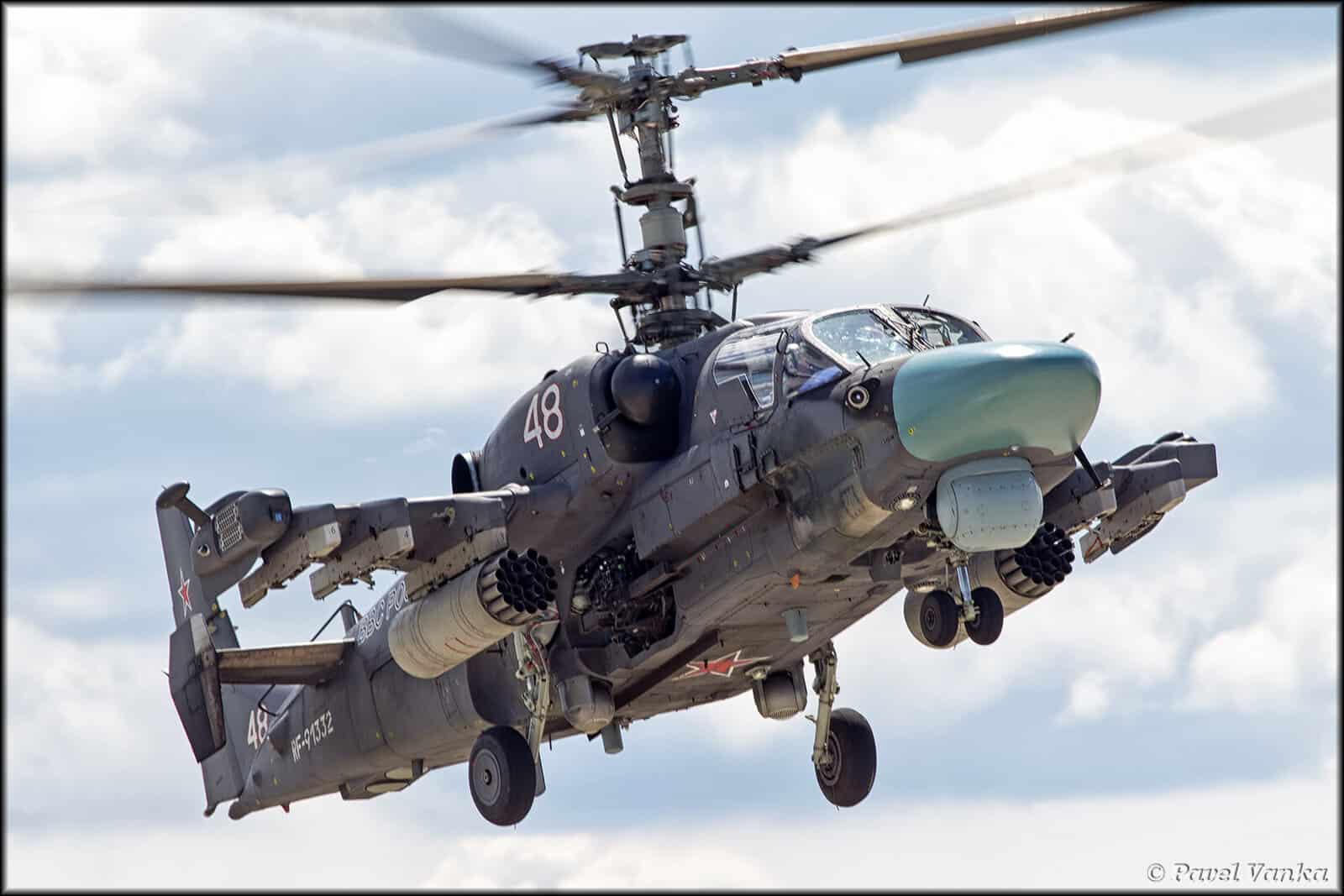
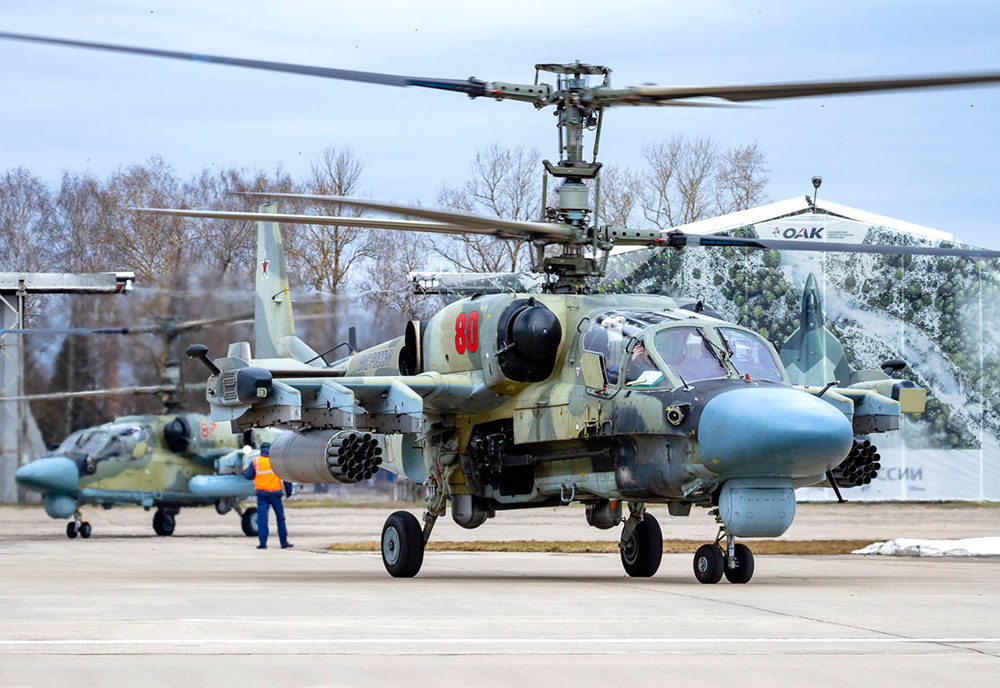
Unlike traditional helicopters, the Ka-52 features a coaxial rotor system, eliminating the need for a tail rotor. This design provides several advantages:
-
Increased maneuverability: The coaxial rotors allow tighter turns and higher agility, especially useful in urban or mountainous terrain.
-
Reduced radar signature: The compact rotor layout contributes to a lower radar and infrared profile.
-
Higher speed potential: Coaxial rotors reduce drag, enabling the helicopter to achieve speeds up to 300 km/h (approximately 186 mph).
The helicopter is also armored with titanium and composite materials, providing survivability against small-arms fire and certain anti-aircraft systems. The cockpit is equipped with ejection seats, a rare feature for helicopters, enhancing crew safety in emergencies.
Avionics and Sensor Systems
The Ka-52 is equipped with state-of-the-art avionics that allow it to operate both day and night under adverse weather conditions:
-
Radar system: The “Crossbow” radar allows simultaneous detection and engagement of ground and aerial targets.
-
Optoelectronic systems: High-resolution cameras and laser rangefinders provide precise target acquisition and tracking.
-
Helmet-mounted sights: Both crew members can designate targets independently, allowing coordinated strikes.
-
Electronic warfare capabilities: Advanced countermeasure systems help evade surface-to-air missiles and radar-guided threats.
Armament
One of the Ka-52’s most formidable features is its versatile weapons suite:
-
30mm 2A42 autocannon: Mounted in a flexible turret, capable of engaging infantry, armored vehicles, and low-flying aircraft.
-
Anti-tank guided missiles (ATGMs): Can carry up to 12 missiles, including Vikhr or Ataka, capable of penetrating modern armored vehicles.
-
Rocket pods: Supports both unguided and precision-guided rockets for area suppression.
-
Air-to-air missiles: Provides limited capability to engage helicopters and low-speed aircraft.
This combination of weapons allows the Ka-52 to conduct both anti-armor and close air support missions, giving it multi-role flexibility on the battlefield.
Operational Capabilities
The Ka-52 is designed for all-weather, day-and-night operations, making it highly effective in modern combat scenarios. Its coaxial design allows for low-altitude flight over rough terrain, while the armored cockpit and redundancy in systems enhance survivability. Additionally, the Ka-52 can operate in tandem with other helicopters, drones, and ground forces for coordinated strikes.
Strategic Implications
The Ka-52 Alligator represents a significant strategic asset for Russia. Its combination of speed, firepower, and sensor capabilities allows it to challenge both armored units and enemy helicopters effectively. Modern conflicts increasingly rely on precision strikes and rapid battlefield maneuvering, and the Ka-52’s versatility makes it a valuable platform in asymmetric warfare, urban combat, and conventional large-scale engagements alike.
Conclusion
In essence, the Ka-52 Alligator is not just an attack helicopter—it is a highly advanced, multi-role combat system capable of performing precision strikes, reconnaissance, and support missions under extreme conditions. Its unique coaxial design, powerful armament, and modern avionics make it one of the most formidable rotary-wing aircraft in the world today, offering a glimpse into the future of helicopter warfare.