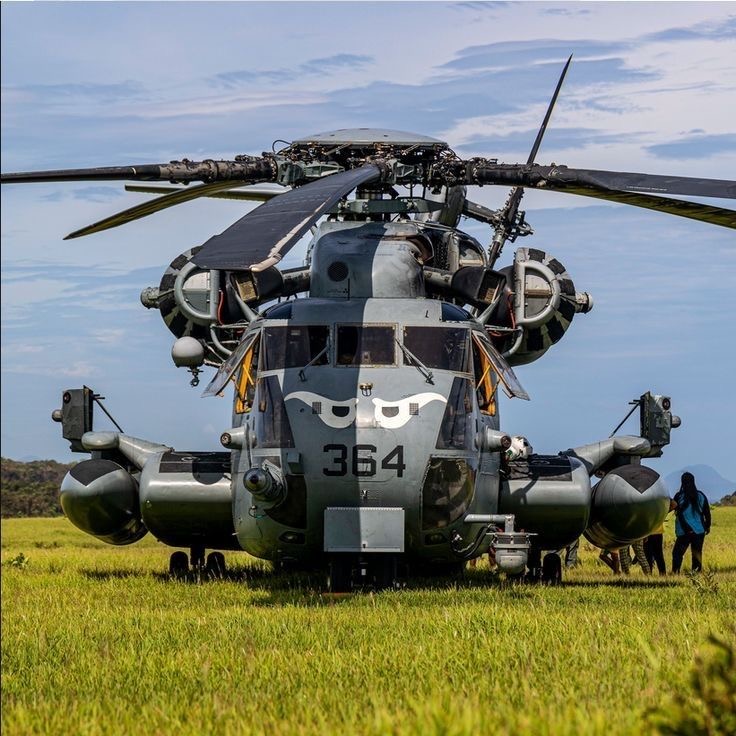
The Sikorsky SH-3 Sea King is one of the most iconic helicopters of the Cold War era. Instantly recognizable by its rounded fuselage, large side sponsons, and five-blade main rotor, the Sea King first flew in the late 1950s and entered U.S. Navy service in 1961. Originally designed for anti-submarine warfare, it carried advanced sonar, radar, and torpedoes, protecting carrier strike groups from underwater threats.
Versatile beyond its ASW role, the Sea King handled search and rescue, medical evacuation, transport, and airborne early warning. It famously recovered NASA astronauts after splashdowns and even served as the U.S. presidential helicopter under the call sign “Marine One.”
Internationally, the Sea King was adapted by the UK, Italy, Japan, and others, performing troop transport, maritime patrol, and logistics—even proving critical during the Falklands War. Its twin turboshaft engines, boat-like hull, and reliable performance made it a true workhorse of naval aviation.
Though gradually replaced by modern helicopters, the SH-3’s legacy endures—through its continued service worldwide and its civilian counterpart, the Sikorsky S-61, which supports firefighting, offshore operations, and heavy lift missions.
The Sea King isn’t just a helicopter—it’s a symbol of innovation, adaptability, and decades of naval aviation history.