At barely 7–11 inches long, the dwarf mongoose could easily be overlooked.
Small. Quiet. Fragile-looking.
But behind that tiny frame lives one of nature’s most remarkable stories of teamwork, trust, and survival.
Across the African savanna, these miniature carnivores never face the world alone. As they forage through grass and soil, stirring up insects hidden beneath the earth, an unlikely partner stands guard above them — the hornbill.
While the mongooses hunt, the hornbill watches.
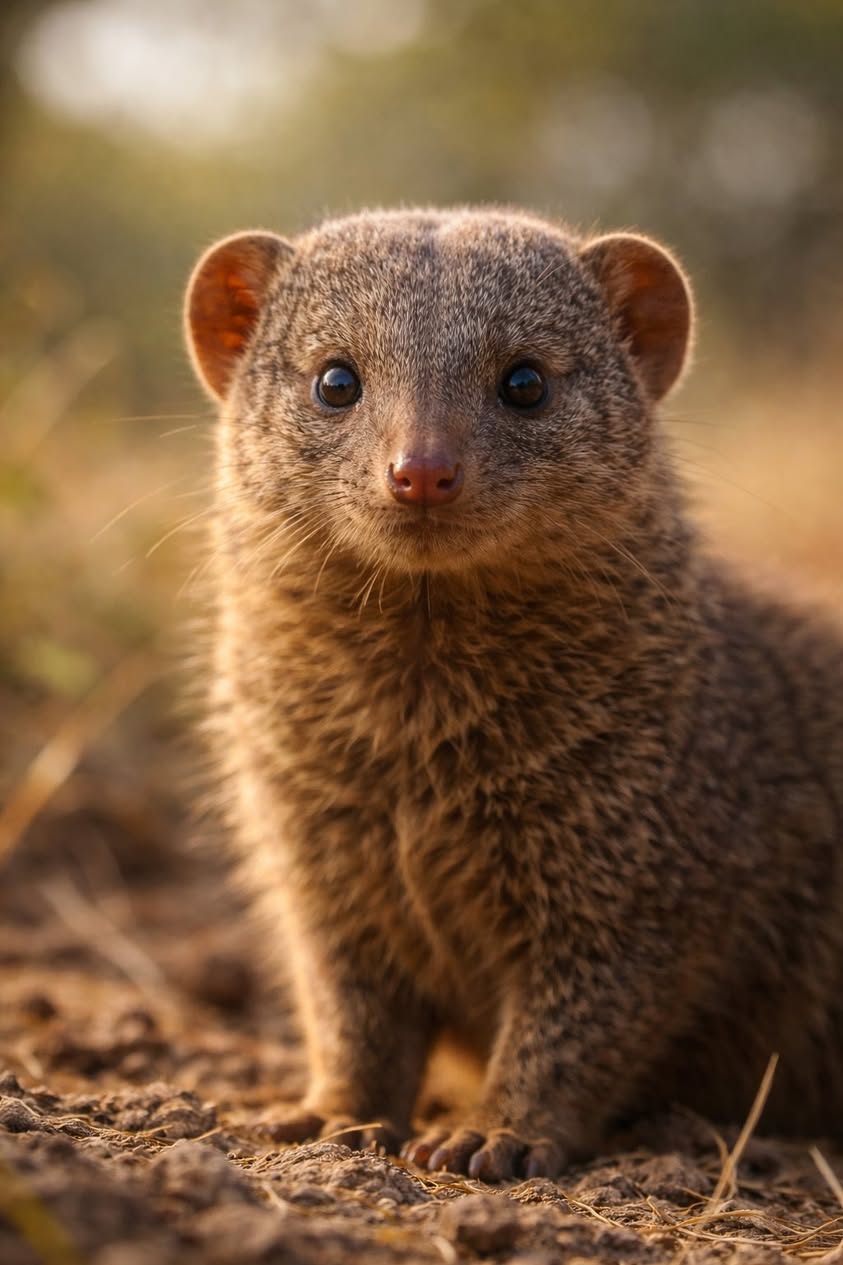
A sudden movement. A shadow overhead. A distant predator. The bird’s alarm calls slice through the air — and the mongooses understand every nuance. Different calls mean different dangers. Ground threat. Aerial hunter. Immediate escape.
It’s not coincidence.
It’s communication.
It’s partnership.
And within their own families, the bonds grow even deeper.
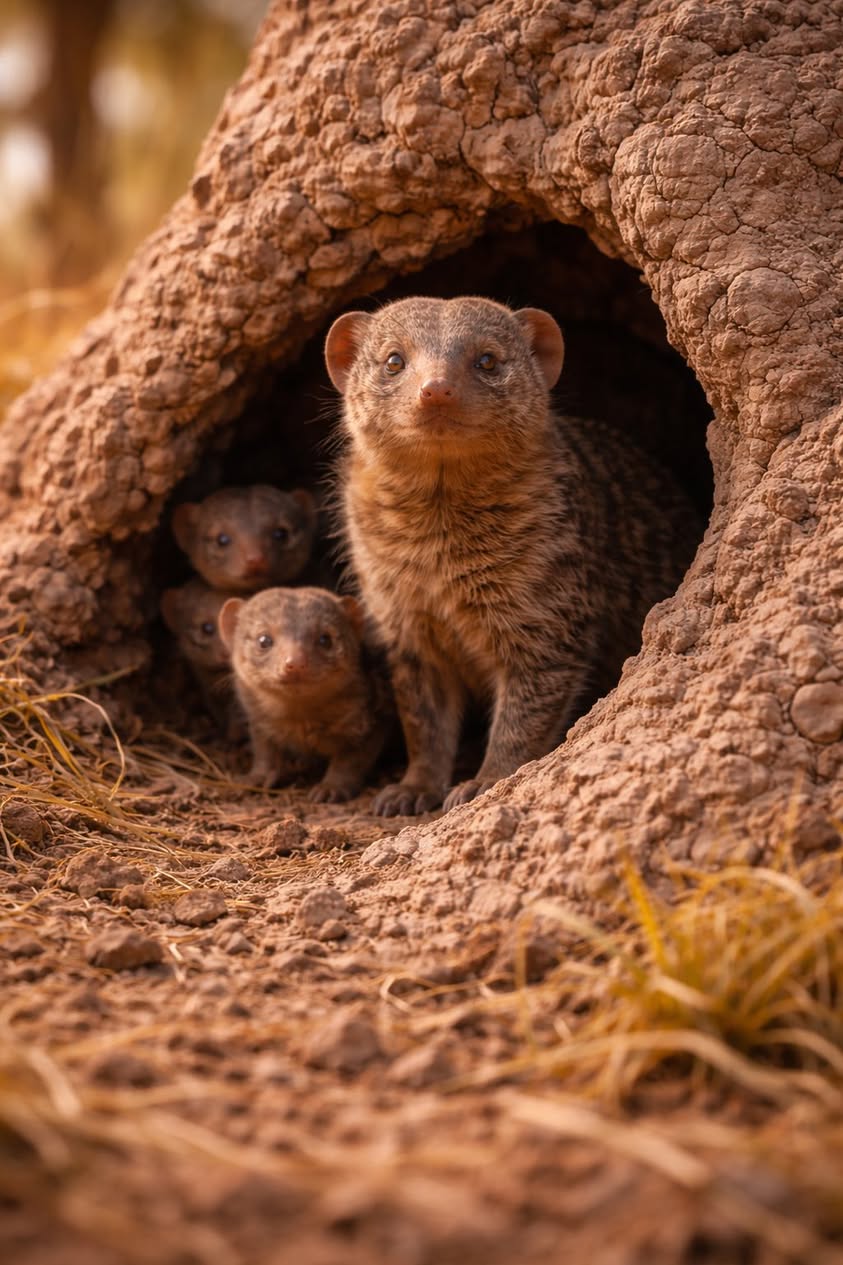
When pups are born, not every adult hunts. Some become babysitters — sentinels who stay behind, protecting the vulnerable while others search for food. The reward is simple yet profound: when the group returns, the guardians eat first.
A quiet promise honored.
Care returned with care.
Trust turned into survival.
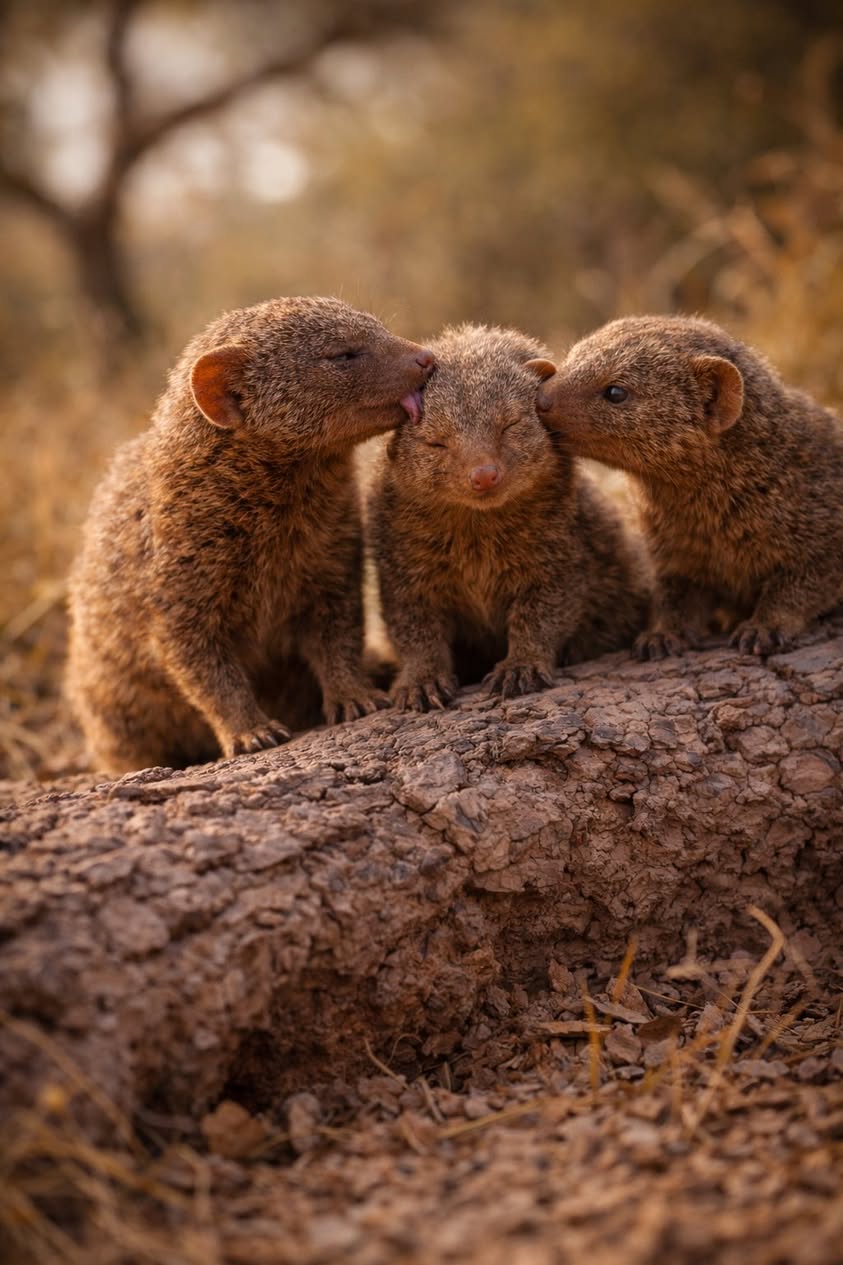
As dusk approaches, another ritual begins. Long chains of synchronized grooming ripple through the troop. Tiny paws, gentle touches, shared calm. These moments are more than hygiene — they reinforce hierarchy, reduce conflict, and strengthen emotional bonds that keep the group united against a harsh world.
In a landscape ruled by predators and uncertainty, the dwarf mongoose survives not through strength, but through connection.
Because sometimes the smallest creatures carry the biggest lessons.
Protect wildlife. Respect ecosystems. Share stories that remind us cooperation is nature’s greatest survival strategy.
If this tiny survivor inspired you, pass the story on — awareness is the first step toward protecting the fragile wonders still fighting to thrive.